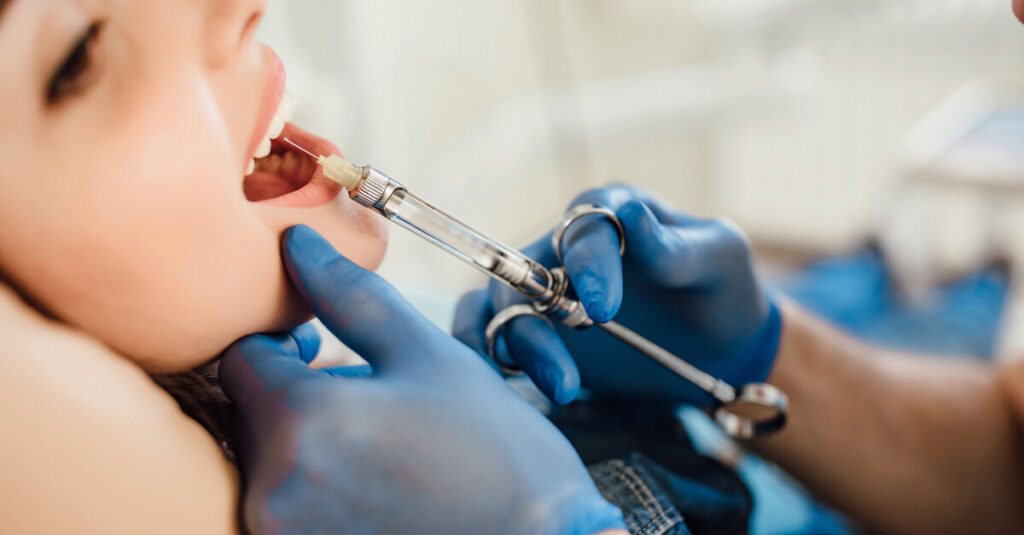
The use of local anesthesia in patients with type 2 diabetes mellitus requires special caution due to the risk of adverse cardiovascular reactions to vasoconstrictors and increased vulnerability of nerve fibers to ischemic damage. Intra-septal anesthesia (ISA) and periodontal ligament anesthesia (PLA) represent alternative techniques that allow achieving effective anesthesia with the use of minimal amounts of anesthetic and vasoconstrictor. A recently published randomized clinical trial evaluated the efficacy and cardiovascular safety of both techniques in tooth extraction in patients with compensated type 2 diabetes, and the results indicate certain advantages of intra-septal anesthesia.
Study design and methodology
A single-center, single-blind randomized trial included 120 adult patients with controlled type 2 diabetes mellitus. Participants were assigned to two groups for the application of either ISA or PLA using a computerized drug delivery system. Researchers evaluated anesthetic success, onset time, duration and area of anesthetic field, as well as cardiovascular parameters of patients.
Results: advantages of intra-septal anesthesia
Both techniques provided immediate onset of anesthesia in cases of success; however, ISA demonstrated better results. In the extraction of maxillary lateral incisors, intra-septal anesthesia achieved 100% success versus 93.3% with periodontal ligament anesthesia. In the extraction of mandibular first premolars, success rate was 93.3% for ISA and 70.0% for PLA, with the difference not being statistically significant.
Intra-septal anesthesia provided significantly longer soft tissue anesthesia: 60.5 minutes versus 46.2 minutes for maxillary lateral incisors and 55.8 minutes versus 45.8 minutes for mandibular first premolars. The anesthetic field was also significantly wider with ISA for both types of teeth. Cardiovascular parameters in both groups remained relatively stable, confirming the safety of both methods in patients with compensated diabetes.
Conclusion and perspectives for clinical application
The authors concluded that both techniques are effective and safe in patients with compensated type 2 diabetes mellitus. The prolonged duration of action and expanded anesthetic field make intra-septal anesthesia a promising option when performing extractions in this patient category. The researchers recommend conducting multicenter studies including a broader spectrum of dental procedures to confirm the obtained results and determine the applicability of ISA in more complex clinical scenarios.
The study results were published in August 2026 in the journal Frontiers in Oral Health.