Main » New in Dentistry » Zirconia bonding: ZirClean and Z-Prime Plus enhance the reliability of restoration adhesion
Zirconia bonding: ZirClean and Z-Prime Plus enhance the reliability of restoration adhesion
At the Greater New York Dental Meeting, Rolando Nunez, DDS, MS (BISCO), presented a lecture dedicated to bonding zirconia restorations and the role of ZirClean and Z-Prime Plus in achieving stable adhesion.
Executive summary
In his presentation, Dr. Nunez emphasized the clinical importance of consistent surface preparation for zirconia restorations: removing contaminants, creating optimal micro-roughness, and applying a chemically active primer to ensure strong adhesion to zirconia restorations.
Key points of the presentation
Speaker: Rolando Nunez, DDS, MSc (BISCO).
Topic: Zirconia bonding – clinical protocols and products.
Products discussed: ZirClean (surface cleaner) and Z-Prime Plus (primer containing functional monomers for chemical bonding to zirconia).
Goal: increasing the reliability and longevity of the adhesive bond between zirconia restorations and abutment structures.
Clinical significance and rationale.
The problem
Zirconia is characterized by low surface reactivity and the absence of a glassy phase, which limits direct chemical bonding with traditional adhesive systems. Clinically, this results in reduced initial bond strength and potential loss of restoration retention under masticatory load.
Adhesion strategy
Dr. Nunez described a combined approach: mechanical increase of the contact area (micro-roughness) and chemical activation of the surface using functional monomers (MDP and similar), which provides the most predictable results.
Surface preparation and product application protocol
Step 1 — Mechanical treatment
Prior to chemical treatment, controlled air abrasion of the zirconia surface (using Al₂O₃, fine-grit abrasive) is recommended to create micro-roughness and enhance mechanical adhesion. Alternatively, light micromechanical processing at the laboratory stage is possible, followed by verification of the restoration’s anatomical integrity.
Step 2 — Cleaning: Application of ZirClean
ZirClean is used to remove organic and inorganic contaminants (plaster residues, colloidal phases, modeling residues, and fingerprints) that may prevent the primer from contacting the surface. The presentation emphasized that cleaning before primer application improves result reproducibility.
Apply and allow to set briefly according to the manufacturer’s instructions.
Thoroughly rinse and dry the surface to remove the solvent before the next step.
Step 3 — Chemical activation: Application of Z-Prime Plus
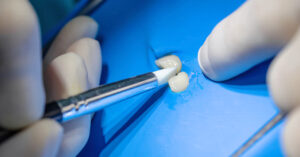
Z-Prime Plus (BISCO’s primer containing functional monomers, including MDP) acts as a chemical intermediary, providing a strong bond between the zirconia oxide surface and the polymer cement matrix. Dr. Nunez recommended strictly adhering to the manufacturer’s specified application time and drying technique to form a stable adhesive layer.
Apply a thin layer of Z-Prime Plus to the cleaned and prepared surface.
Allow it to set for the recommended time and gently air dry to remove the solvent and orient the monomers.
Step 4 — Cementation
Following primer application, a resin cement should be applied. For maximum long-term stability, the use of cements compatible with MDP-containing primers (e.g., adhesive or self-etch resin cements recommended by the manufacturer) is indicated. Control of the cement layer and polymerization according to clinical requirements is mandatory.
Results and clinical observations
The presentation included clinical observations and laboratory data confirming that the sequence: air abrasion → cleaning with ZirClean → priming with Z-Prime Plus → application of a suitable resin cement provides high initial bond strength and increased resistance to fatigue failure compared to non-facilitated protocols.
Expert commentary and practice recommendations
Always consider the final processing of the restoration in the laboratory and the impact of potential contaminants on adhesion.
The “clean → prime” sequence is crucial: applying primer to a contaminated surface reduces the effectiveness of the functional monomers.
The use of MDP-containing systems remains the “gold standard” for chemical bonding to oxide ceramics, including zirconia.
The presentation emphasized the importance of following the manufacturer’s instructions for each product (dwelling time, drying method, cement compatibility).
Findings
The presentation by Rolando Nunez confirmed that integrating specialized products—the ZirClean cleaner and Z-Prime primer—into the clinical protocol for zirconia bonding enhances the predictability and durability of the adhesive interface. The combination of mechanical preparation and chemical surface activation remains crucial for successful cementation of zirconia restorations.
Contemporary dentistry is undergoing a profound digital and clinical transformation that requires coordinated integration of theory and practice to improve
Modern restorative dentistry is undergoing an intensive phase of digital and clinical transformation, during which approaches to materials and restoration
We use cookies to improve website performance, analyze traffic, and personalize content. You can accept all cookies or customize their use. Learn more in our Cookie Policy.
Functional
Always active
Technical storage or access is strictly necessary for the legitimate purpose of making possible the use of a particular service expressly requested by the subscriber or user, or solely for the purpose of carrying out the transmission of a message over an electronic communications network.
Preferences
The technical storage or access is necessary for the legitimate purpose of storing preferences that are not requested by the subscriber or user.
Statistics
Technical storage or access used solely for statistical purposes.The technical storage or access that is used exclusively for anonymous statistical purposes. Without a subpoena, voluntary compliance on the part of your Internet Service Provider, or additional records from a third party, information stored or retrieved for this purpose alone cannot usually be used to identify you.
Marketing
Technical storage or access is necessary to create user profiles for the purpose of sending advertising or to track a user across a website or multiple websites for similar marketing purposes.