Main » Uncategorized » The Voice of Young Dentists in Professional Policy: IADS at 75 Years of Activity and a New Leadership Paradigm
The Voice of Young Dentists in Professional Policy: IADS at 75 Years of Activity and a New Leadership Paradigm
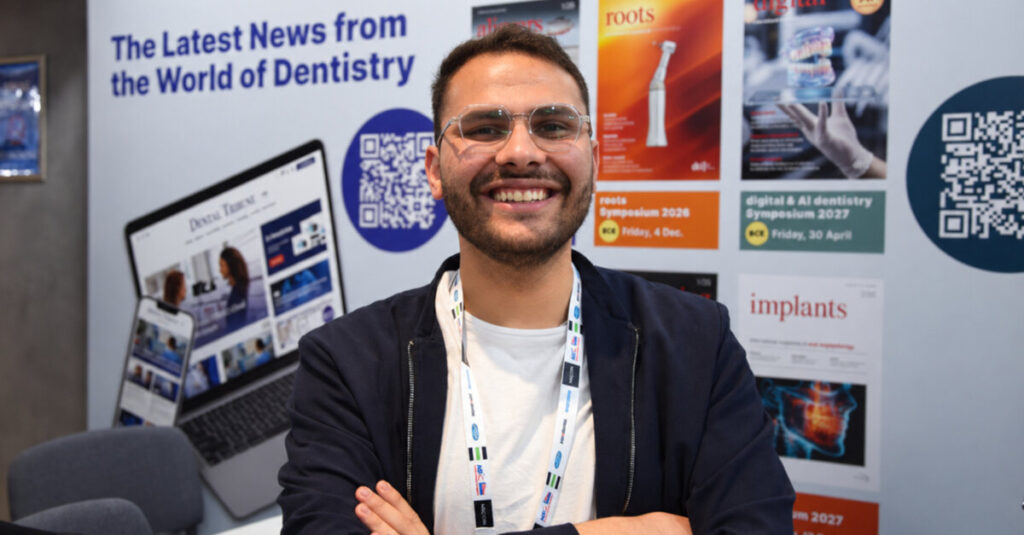
On its 75th year of operation, the International Association of Dental Students (IADS) is stepping beyond clinical education, strengthening the voice of young professionals on the international stage. Under the leadership of outgoing president Dr. Abdullah Alzubadi, the organization has focused on increasing student engagement and ensuring their representation in discussions that shape the future of the profession. At the FDI World Dental Congress in Prague, Dr. Alzubadi shared his vision for the organization’s development, discussing his path to IADS leadership and the challenges facing the new generation of dentists.
From skepticism to leadership
Alzubadi first heard about IADS when he enrolled in dental school in Iraq at the age of 18. Moving to the United States at 24, he was convinced that his background from a conflict-affected Middle Eastern country would close doors for him. However, a meeting with an active IADS member from the same region changed his perspective. His first application was rejected, but Alzubadi continued to develop professionally. In 2023, he joined the organization’s editorial board and was elected president for the term 2025–2026.
Digitalization and leadership in times of change
In the face of rapid adoption of digital technologies and artificial intelligence in clinical practice, Alzubadi emphasizes that IADS is in an ideal position of leadership. Most of the organization’s members are digital natives, naturally proficient with modern dental tools: intraoral scanning, 3D printing, and AI-based systems.
IADS develops educational programs, including factory tours and workshops at congresses, where issues of ethics and responsible technology use are discussed. However, Alzubadi notes a significant gap between available innovations and their actual implementation in clinics. The reasons lie in three factors: practitioners’ readiness to adopt new solutions, the availability of scientific evidence, and, above all, economic affordability.
Structural problems of the profession
The proliferation of dental service organizations (DSOs) and corporate groups plays a critical role. On one hand, they facilitate employment of young professionals and provide access to cutting-edge technologies. On the other hand, they substantially hinder the establishment of independent practice. Alzubadi considers this a systemic problem requiring attention from dental associations, government bodies, and global organizations like FDI.
A particularly acute situation has developed in Iraq, where unresolved structural problems have led to an oversupply of dentists and unemployment among young professionals. A growing number of graduates are leaving the profession, which threatens its attractiveness.
Vision for the next 25 years
Alzubadi is convinced that students should participate in shaping the profession’s policy rather than simply comply with already made decisions. His vision for IADS is an organization that prepares not only clinically competent specialists, but also future leaders, educators, and advocates for patient interests. Recently elected new IADS president for 2026–2027 Ralitsa Androlova, former vice president for internal affairs, will continue this work, bringing expertise in cross-national collaboration and organizational development.
We use cookies to improve website performance, analyze traffic, and personalize content. You can accept all cookies or customize their use. Learn more in our Cookie Policy.
Functional
Always active
Technical storage or access is strictly necessary for the legitimate purpose of making possible the use of a particular service expressly requested by the subscriber or user, or solely for the purpose of carrying out the transmission of a message over an electronic communications network.
Preferences
The technical storage or access is necessary for the legitimate purpose of storing preferences that are not requested by the subscriber or user.
Statistics
Technical storage or access used solely for statistical purposes.The technical storage or access that is used exclusively for anonymous statistical purposes. Without a subpoena, voluntary compliance on the part of your Internet Service Provider, or additional records from a third party, information stored or retrieved for this purpose alone cannot usually be used to identify you.
Marketing
Technical storage or access is necessary to create user profiles for the purpose of sending advertising or to track a user across a website or multiple websites for similar marketing purposes.