Brush biopsy in molecular diagnostics of oral cancer: non-invasive method and clinical transformation of screening

The majority of suspicious oral mucosal lesions are not malignant; however, their differentiation often requires invasive scalpel biopsy. This not only causes additional discomfort to patients but also delays final diagnosis. A new non-invasive molecular test developed by researchers at Queen Mary University of London is designed to solve this problem.

Research methodology and testing principle

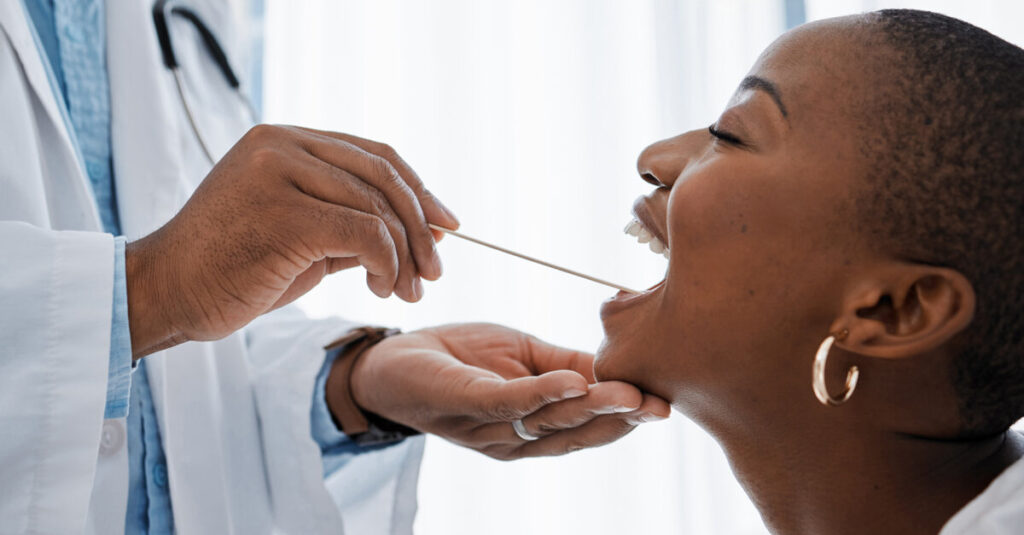
Professor of Molecular Oral Oncology Mui-Teck Teh led the study, which confirms the effectiveness of brush biopsy as an alternative to microbiopsy. Previous trials of the microbiopsy variant of the test on tissue samples from patients in the United Kingdom, India, and China demonstrated its reliability across different populations. Since microbiopsy remains an invasive procedure, the researcher conducted a large-scale case-control study to verify the possibility of applying a non-invasive brush method as its alternative.

The study involved 545 patients with squamous cell carcinoma, leukoplakia, or oral lichen planus. Each patient provided two brush biopsy samples: one from the affected area and another from healthy tissue on the opposite side of the mouth. The test measures the expression of four genes, including INHBA and S100A16, which serve as biomarkers of malignant changes.

Research results: sensitivity and specificity

The results demonstrated high differentiation accuracy: the test flawlessly identified nearly all cases of cancer and rarely misclassified benign lesions as malignant. The sensitivity and specificity of the brush variant proved comparable to its microbiopsy predecessor.

According to Professor Teh, the biological signal registered by these four genes is so strong and consistent that it can be detected even in surface-shed cells collected by brush. This provides patients with the opportunity to obtain a molecular risk assessment without an invasive procedure.

Clinical application and advantages for practice

If the test is implemented in clinical practice, dentists will be able to perform primary molecular triage assessment directly in the office or through local laboratories, improving the quality of referrals to specialists in oral medicine and maxillofacial surgery. This could reduce the burden on specialized centers, allowing them to focus on high-risk patients.

Important limitations of the test

The researcher emphasized a fundamental limitation: the test does not replace histopathological diagnosis. Positive or high-risk results require confirmation by conventional biopsy and morphological analysis. Thus, brush biopsy can serve as an effective tool for primary molecular stratification but does not eliminate the need for final diagnosis verification through histopathological examination.

Source

Original publication

Leave a Reply

Your email address will not be published. Required fields are marked *

Other news

Subscription to thousands of useful articles, 600 lessons, reviews & ratings

Subscribe to the newsletter

More news in our Telegram!

Congratulations!
You have successfully registered