Main » Scientific articles » Training in dental implantology in the United Kingdom and Ireland: 10–20 hours and transformation of educational standards
Training in dental implantology in the United Kingdom and Ireland: 10–20 hours and transformation of educational standards
Modern dentistry is developing as one of the most dynamic fields of medicine, rapidly integrating digital technologies and interdisciplinary approaches.
Brief description of the review and methodology
New review, conducted by British researchers, is based on a systematic analysis of publications and surveys covering approximately four decades; the aim — to assess the state of training in dental implantology at universities in the United Kingdom and Ireland and to propose recommendations for the validation and integration of curricular content. Methodologically, the work relies on a literature review and faculty survey data, which allows identification of both historical dynamics and current operational gaps in education.
Educational ecosystem: structure and content
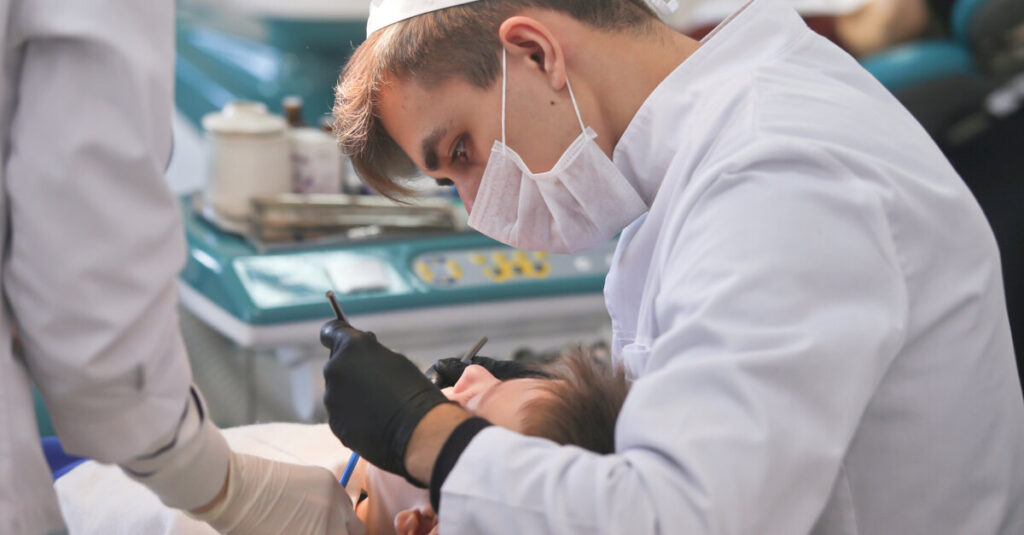
The authors note the evolution of programs — from predominantly lecture-based teaching to combined formats with the introduction of simulation-based training and partial clinical practice; at the same time there remains considerable variability between institutions, reflecting differences in resources and priorities. According to a 2022 survey, all eight responding faculties included implantology in lecture courses, six provided preclinical simulation training, however only one institution reported the possibility of observing restorative procedures, one — of students performing restorative work themselves and two — of observing surgeries; these data underscore barriers to comprehensive clinical training. Simulation training is regarded not only as a means for practicing technical skills, but also as a platform for developing interdisciplinary clinical competencies — planning and interpretation of CT/CBCT data, assessment of primary implant stability, strategies of prosthetic rehabilitation and soft-tissue surgical management skills in controlled conditions.
Standardization as a tool for overcoming barriers
The authors emphasize the need to synchronize standards and workforce training to ensure reproducibility and clinically validated predictability of treatment in primary and secondary care settings; key constraints — lack of time in crowded curricula, the high cost of technology and insufficient teaching expertise. As practical measures, it is appropriate to implement standardized curricula with clear learning outcomes, validated methods for assessing practical skills — for example, systems of objective skills assessment, modified OSCE/DOPS approaches and clinical outcome criteria for monitoring training effectiveness — as well as continuous professional development programs for teachers aimed at aligning levels of expertise.
Geography as a strategic platform
Comparative data across Europe show an average volume of implant education of about 74 hours, whereas in the United Kingdom 10–20 hours are indicated, which points to a significant regional imbalance and the need for transnational cooperation and accelerated diffusion of best educational practices. At the same time epidemiological estimates indicate increasing clinical significance: in England a 2021 survey showed about 5 percent of adults with implants — approximately 2.8 million people — which reinforces the requirement for graduates’ readiness for differentiated management of patients with implants.
Navigation as a key aspect of clinical practice
The increase in number and complexity of implant cases in general practice raises the importance of skills for early identification of complications — peri-implant mucositis, peri-implantitis, prosthetic failures — and the ability to perform supportive therapy and long-term monitoring. Undergraduate training should provide not only theoretical knowledge but also the formation of clinical confidence, the ability to interpret radiological data, to plan prosthetic rehabilitation, to assess risks and to apply preventive protocols, including supportive hygiene programs and control of risk factors in patients.
Recommendations for universities and clinical practice
It is recommended to integrate simulation and clinical training: a combination of controlled preclinical simulators with gradual expansion of observation and supervised interventions; to allocate protected teaching time and resources, to invest in faculty training through targeted CPD programs; to develop transnational educational networks and digital platforms for sharing teaching modules, protocols and clinical registries; to implement validated methods for assessing practical skills and clinical outcomes to ensure reproducibility and improve the quality of training.
Conclusion
The review demonstrates that modern dentistry constitutes an integrated educational ecosystem, where key elements are knowledge exchange, digital technologies and clinical cooperation; accelerated implementation of innovations and standardization of curricula are necessary to improve the quality of medical care in the digital age. International educational initiatives and digital platforms play a strategic role in synchronizing standards, exchanging clinical protocols and shaping a professional culture based on accuracy, reproducibility and continuous professional development.
A prospective population-based cohort study examined for the first time the relationship between early childhood systemic inflammatory response and the
We use cookies to improve website performance, analyze traffic, and personalize content. You can accept all cookies or customize their use. Learn more in our Cookie Policy.
Functional
Always active
Technical storage or access is strictly necessary for the legitimate purpose of making possible the use of a particular service expressly requested by the subscriber or user, or solely for the purpose of carrying out the transmission of a message over an electronic communications network.
Preferences
The technical storage or access is necessary for the legitimate purpose of storing preferences that are not requested by the subscriber or user.
Statistics
Technical storage or access used solely for statistical purposes.The technical storage or access that is used exclusively for anonymous statistical purposes. Without a subpoena, voluntary compliance on the part of your Internet Service Provider, or additional records from a third party, information stored or retrieved for this purpose alone cannot usually be used to identify you.
Marketing
Technical storage or access is necessary to create user profiles for the purpose of sending advertising or to track a user across a website or multiple websites for similar marketing purposes.