Main » Uncategorized » Emissions during resin 3D printing: standardization, risk assessment and transformation of clinical practice
Emissions during resin 3D printing: standardization, risk assessment and transformation of clinical practice
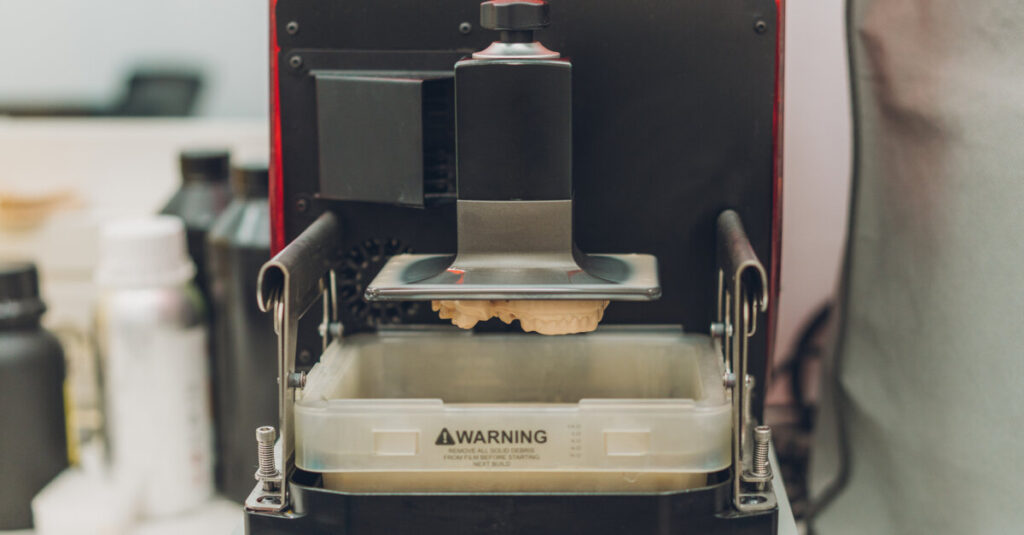
In the era of rapid digitalization modern dentistry is developing as one of the most dynamic fields of medicine, intensively integrating additive technologies into clinical and laboratory processes, and in these conditions the key factor of progress becomes not only the development of new materials, but also their clinical validation and transnational standardization; the studies presented at the 65th annual meeting of the Society of Toxicology and ToxExpo demonstrate attention to the problem of inhalation exposure during resin 3D‑printing, and this analytical reflection focuses on emissions of volatile organic compounds, risk assessment and practical measures to reduce exposure. For clinicians and laboratory specialists this means the need to take into account not only the mechanical‑technical characteristics of additive processes, but also the chemical risks of off‑gases, to implement air quality control protocols and to integrate the results of emission testing into material selection and workspace organization.
Emission as a key risk factor
Emission of volatile organic compounds (VOC) and other off‑gases during photopolymerization of resins represents the primary pathway of inhalation exposure in the clinical‑laboratory environment; sources are the composition of the raw materials, copolymers, monomers, photoinitiators and by‑products of photochemical reactions. Special attention should be paid to the presence of irritating, reproductive‑toxic and potentially carcinogenic components, as well as the possibility of VOC release at room temperature during storage of unreacted resins, which requires systemic evaluation of materials at the procurement and use stages.
Exposure and its assessment: methods and results
In a study by UL Research Institutes at Chemical Insights chemical identification and exposure modeling were conducted — more than 400 compounds were detected, over 100 were quantitatively assessed, and in worst‑case scenarios some concentrations exceeded recommended reference levels; this emphasizes the importance of quantitative measurements, use of reference doses, calculation of short‑term and long‑term exposure metrics, as well as consideration of the cumulative effect of mixed mixtures. For the clinician this means the necessity of collaboration with industrial hygienists and toxicologists when interpreting data, selecting monitoring methods (gas chromatography‑mass‑spectrometry, sensor systems, personal samplers) and adapting work protocols in accordance with the results.
Engineering controls: ventilation and local aspiration
Engineering controls — the primary line of defense in the laboratory: effective supply‑and‑exhaust ventilation, local aspiration in the printing zone, filtration with selection of adequate cartridges and ensuring the required air change rate (ACH) provide reduction of airborne contaminant concentrations and increase the predictability of working conditions. Maintenance schedules, verification of the effectiveness of local systems, post‑installation testing protocols and periodic validation should be part of standardized quality control in clinics and dental technical laboratories.
Practical measures: protocols and handling of materials
To reduce dermal and inhalation risks it is recommended: the use of personal protective equipment — gloves, protective shields, laboratory coats; the use of closed or localized stations for loading and post‑processing; storage of unreacted resins in hermetic containers with labeling and date of opening; proper handling of solvents and waste taking into account local regulations; implementation of remote process monitoring using video surveillance; positioning equipment in such a way as to ensure direct capture of emissions into local aspiration and to avoid recirculation throughout the room and transfer via the ventilation system to other areas of the building. Replacement of isopropanol and other solvents should be carried out taking into account the possible formation of new by‑products and be confirmed by analytical studies.
Standardization and testing: the path to safe products
Emission tests should become an integral part of material evaluation and marketing documentation — they allow identification of sources of hazardous components, comparison of materials by emission profile and decisions on modification of formulations or replacement of components at the source. Since the composition of the raw materials does not always predict the emission profile, inclusion of testing methods during the development and validation of materials will increase the safety of patients and personnel, and will allow manufacturers to declaratively reduce risks through optimization of formulations and technological processes.
Knowledge gaps and research perspectives
There are key gaps in the data — limited information on long‑term cumulative exposure to complex chemical mixtures, insufficient data on cumulative and combined toxicity, as well as on the effectiveness of engineering controls in real clinical conditions. Future research should expand modeling to multiple devices and resin types, include in vitro and in vivo toxicity tests of off‑gases, epidemiological observations and the development of clinically relevant biomarkers of exposure and effect.
Conclusions for clinical practice
The integration of additive technologies into dentistry requires a multidisciplinary approach — combining the selection of low‑emission materials, implementation of engineering controls, regulated handling protocols and air monitoring, as well as involvement of industrial hygiene and toxicology specialists. A practical recommendation for clinics and laboratories is to conduct preliminary emission testing when implementing a new material or equipment, ensure a documented maintenance regime for ventilation systems, implement personnel training on safe handling of resins and take into account the results of emission studies when forming procurement policy and quality standards.
Modern dentistry is developing as one of the most dynamic fields of medicine, rapidly integrating digital technologies and interdisciplinary approaches.
We use cookies to improve website performance, analyze traffic, and personalize content. You can accept all cookies or customize their use. Learn more in our Cookie Policy.
Functional
Always active
Technical storage or access is strictly necessary for the legitimate purpose of making possible the use of a particular service expressly requested by the subscriber or user, or solely for the purpose of carrying out the transmission of a message over an electronic communications network.
Preferences
The technical storage or access is necessary for the legitimate purpose of storing preferences that are not requested by the subscriber or user.
Statistics
Technical storage or access used solely for statistical purposes.The technical storage or access that is used exclusively for anonymous statistical purposes. Without a subpoena, voluntary compliance on the part of your Internet Service Provider, or additional records from a third party, information stored or retrieved for this purpose alone cannot usually be used to identify you.
Marketing
Technical storage or access is necessary to create user profiles for the purpose of sending advertising or to track a user across a website or multiple websites for similar marketing purposes.