Main » Reviews and ratings » Sterilization of dental instruments: adherence to protocols ensures patient safety
Sterilization of dental instruments: adherence to protocols ensures patient safety
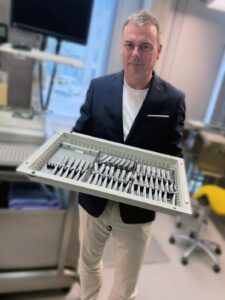
At the Greater New York Dental Meeting, Karen Gregory, a certified professional in healthcare and information technology, emphasized the critical role of proper processing and sterilization of dental instruments in ensuring patient safety.
In her brief presentation, she highlighted the necessity of strictly adhering to pre-sterilization processing protocols, selecting appropriate sterilization equipment, and monitoring process quality. Sterilization units from the Lexa series by W&H were cited as an example, noted for their combination of user-friendliness and process validation capabilities.
Key points
Infection prevention through proper processing
Pre-sterilization processing — the removal of organic and inorganic contaminants, manual or automated cleaning (washing/ultrasonic), unpacking, and inspection of instrument integrity — is considered the primary stage that ensures the effectiveness of subsequent sterilization.
Mechanical cleaning and the use of detergents compatible with the instrument materials are mandatory before thermal processing.
For instruments with moving parts, a lubrication procedure and functional check are recommended prior to sterilization.
The impact of equipment on patient safety
The class of equipment, the presence of vacuum phases, drying modes, and the ability to verify cycles directly impact the confidence in achieving sterility and minimizing the risk of recontamination.
Steam sterilization, when validated parameters are followed, remains the “gold standard” for most metal and heat-resistant instruments.
Incorrect loading or cycle selection can lead to failure in achieving the required sterility assurance level for a specific set of instruments.
Example: Lexa sterilizers
The presentation mentioned Lexa sterilizers as an example of equipment designed for dental practice: compact units with a set of programs for typical dental loads, an intuitive interface, and capabilities for traceability and manufacturer service support.
Expert assessment: When selecting equipment, it is important to evaluate not only marketing advantages but also the possibility of documented process validation, the availability of consumables and regular service maintenance, as well as compliance with current standards (e.g., EN 13060 for small steam sterilizers).
Practical recommendations for clinics
Instrument processing algorithm – key stages
Preliminary removal of biological material and visual inspection of the instrument.
Mechanical or automated washing/ultrasonic cleaning using recommended detergents.
Drying, application of lubricant to moving parts if necessary, packaging in sterilization barrier materials with indication of date and operator.
Selection of a validated sterilization cycle based on the type of instruments and packaging.
Sterilization quality control
Daily tests: Bowie-Dick test or equivalent to verify the initial vacuum phase in vacuum sterilizers.
Periodic checks: use of chemical indicators in each load and biological indicators (spores of Geobacillus stearothermophilus) at the recommended frequency to verify sterilization efficacy.
Maintaining logs of cycles, test results, and maintenance to ensure traceability and auditability.
Recommendations for selecting a sterilizer for dental practice
When selecting equipment, consider:
compliance with standards and the ability to validate cycles;
availability of programs for different load types (trays, multi-part sets, textile components, etc.);
the presence of a vacuum phase to ensure steam penetration into hollow instruments;
ease of use, chamber volume, and loading ergonomics tailored to the clinic’s workflow;
capabilities for documentation and integration with practice management systems.
Conclusion
For a dental practice, the combination of established pre-sterilization processing protocols, the selection of adequate sterilization equipment, and regular quality control of processes is critically important. This ensures reliable infection prevention and enhances patient safety. The Lexa sterilizers (W&H) mentioned in the presentation are considered one example of equipment that meets the needs of a modern dental clinic; however, the final selection should be based on verified data regarding operational modes, service support, and compliance with standards.
Modern dentistry is unimaginable without high-precision rotary instruments, among which straight and contra-angle handpieces hold a special place. These devices
We use cookies to improve website performance, analyze traffic, and personalize content. You can accept all cookies or customize their use. Learn more in our Cookie Policy.
Functional
Always active
Technical storage or access is strictly necessary for the legitimate purpose of making possible the use of a particular service expressly requested by the subscriber or user, or solely for the purpose of carrying out the transmission of a message over an electronic communications network.
Preferences
The technical storage or access is necessary for the legitimate purpose of storing preferences that are not requested by the subscriber or user.
Statistics
Technical storage or access used solely for statistical purposes.The technical storage or access that is used exclusively for anonymous statistical purposes. Without a subpoena, voluntary compliance on the part of your Internet Service Provider, or additional records from a third party, information stored or retrieved for this purpose alone cannot usually be used to identify you.
Marketing
Technical storage or access is necessary to create user profiles for the purpose of sending advertising or to track a user across a website or multiple websites for similar marketing purposes.