Main » Technologies » Print orientation as a factor in clinical accuracy: new horizons in digital orthodontics
Print orientation as a factor in clinical accuracy: new horizons in digital orthodontics
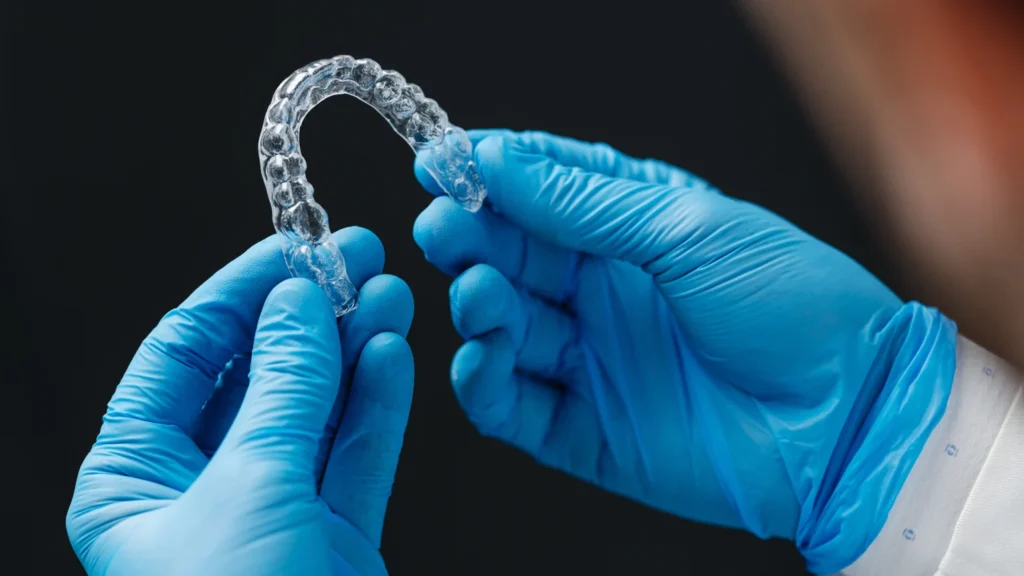
Digitalization of dentistry is gradually transforming not only diagnostic and treatment planning methods but also the very processes of manufacturing orthodontic appliances. One of the most promising areas is the direct 3D printing of aligners — clear trays widely used for correcting malocclusions. However, as these technologies are introduced into clinical practice, it becomes evident that the effectiveness and accuracy of such devices depend not only on the materials and equipment used but also on seemingly secondary parameters of the production process.
One such parameter is the print orientation. The study under review, published in Dental Tribune International, demonstrates that the orientation of the object during 3D printing has a significant impact on the accuracy of aligner fit and the efficiency of their production. The text presented below is an expanded translation of the article, with analytical reflection on its scientific and practical significance.
Digital orthodontics and the growing role of additive technologies
In recent years, additive technologies have taken center stage in orthodontics. The use of 3D printing significantly reduces production time, lowers costs, and increases treatment individualization. Particularly actively implemented are LCD printing technologies, which are distinguished by high resolution, speed, and the availability of biocompatible materials.
Nevertheless, despite the widespread adoption of digital methods, until recently a significant portion of research has focused on other technologies, such as stereolithography and digital light processing. The question of the influence of printing parameters, including orientation angle, remained insufficiently studied, particularly in the context of clinically applied transparent resins.
Research methodology: accuracy as the object of measurement
The study aimed to assess the influence of print orientation on the accuracy and efficiency of aligner manufacturing. To this end, the researchers fabricated 70 specimens distributed across seven different orientations, followed by a comparison of their geometric parameters with the original digital model. This approach yielded quantitative data on linear and angular deviations, as well as an assessment of the impact of orientation on printing time and production characteristics. It is important to note that the study considered not only shape accuracy but also parameters such as reduction in product height and variability of deviations, making it particularly valuable for clinical practice.
Results: horizontal orientation as the optimal parameter
The obtained data indicate that the highest accuracy is achieved with a horizontal orientation of the aligners, i.e., at an angle of 0° relative to the printing platform. In this case, minimal deviations from the original model were observed, which is attributed to more uniform layer‑by‑layer formation and less deformation caused by supporting structures.
Furthermore, this orientation provided the minimum printing time, as it required fewer layers. However, this approach also has limitations: with horizontal placement on the platform, a smaller number of aligners can be placed per cycle, which may reduce overall production efficiency. In contrast, increasing the print orientation angle led to greater deviations and a reduction in product height. Particularly pronounced variations were observed at an angle of 60°, where accuracy even depended on whether printing started from the anterior or posterior part of the dental arch.
Clinical interpretation of the results
Despite statistically significant differences between various print orientations, the absolute deviations in many cases remained clinically insignificant. Nevertheless, even minimal changes in geometry can affect the distribution of orthodontic forces, and thus the predictability of tooth movement. This circumstance is of fundamental importance, since the effectiveness of aligner treatment directly depends on the accuracy of their fit and the correct transmission of forces. Thus, choosing the optimal print orientation becomes not merely a technical but a clinically significant decision.
Production efficiency and process optimization
From the perspective of organizing clinical work, the study results indicate the possibility of optimizing production processes without the need for investment in new equipment. Changing the print orientation is a relatively simple parameter that can be standardized and included in the quality control system. This is particularly important for clinics and laboratories implementing in‑house aligner production. In such settings, even small improvements in manufacturing accuracy and speed can significantly affect overall work efficiency and economic performance.
Prospects for further research
The authors emphasize the need for further clinical research aimed at confirming the obtained results under real‑world treatment conditions. Despite compelling laboratory data, the impact of print orientation on long‑term clinical outcomes requires additional study. In the future, we can expect the integration of such parameters into automated planning and production systems, where optimal settings will be determined algorithmically, taking into account individual patient characteristics and the clinical task.
Conclusion
The study under review demonstrates that even seemingly minor parameters such as print orientation can have a significant impact on the quality and efficiency of orthodontic devices. The relevance of this topic is driven by the growing role of digital technologies in dentistry and the need for their precise calibration to achieve optimal clinical results. In the context of the transition to personalized medicine, such studies become the foundation for forming new quality standards.
Thus, it can be argued that the future of orthodontics will be shaped not only by the development of technologies but also by the depth of understanding of the processes underlying them. Optimizing parameters such as print orientation opens up new possibilities for increasing treatment accuracy, improving clinic efficiency, and ultimately enhancing patients’ quality of life.
One endodontic system, multiple motions: case-based approaches to routine challenges Introduction / background Root canal anatomy and its variations remain
We use cookies to improve website performance, analyze traffic, and personalize content. You can accept all cookies or customize their use. Learn more in our Cookie Policy.
Functional
Always active
Technical storage or access is strictly necessary for the legitimate purpose of making possible the use of a particular service expressly requested by the subscriber or user, or solely for the purpose of carrying out the transmission of a message over an electronic communications network.
Preferences
The technical storage or access is necessary for the legitimate purpose of storing preferences that are not requested by the subscriber or user.
Statistics
Technical storage or access used solely for statistical purposes.The technical storage or access that is used exclusively for anonymous statistical purposes. Without a subpoena, voluntary compliance on the part of your Internet Service Provider, or additional records from a third party, information stored or retrieved for this purpose alone cannot usually be used to identify you.
Marketing
Technical storage or access is necessary to create user profiles for the purpose of sending advertising or to track a user across a website or multiple websites for similar marketing purposes.