Adaptive motion with cbct for calcified canals

One endodontic system, multiple motions: case-based approaches to routine challenges

Introduction / background

Root canal anatomy and its variations remain a major obstacle to predictable endodontic therapy. In a clinical report published in roots – international magazine of endodontics (vol. 21, issue 2/2025), Dr Philippe Sleiman describes two cases in which he combined high-resolution CBCT imaging and a file system capable of different kinematic modes to manage complex anterior and posterior presentations. The report highlights use of DTX Studio Clinic (DEXIS) for image enhancement and a Kerr Dental file system (Traverse and ZenFlex) able to operate in both full rotation and an adaptive rotational–reciprocation mode.

What was performed

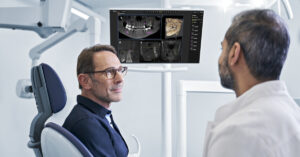
  • Imaging and diagnostics: In both cases Dr Sleiman used CBCT imaging. A DICOM dataset acquired elsewhere was imported into DTX Studio Clinic to exploit the software’s edge-enhancement features; an on-site DEXIS OP 3D unit was used for follow-up high-definition scans.
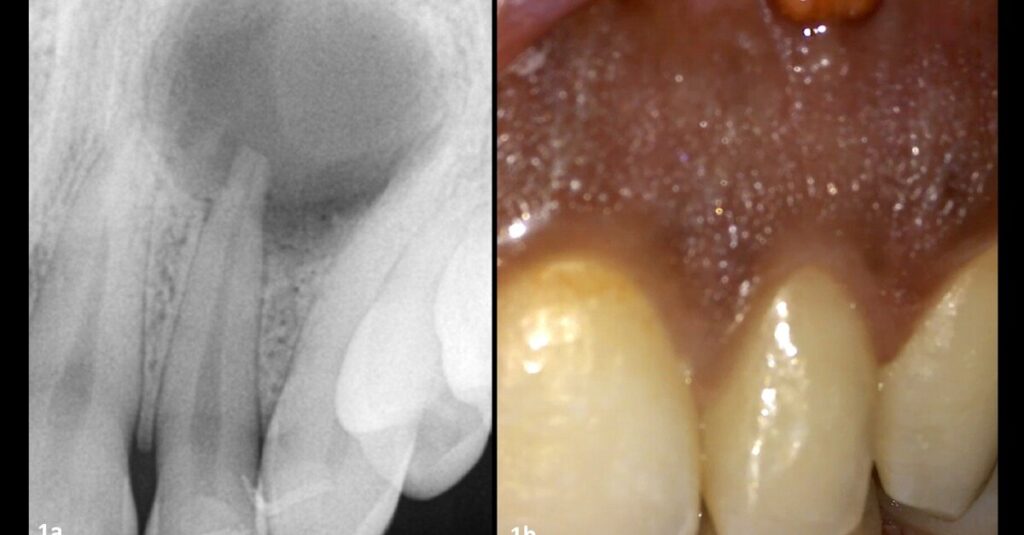
  • Surgical and endodontic sequence (Case 1, anterior maxilla): The patient presented with a draining fistula and a large cystic lesion adjacent to the lateral incisor. Treatment consisted of conventional root canal debridement and obturation followed immediately by a “zero apicectomy” technique to enucleate the cyst and prepare the exposed root surface to encourage periodontal ligament reattachment.
  • Canal preparation (Case 1): Dr Sleiman selected Adaptive Motion using a single-file technique with a 25/0.06 ZenFlex file. Adaptive Motion combines continuous rotation on initial engagement with variable reciprocation when the file encounters canal stress; reciprocating angles change with the level of intracanal stress.
  • Root surface treatment after cyst removal: The exposed root surface was irrigated frequently with saline to preserve viable cells. A 1% citric acid application for one minute was used to address surface bacteria, followed by saline rinsing, then a 17% EDTA application with a micro‑brush for one minute to support periodontal ligament regeneration.
  • Canal preparation (Case 2, molars): For a maxillary first molar with a severely calcified chamber, ultrasonic non‑diamond tips were used to remove calcific obstruction, then a diamond tip to refine access. Adaptive Motion in a single‑file technique was used for the curved, narrow canals after initial scouting with manual #8 and #10 K‑files. A 13/0.06 Traverse file was used as a pre‑shaping file in a pecking motion (3 seconds per pass) and followed sequentially by 20/0.06 and 25/0.06 ZenFlex files to working length, with full irrigation and 3D vertical obturation.
  • Alternate kinematics for heavy calcification: For a mandibular molar with extensive internal calcification, Dr Sleiman used Traverse and ZenFlex files in continuous full rotation—starting with a 25/0.08 Traverse file—employing pecking motions to increase cutting efficiency for removal of calcified tissue.

Key findings

  • Imaging: Artificial intelligence–enhanced CBCT (DTX Studio Clinic) clarified anatomical relationships, demonstrating intact nerve and periodontal ligament in the anterior case despite extensive cortical loss, and distinguishing physiologic fibrous tissue from recurrent pathology at two‑year follow‑up.
  • Instrumentation: Adaptive Motion permitted single‑file preparation with a 25/0.06 ZenFlex in straightforward and moderately curved canals while preserving canal anatomy; full‑rotation sequences with Traverse/Z enFlex files provided greater cutting efficiency for cases with heavy calcification.
  • Surgical outcome (anterior case): After immediate cyst enucleation and conservative root surface treatment, radiographic follow‑up at two years showed healing; a CBCT high‑definition scan identified a fibrous reparative tissue area at the apex rather than persistent pathology, so no further intervention was performed.
  • Treatment outcome (posterior cases): Postoperative radiographs documented adequate obturation and clinical healing in the treated molars following the combined approaches to access, calcification removal and sequential instrumentation.

Relevance for dental practice

  • Combining enhanced CBCT imaging with flexible instrumentation kinematics allows tailoring of the endodontic approach to case anatomy and pathology: adaptive kinematics can reduce stress and better preserve original canal shape in narrow or curved systems, while continuous rotation maintains higher cutting efficiency for calcified canals.
  • When performing surgical enucleation adjacent to root surfaces, maintaining hydration, minimizing mechanical damage to the root surface and using targeted chemical surface treatments (as described in these cases) were employed to encourage periodontal ligament healing and bone reattachment—although these are procedural details reported by the author, not guideline recommendations.
  • Use of manual scouting files before rotary/reciprocating preparation and staged sequences (pre‑shaping, then progressively larger rotary files) remain important in negotiating calcified or narrow canals.

Limitations and context

  • The report is a clinical case series presented by a single operator and documents technique choices and outcomes in two clinical scenarios; it does not constitute comparative evidence or a controlled study.
  • Device and product names (DTX Studio Clinic, DEXIS OP 3D, Traverse, ZenFlex) are reported as used in these cases; outcomes relate to the described clinical protocol and operator technique.
  • Procedural adjuvants and timings reported (1% citric acid for 1 minute; 17% EDTA for 1 minute) reflect the author’s approach in these cases; broader generalization requires consideration of the evidence base and clinical guidelines.

Author and publication note

Case report and commentary by Dr Philippe Sleiman. Editorial note: the article originally appeared in roots – international magazine of endodontics, vol. 21, issue 2/2025. Published on Dental Tribune International on 29 April 2026.

SOURCE

https://www.dental-tribune.com/news/one-system-different-motions-for-daily-challenges/

Leave a Reply

Your email address will not be published. Required fields are marked *

Other news

Subscription to thousands of useful articles, 600 lessons, reviews & ratings

Subscribe to the newsletter

More news in our Telegram!

Congratulations!
You have successfully registered