Main » Uncategorized » OneGuide from Osstem Implant: 360 000 clinical cases and formation of an integrated digital implantology paradigm
OneGuide from Osstem Implant: 360 000 clinical cases and formation of an integrated digital implantology paradigm
Contemporary dentistry is rapidly integrating digital technologies, forming a new paradigm of planning and performing implantological interventions, based on high-precision solutions.
OneGuide from Osstem Implant, launched in 2016 and having marked a ten-year stage of development, is regarded as an element of a comprehensive digital workflow, which combines virtual planning, the manufacture of surgical guides and specialized surgical kits; such integration provides a systemic approach to the standardization of procedures and validation of clinical protocols, which is critical for the reproducible predictability of outcomes.
Digital navigation as a key factor
High-precision navigation within the platform allows combining the stages of preliminary 3D planning, printing of guiding templates and intraoperative control of implant positioning, which reduces the likelihood of positioning errors and decreases the variability of osteotomy with differing bone quality.
From a clinical point of view the key advantages are — increased accuracy of implant positioning, reproducibility of the depth and direction of the osteotomy, reduction of operative time and reduction of surgical trauma; the availability of specialized kits for edentulous jaws, sinus lift and narrow alveolar ridges allows adapting protocols to the patient’s anatomical variants and minimizing the invasiveness of the intervention.
Educational ecosystem: structure and content
Osstem is developing an educational ecosystem, providing access to OneGuide through 32 overseas branches and combining theoretical materials with practical hands-on sessions and broadcasts of live surgeries; such a model contributes to the unification of standards and accelerates the diffusion of evidence-based medicine in digital implantology.
Training formats and clinical validation
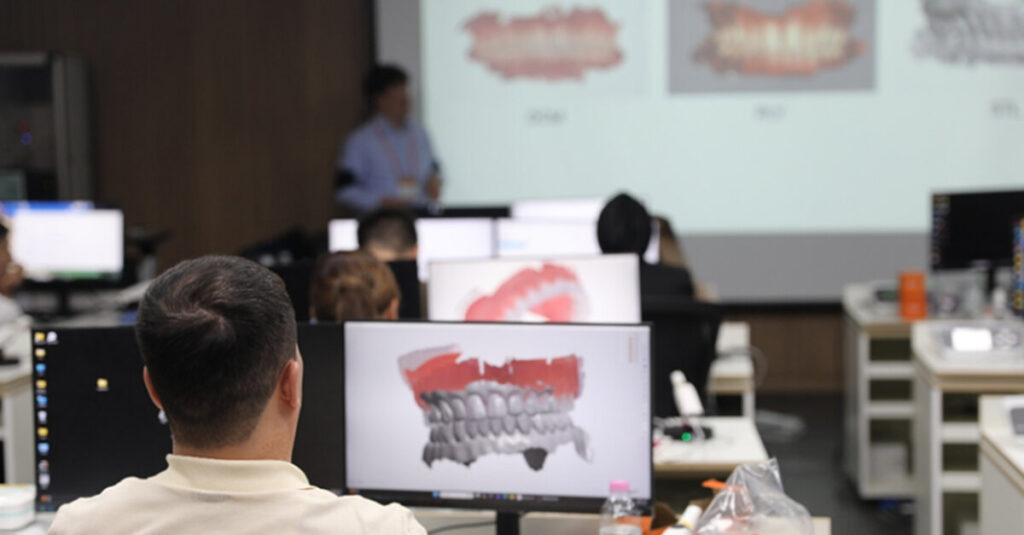
Educational formats include in-person masterclasses, courses on virtual planning, practical trainings on models and patient cases, as well as the online platform OSSTEM TV — this allows ensuring continuous professional development, monitoring of clinical outcomes and an accelerated feedback loop between field clinicians and protocol developers.
Geography as a strategic platform
Global dissemination in 32 countries and use in more than 360 000 clinical cases demonstrate the scale of implementation and provide a clinical base for assessing the effectiveness and safety of methods; at the same time the localization of educational programs and adaptation of protocols to regional anatomical-physiological and regulatory features is critically important.
Localization of protocols and the digital workflow
The development of ecosystem components — OneClick for electronic documentation, OneMS for planning and OneJet for high-precision 3D printing — ensures synchronization of treatment stages, simplifies data transfer between clinics and laboratories, and also accelerates the implementation of standardized and reproducible treatment algorithms.
Integration as a path to clinical predictability
The transition from fragmented stages to a unified digital workflow contributes to increased predictability of clinical outcomes and scaling of restorative and regenerative protocols; at the same time the role of the manufacturer is transformed into that of a strategic partner, who participates in the creation, validation and support of clinical protocols.
From a practical point of view for the clinician it is important to monitor outcomes, maintain patient registries and participate in educational initiatives — this accelerates the implementation of algorithms and improves the quality of treatment; as an expert remark I note that for sustainable integration it is necessary to combine standardized surgical kits, reliable digital documentation and continuous professional development programs.
Conclusion: OneGuide demonstrates the development of modern implantology as an integrated digital ecosystem, where precision, standardization and educational cooperation are key factors in improving the quality and predictability of clinical care.
Case report: Bleach‑shade full‑smile rehabilitation using KATANA Zirconia YML and CERABIEN ZR Introduction / Background Authors Kostia Vyshamirski and Dr
We use cookies to improve website performance, analyze traffic, and personalize content. You can accept all cookies or customize their use. Learn more in our Cookie Policy.
Functional
Always active
Technical storage or access is strictly necessary for the legitimate purpose of making possible the use of a particular service expressly requested by the subscriber or user, or solely for the purpose of carrying out the transmission of a message over an electronic communications network.
Preferences
The technical storage or access is necessary for the legitimate purpose of storing preferences that are not requested by the subscriber or user.
Statistics
Technical storage or access used solely for statistical purposes.The technical storage or access that is used exclusively for anonymous statistical purposes. Without a subpoena, voluntary compliance on the part of your Internet Service Provider, or additional records from a third party, information stored or retrieved for this purpose alone cannot usually be used to identify you.
Marketing
Technical storage or access is necessary to create user profiles for the purpose of sending advertising or to track a user across a website or multiple websites for similar marketing purposes.