Case report: Bleach‑shade full‑smile rehabilitation using KATANA Zirconia YML and CERABIEN ZR
Introduction / Background
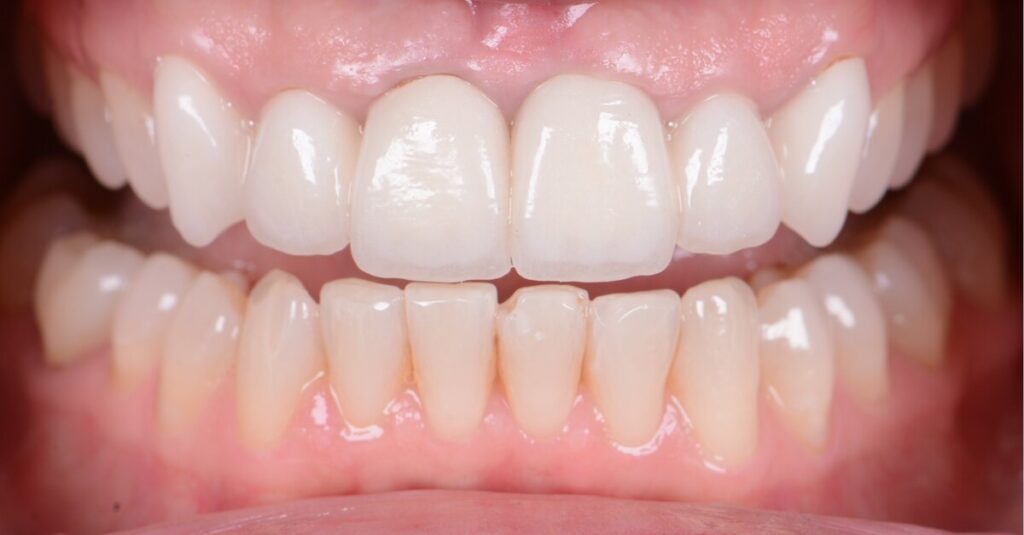
Authors Kostia Vyshamirski and Dr Omar Azzawi describe a single‑patient case published in digital—international magazine of digital dentistry (vol. 7, issue 1/2026) that combined digital design, 3D printing and traditional ceramic layering to produce 20 bleach‑shade, natural‑appearing restorations. The treatment integrated KATANA Zirconia YML, CERABIEN ZR porcelains and Noritake Super Porcelain EX‑3 (Kuraray Noritake Dental) with laboratory workflows intended to control both white and pink aesthetics while minimising tooth reduction.
What was performed
- Objective: Replace existing maxillary crowns and widen/brighten the smile by adding laminate veneers in the maxilla and mandible, producing a total of 20 restorations.
- Digital planning: Intra‑oral scans and facial portrait photographs were used to execute a digital smile design in DentalCAD (exocad). A diagnostic wax‑up was produced digitally, 3D printed and transferred to the mouth with a matrix for clinical try‑in and extra‑oral aesthetic evaluation.
- Model production and articulation: Master and alveolar models with removable dies were produced using SHERAeasy‑model software and an Asiga MAX UV 3D printer. Printed dies were duplicated with refractory die material and mounted on an articulator to transfer the maxillo‑mandibular relationship.
- Framework and ceramic fabrication:
- Six maxillary anterior crown frameworks were milled from KATANA Zirconia YML (Shade NW). Intaglio surfaces were treated with Esthetic Colorant (Shade Opaque) to mask substrate discoloration prior to sintering.
- Frameworks were sintered at 1,550 °C in a high‑temperature furnace (Nabertherm).
- CERABIEN ZR porcelains were layered onto the sintered zirconia frameworks. Internal staining with CERABIEN ZR internal stains was applied to create natural internal effects; layering included opacity control (OB White), body (NW0.5B), enamel (E1), and luster/enamel shades (LTX, ELT1, ELT3), with clear cervical application (CCV‑1). The interchangeable build‑up technique and a documented layering map were used during build‑up.
- Veneers for the maxillary premolars and mandibular central incisors through second premolars were fabricated on refractory dies using Noritake Super Porcelain EX‑3.
- Verification and try‑in: Restorations were assessed on the printed master models to confirm passive fit, interproximal contacts and integration, followed by intra‑oral try‑in.
- Cementation: Veneers were cemented adhesively using a resin composite protocol; the crowns were cemented with an opaque glass ionomer cement.
- Documentation and follow‑up: The team photographed each stage of porcelain build‑up and staining for procedure control. A recall at approximately one month assessed soft‑tissue response and aesthetic integration.
Key findings
- The workflow produced 20 bleach‑shade restorations combining KATANA Zirconia YML frameworks with CERABIEN ZR and Noritake Super Porcelain EX‑3 layering, aiming for a natural internal appearance and high brightness.
- Refractory die duplication enabled fabrication of thin‑walled restorations suitable for minimal preparation on teeth without major defects.
- Internal staining with CERABIEN ZR internal stains was used to reproducibly create mamelon and incisal effects between porcelain layers.
- Verification on 3D‑printed master models allowed passive fit and contact adjustment prior to definitive cementation.
- At the one‑month recall the authors reported healthy gingival conditions and a satisfactory integration of white and pink aesthetics.
Relevance for dental practice
- The case illustrates a combined digital‑analog workflow: digital smile design and CAD/CAM‑derived wax‑ups guide 3D printing, refractory die techniques and conventional ceramic layering to achieve a high‑value aesthetic result.
- KATANA Zirconia YML was used for anterior crowns where translucency and masking requirements were balanced by internal opaquer application and porcelain stratification.
- Using printed master models for passive‑fit verification and intra‑oral try‑in can reduce occlusal and contact adjustments at cementation.
- Photographic documentation of each laboratory step is highlighted as useful for protocol control and reproducibility when employing internal staining and multilayer porcelain techniques.
Limitations and context
This report describes a single clinical case with a follow‑up of approximately one month; it does not provide medium‑ or long‑term outcome data. Material and technique choices were tailored to this patient’s presentation and should be considered within the context of individual clinical indications. The article was originally published in digital—international magazine of digital dentistry, vol. 7, issue 1/2026.
SOURCE
https://www.dental-tribune.com/news/a-bright-new-smile-with-katana-zirconia-yml/