Main » Technologies » Modern orthodontic approaches to the correction of jaw anomalies: clinical significance of mandibular repositioning technology
Modern orthodontic approaches to the correction of jaw anomalies: clinical significance of mandibular repositioning technology
Orthodontics in the 21st century goes beyond traditional tooth alignment, gradually transforming into an interdisciplinary field focused on the comprehensive restoration of function and esthetics of the maxillofacial system. One of the key directions of this development is the correction of skeletal anomalies, in particular disorders of the mandibular position, which affect not only occlusion but also breathing, speech, and overall facial harmony. Against this backdrop, educational initiatives aimed at disseminating advanced clinical knowledge are becoming particularly important. The holding of a specialized master class by Smartee Denti‑Technology in Sydney at the invitation of the international organization Excellence in Orthodontics and Dentofacial Orthopedics (EODO) reflects the relevance of the topic and demonstrates the growing interest of the professional community in innovative orthodontic solutions.
International educational collaboration as a factor in industry development
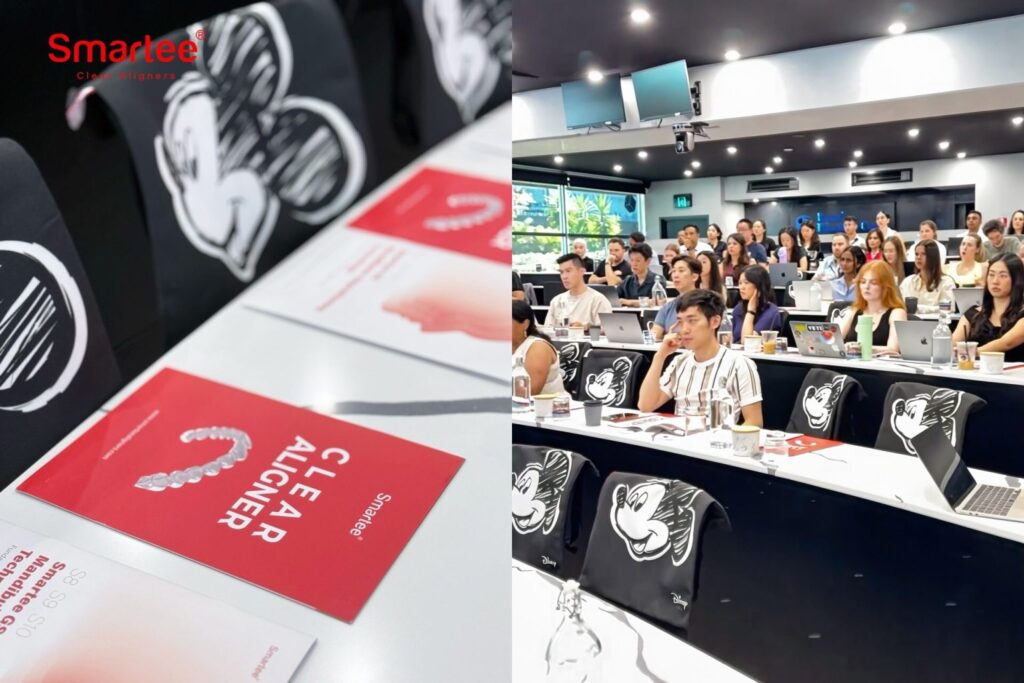
According to the information presented, the master class took place on February 7 at the Dental Education Centre in Sydney and brought together about 80 specialists, some of whom participated in person and others online. This format highlights the trend toward hybrid learning, which expands access to specialized knowledge and brings together professionals from different regions. The particular significance of such events lies not only in the transfer of theoretical information but also in the discussion of clinical protocols based on real‑life experience in treating complex cases. This contributes to the formation of a unified professional space in which innovations are more quickly implemented into practice.
Mandibular repositioning technology as a clinical breakthrough
The central theme of the master class was the Mandibular Advancement Repositioning Technology (MART) developed by Smartee. Unlike traditional orthodontic approaches focused primarily on tooth movement, this technique aims to eliminate the root cause of the pathology — improper mandibular position. The therapy provides simultaneous orthodontic and orthopedic effects, allowing not only the correction of occlusion but also the restoration of the functional balance of the maxillofacial system. This is especially important in the treatment of complex cases such as skeletal Class II and Class III anomalies, facial asymmetry, and temporomandibular joint disorders. The clinical significance of the technology is confirmed by its widespread use: to date, more than 100,000 treatment cases have been performed worldwide using this technique, indicating its effectiveness and reproducibility of results.
Clinical protocols and treatment predictability
During the master class, particular attention was paid to the development and application of standardized clinical protocols. Participants studied the principles of treatment planning taking into account anatomical and biological factors, including the patient’s age, type of anomaly, and bone tissue characteristics. This approach significantly improves the predictability of outcomes and minimizes the risk of complications. In modern dentistry, where patients have high demands regarding effectiveness and treatment duration, process standardization becomes a key factor in the quality of medical care.
The Australian market and the demand for esthetic orthodontics
Of particular interest is the context of the event — the Australian dental market, which is characterized by a high level of patient awareness and a steady demand for esthetic solutions. A significant portion of the adult population shows active interest in smile correction and is willing to consider modern treatment methods, including the use of clear aligners. This factor facilitates the rapid adoption of innovative technologies and makes Australia an important platform for testing and disseminating new clinical approaches. In this context, educational initiatives such as the master class under consideration act as catalysts for professional development.
The role of academic and clinical collaboration
Representatives of Smartee emphasize that their strategy for entering international markets is based not so much on commercial promotion as on the development of academic exchange and clinical training. This approach reflects the current trend of integrating science and practice, in which innovations are disseminated through the professional community rather than exclusively through marketing channels. Collaboration with international organizations such as EODO helps build sustainable educational networks and raise the overall level of specialist training, which ultimately has a positive impact on the quality of patient care.
Conclusion
Thus, the master class on mandibular repositioning held in Sydney represents a significant event in the context of the development of modern orthodontics. It demonstrates the industry’s transition toward more comprehensive and biologically based treatment methods aimed at addressing the causes of pathology rather than merely its symptoms. The relevance of this topic lies in the fact that technologies such as MART open up new possibilities for treating complex clinical cases and contribute to improving the effectiveness of orthodontic care. Combined with international educational collaboration, this is shaping a new model for the development of dentistry in which knowledge, technology, and global professional interaction play a key role.
Case report: Bleach‑shade full‑smile rehabilitation using KATANA Zirconia YML and CERABIEN ZR Introduction / Background Authors Kostia Vyshamirski and Dr
We use cookies to improve website performance, analyze traffic, and personalize content. You can accept all cookies or customize their use. Learn more in our Cookie Policy.
Functional
Always active
Technical storage or access is strictly necessary for the legitimate purpose of making possible the use of a particular service expressly requested by the subscriber or user, or solely for the purpose of carrying out the transmission of a message over an electronic communications network.
Preferences
The technical storage or access is necessary for the legitimate purpose of storing preferences that are not requested by the subscriber or user.
Statistics
Technical storage or access used solely for statistical purposes.The technical storage or access that is used exclusively for anonymous statistical purposes. Without a subpoena, voluntary compliance on the part of your Internet Service Provider, or additional records from a third party, information stored or retrieved for this purpose alone cannot usually be used to identify you.
Marketing
Technical storage or access is necessary to create user profiles for the purpose of sending advertising or to track a user across a website or multiple websites for similar marketing purposes.