Main » Uncategorized » Minimally Invasive Oral Care MIOC: international consensus and formation of reproducible clinical practice
Minimally Invasive Oral Care MIOC: international consensus and formation of reproducible clinical practice
Modern dentistry is undergoing a large-scale transformation, accompanied by a shift of emphasis toward prevention, digital tools, and interdisciplinary cooperation in oral care.
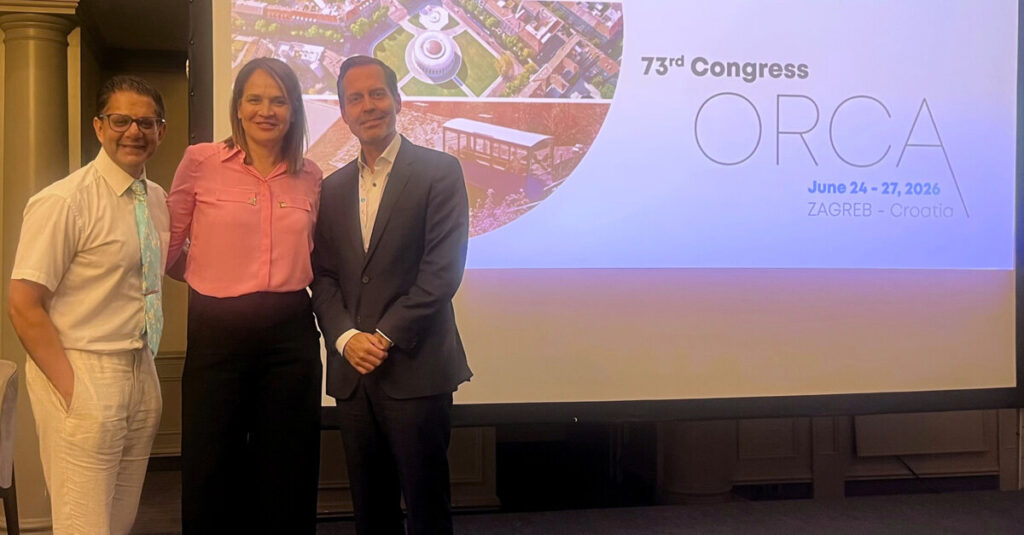
The symposium of the International Minimal Intervention Oral Care Society (MI Society), held within ORCA 2026 in Zagreb, presented an international expert consensus and practical strategies to accelerate the implementation of minimally invasive oral care (MIOC), including caries risk assessment algorithms, remineralization strategies, tissue-preserving restorations, and integration of digital workflows.
The MIOC system as a key factor in transforming clinical practice
The MIOC approach should be considered not as a set of discrete techniques but as a systemic strategy that unites evidence-based medicine, materials science, and clinical navigation to achieve reproducible clinical outcomes, reduce iatrogenic damage, and optimize costs throughout the tooth’s life cycle.
Clinical components
The key elements of clinical focus include assessment of patient susceptibility and risk stratification (caries risk assessment), early diagnosis using optical and radiographic methods, selective removal of carious tissue with priority given to preserving dentin structure, adhesive restorative protocols, use of bioactive materials to support remineralization, integration of minimally invasive endodontic and periodontal interventions, as well as the use of digital tools — intraoral scanning, CAD/CAM processing and 3D radiography for planning and monitoring.
Educational and organizational synchronization
To ensure reproducibility of clinical outcomes, synchronization of educational programs is required — implementation of competency-oriented training modules, simulation of tissue-preserving techniques, standardized teaching cases and continuous professional development; at the organizational level — development of quality protocols, clinical pathways and feedback mechanisms for auditing outcomes and evaluating implementation effectiveness.
Consensus and its deconstruction: recommendations and implementation
The consensus document serves both as an analytical compendium of evidence and as a practical tool — it proposes standardized clinical decision-making algorithms, criteria for selecting restorative materials and methods, outcome metrics for registration and audit, as well as benchmarks for educational validation and regulatory alignment.
Special attention was paid to validation of materials and techniques in the context of long-term predictability: assessment of adhesion, resistance to microleakage, bioactive properties and the ability to sustain remineralization through controlled clinical trials and patient registries is a key condition for widespread implementation.
Implementation requires cross-sector interaction — clinicians, academic centers, material manufacturers, regulators and insurers must align criteria of effectiveness, financing instruments and training standards; otherwise the risk of practice fragmentation and outcome variability will remain high.
Zagreb as a strategic venue
Holding the symposium within ORCA 2026 in Zagreb demonstrated the value of regional congresses as platforms for practical validation of recommendations: participants presented clinical cases, discussed adaptation of protocols in primary dental care, analyzed implementation of digital workflows in resource-limited settings and assessed barriers related to workforce training and regulatory requirements.
Such events contribute to the formation of a reproducible educational ecosystem: exchange of experience in live sessions and master classes accelerates the translocation of evidence into practice, identifies problematic bottlenecks and allows prompt adjustment of clinical algorithms taking into account real working conditions.
Practical recommendations for clinicians
Clinicians are recommended to implement MIOC through a phased strategy: systematic assessment of patient risk and personalization of prevention, preference for adhesive and tissue-preserving methods in restoration, use of clinical registries for outcome monitoring and participation in interdisciplinary educational programs; it is critical to document treatment results and participate in local initiatives to standardize protocols to ensure reproducibility.
Conclusions
The MI Society symposium at ORCA 2026 confirmed that the transition to minimally invasive treatment models requires synchronization of standards, clinical validation of methods and the formation of reproducible educational practices; successful transformation of the clinical paradigm will depend on coordinated efforts of clinicians, academic institutions, manufacturers and regulators to integrate evidence-based medicine into everyday practice.
Modern dentistry is undergoing an intensive transformation, in which digital technologies, patients’ aesthetic expectations and interdisciplinary cooperation are shaping new
We use cookies to improve website performance, analyze traffic, and personalize content. You can accept all cookies or customize their use. Learn more in our Cookie Policy.
Functional
Always active
Technical storage or access is strictly necessary for the legitimate purpose of making possible the use of a particular service expressly requested by the subscriber or user, or solely for the purpose of carrying out the transmission of a message over an electronic communications network.
Preferences
The technical storage or access is necessary for the legitimate purpose of storing preferences that are not requested by the subscriber or user.
Statistics
Technical storage or access used solely for statistical purposes.The technical storage or access that is used exclusively for anonymous statistical purposes. Without a subpoena, voluntary compliance on the part of your Internet Service Provider, or additional records from a third party, information stored or retrieved for this purpose alone cannot usually be used to identify you.
Marketing
Technical storage or access is necessary to create user profiles for the purpose of sending advertising or to track a user across a website or multiple websites for similar marketing purposes.