Main » Technologies » Digital workforce in dentistry: transforming operational processes through AI agents
Digital workforce in dentistry: transforming operational processes through AI agents
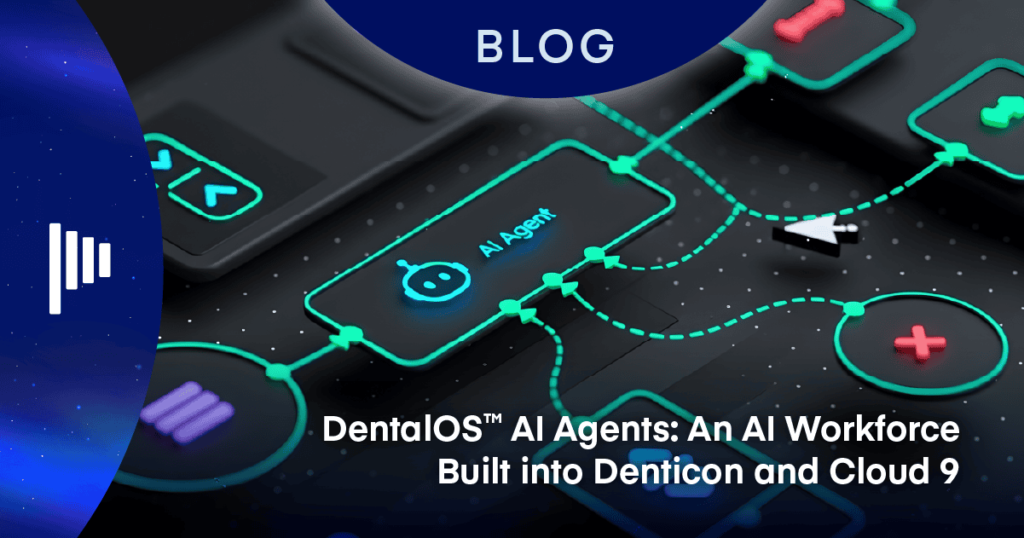
Modern dentistry is undergoing a deep organizational transformation, in which not only the development of clinical technologies but also a rethinking of management processes is becoming crucial. The growing number of patients, the expansion of network structures, and the increasing complexity of administrative tasks are creating a sustained demand for new scaling tools capable of ensuring efficiency without a proportional increase in resources. In this context, the concept of “AI agents,” presented in the Planet DDS publication, reflects the transition from traditional automation to the formation of a full‑fledged digital working environment in which artificial intelligence becomes an active participant in operational activities.
Limitations of the traditional management model
The classic organizational structure of dental clinics, based on human labor, demonstrates its limitations as the business grows. An increase in the number of appointments inevitably leads to a greater workload on the front desk, more complex patient communication, and an accumulation of administrative tasks requiring constant attention. In these conditions, even minor disruptions — such as missed calls or untimely appointment confirmations — lead to significant financial losses and reduced operational efficiency.
Particularly telling is the problem of patient no‑shows, which, according to industry estimates, reaches significant levels and directly affects physician workload and revenue stability. At the same time, traditional solutions — such as expanding staff or tightening control — prove either economically unviable or insufficiently effective in the long term. Thus, there arises a need to transition to a different logic of process organization, based not on automating individual tasks but on automating the entire system of patient interaction.
The concept of AI agents as a new organizational paradigm
Within the DentalOS platform, a fundamentally new approach is proposed, involving the use of autonomous AI agents functioning as “digital employees.” Unlike traditional software solutions that perform limited functions, these agents are integrated directly into the core of the clinic management system and work with the same data as the staff, including the schedule, medical records, and patient interaction history.
This architecture allows a transition from fragmented automation to an end‑to‑end process execution model, in which information analysis and subsequent actions are united into a single chain. AI agents are capable not only of interpreting data but also of initiating specific actions — including confirming visits, managing schedules, and processing inquiries — which fundamentally distinguishes them from traditional decision‑support tools.
Functional logic and operational mechanisms
A key feature of the model under consideration is its focus on continuous real‑time data processing, which ensures high response speed and minimizes the need for manual intervention. AI agents analyze the current clinic workload, take patient behavior into account, and automatically make decisions aimed at optimizing the schedule and improving the efficiency of resource use.
At the same time, an important element of the system remains the escalation mechanism, which allows tasks to be transferred to staff in cases requiring a clinical or individualized approach. Thus, a hybrid model is formed in which digital and human resources do not compete but rather complement each other, ensuring a balance between automation and professional oversight.
Practical implementation and operational effects
The most noticeable results of implementing AI agents are seen in the administrative sphere, primarily in the front desk area, where the largest number of repetitive tasks are concentrated. Automating appointment confirmations significantly reduces no‑show rates while ensuring more stable physician workload, while intelligent schedule management makes it possible to promptly fill open time slots by working with waiting lists and deferred inquiries.
This approach leads to a comprehensive improvement in operational metrics, including increased patient engagement, reduced inquiry processing time, and a decreased burden on staff. It is important to emphasize that the achieved effect is not due to individual system functions but to their integration into a single logical structure that ensures consistency at all stages of patient interaction.
Scalability and economic sustainability
One of the key advantages of the AI agent model is its ability to scale without significantly increasing costs. Unlike a traditional system, where business growth requires staff expansion, a digital workforce can be replicated with virtually no limitations, providing the same level of quality and speed of task execution at any point in the network.
From an economic perspective, this leads to lower operating costs, increased clinic occupancy, and improved financial performance. Greater efficiency in using doctors’ time, reduced losses associated with no‑shows, and optimization of administrative processes create a sustainable development model capable of adapting to changes in the external environment.
Rethinking the role of staff
The implementation of AI agents is not intended to displace human labor but, on the contrary, facilitates its reorientation toward more complex and meaningful tasks. Freeing staff from routine operations allows them to focus on patient interaction, handling non‑standard situations, and improving service quality.
This approach aligns with current trends in medicine, where technology is used to enhance professional competencies rather than replace them. As a result, a new model of interaction is formed, in which humans and artificial intelligence function as elements of a unified system, providing a higher level of efficiency and sustainability.
Conclusion
The considered concept of AI agents demonstrates dentistry’s transition to a new organizational paradigm based on the deep integration of intelligent technologies into everyday processes. Its significance lies in its ability to solve the fundamental problem of scaling, ensuring growth without increasing the burden on human resources.
The relevance of this approach is driven by the need for dental organizations to adapt to the conditions of the digital economy, where the key success factor is not only the quality of clinical work but also management efficiency. In this context, AI agents act not merely as a technological innovation but as the foundation for shaping a new healthcare model in which automation, analytics, and clinical practice are combined into a single, coherent system.
One endodontic system, multiple motions: case-based approaches to routine challenges Introduction / background Root canal anatomy and its variations remain
We use cookies to improve website performance, analyze traffic, and personalize content. You can accept all cookies or customize their use. Learn more in our Cookie Policy.
Functional
Always active
Technical storage or access is strictly necessary for the legitimate purpose of making possible the use of a particular service expressly requested by the subscriber or user, or solely for the purpose of carrying out the transmission of a message over an electronic communications network.
Preferences
The technical storage or access is necessary for the legitimate purpose of storing preferences that are not requested by the subscriber or user.
Statistics
Technical storage or access used solely for statistical purposes.The technical storage or access that is used exclusively for anonymous statistical purposes. Without a subpoena, voluntary compliance on the part of your Internet Service Provider, or additional records from a third party, information stored or retrieved for this purpose alone cannot usually be used to identify you.
Marketing
Technical storage or access is necessary to create user profiles for the purpose of sending advertising or to track a user across a website or multiple websites for similar marketing purposes.