Main » Uncategorized » Dental Innovations as a Result of Transdisciplinary Convergence: Osseointegration, Artificial Intelligence, and Technology Adaptation
Dental Innovations as a Result of Transdisciplinary Convergence: Osseointegration, Artificial Intelligence, and Technology Adaptation
Dentistry is often presented as an independent field of knowledge with its own dynamics of development. However, reality is considerably more complex: many key technologies that have transformed modern practice originated in completely different areas of science and engineering, and were subsequently adapted to solve problems of the oral cavity.
Osseointegration: A Case in a Rabbit’s Paw
A classic example of such borrowing is the discovery of osseointegration (the process of biological fusion of metal with bone tissue). Paradoxically, this foundation of modern implantology did not arise from dental research, but from a medical accident.
In the 1960s, Swedish scientist and anatomist Per-Ingvar Brånemark was studying bone tissue healing. He inserted a titanium optical chamber into a rabbit’s tibia to observe microcirculation of bone marrow. However, it proved impossible to extract the device: the bone tissue had fused so firmly with the titanium that they became a single unit. This procedural failure became an epiphany. Brånemark hypothesized that the same principle could be used in the jawbones of humans. From the late 1960s onwards, he began experimenting with titanium implants in patients. For a long time the dental community was skeptical of the method, but the accumulation of long-term data changed the situation. By the late 1980s and early 1990s, osseointegration had become the recognized foundation of implantology.
Regenerative Dentistry: From Stem Cells to Living Tissues
One of the most promising directions in modern dentistry is regenerative dentistry, which relies on the body’s capacity to independently restore dental tissues. Although dentists had been studying reparative dentinogenesis since the 1950s, the breakthrough occurred in the early 2000s, when researchers first isolated stem cells from the pulp of adult teeth.
One of the key discoveries was made by scientist Songtao Shi, who studied a baby tooth lost by his six-year-old daughter. He discovered a rapidly proliferating population of stem cells—a source that was more ethically sound from a scientific standpoint than previously used options. This development was the result of convergence of three disciplines: regenerative medicine, stem cell biology, and tissue engineering. As with osseointegration, regenerative dentistry developed through borrowing from neighboring areas of science.
Computer Vision and Artificial Intelligence
The development of AI in dentistry is also a result of independent advancement in other fields. Computer vision originated in computer science in the mid-twentieth century, where researchers faced a theoretical question: can a machine interpret visual information the way humans do?
The breakthrough occurred in the 1980s–1990s, when increased computational power allowed computers to analyze increasingly complex visual data. Simultaneously, dentistry began generating enormous volumes of digital images through digital radiography, CAD/CAM systems, intraoral scanning, and cone-beam computed tomography—but initially these technologies were developed to enhance clinical efficiency, not for use with AI. Synergy emerged by chance: image analysis algorithms, created independently, proved to be perfectly compatible with digital dental data.
Biofilms: Microbiology in the Oral Cavity
For a long time, dentists viewed dental plaque as a simple accumulation of individual bacterial cells. The revolution occurred in the 1970s, when American microbiologist John Costerton and his colleagues developed the modern understanding of biofilms—organized microbial communities with their own chemical communication and collective behavior.
Initially, biofilm research concerned industrial and natural surfaces: ship hulls, filtration systems, soil. This knowledge was later integrated into medicine through the study of chronic infections and, ultimately, into dentistry. Understanding plaque as a dynamic, multispecies microbial community fundamentally changed the approach to prevention and treatment of caries and periodontal disease: the emphasis shifted from simple plaque removal to maintaining a healthy microbiological balance of the oral cavity.
3D Printing: From Science Fiction to Clinical Reality
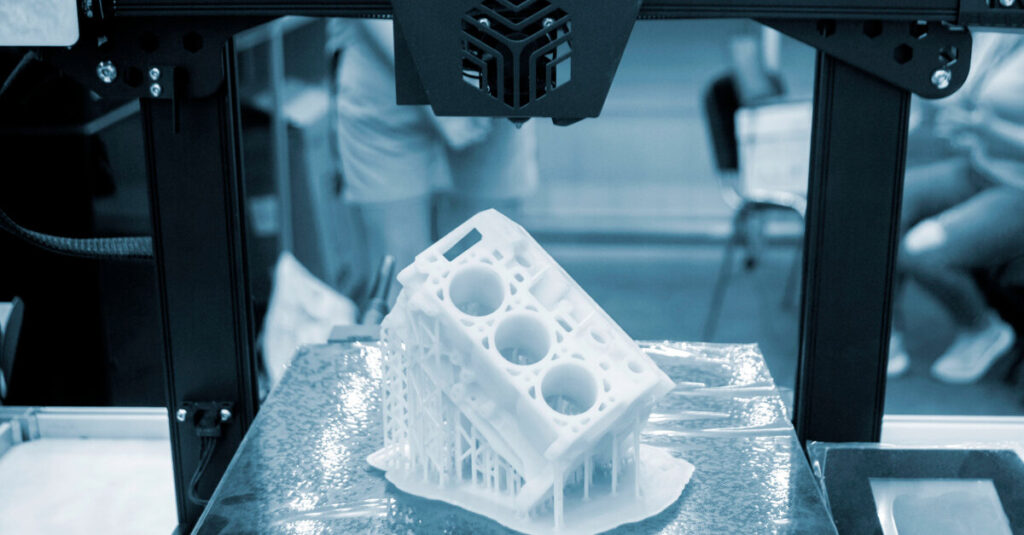
The history of 3D printing does not begin in dentistry or in science, but in science fiction. In 1945, American writer Murray Leinster described a machine capable of forming objects from liquid plastic. Real development of the technology began in the 1980s in the automotive, aerospace, and consumer industries—for rapid prototyping. Dentistry remained on the sidelines for a long time.
Adaptation occurred due to coincidence of data formats. 3D printing requires digital three-dimensional models that it can physically reproduce. Simultaneously (independently of 3D printing development), dentistry was generating a growing volume of digital 3D models through intraoral scanning and CBCT. These data were creatively adapted for additive manufacturing—
Variability in the interpretation of dental radiographs between clinicians remains a significant problem, and research documents low detection rates for
We use cookies to improve website performance, analyze traffic, and personalize content. You can accept all cookies or customize their use. Learn more in our Cookie Policy.
Functional
Always active
Technical storage or access is strictly necessary for the legitimate purpose of making possible the use of a particular service expressly requested by the subscriber or user, or solely for the purpose of carrying out the transmission of a message over an electronic communications network.
Preferences
The technical storage or access is necessary for the legitimate purpose of storing preferences that are not requested by the subscriber or user.
Statistics
Technical storage or access used solely for statistical purposes.The technical storage or access that is used exclusively for anonymous statistical purposes. Without a subpoena, voluntary compliance on the part of your Internet Service Provider, or additional records from a third party, information stored or retrieved for this purpose alone cannot usually be used to identify you.
Marketing
Technical storage or access is necessary to create user profiles for the purpose of sending advertising or to track a user across a website or multiple websites for similar marketing purposes.