The autumn-winter 2025 issue of Dental Asia China magazine is a practice-oriented publication aimed at dental clinicians and dental laboratory specialists. The issue’s materials focus on modern clinical solutions and technologies that are already shaping the standards of orthodontic, endodontic, and therapeutic treatment. Central attention is given to additive technologies in orthodontics, the use of bioceramic materials in endodontic retreatment, and predictive algorithms for Class II restoration.
Additive technologies in orthodontics: from digital design to clinic
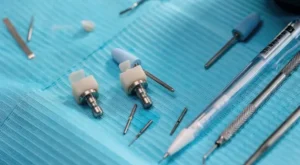
One of the key publications in this issue focuses on 3D metal printing in orthodontics and examines the complete technological cycle of manufacturing customized orthodontic appliances. The authors provide a detailed analysis of the stages of digital design in a CAD environment, the specifics of additive manufacturing of metal components, and their subsequent clinical integration. Particular attention is given to the selection of alloys considering biocompatibility and mechanical properties, as well as post-processing of the products, including heat treatment and final polishing.
The practical value of the material lies in its emphasis on controlling the precision fit of orthodontic appliances and fostering collaboration between clinicians and laboratories. It underscores that implementing 3D printing requires not only technological readiness but also well-established workflows to ensure consistent clinical outcomes. A detailed analysis is presented on page 18 of the issue.
Bioceramics in root canal retreatment: opportunities and limitations
The endodontic section of this issue is dedicated to the use of modern bioceramic materials in retreatment procedures. The article examines the properties of calcium silicate-based bioceramic cements and sealers, their adhesive characteristics, and behavior in retreatment scenarios. The authors analyze the ability of these materials to restore apical seal integrity, as well as their interaction with previously used obturation systems.
Particular interest lies in the discussion of clinical challenges that arise when removing old materials and addressing altered root canal anatomy. The material not only highlights the advantages of bioceramics in terms of bioinertness and sealing ability but also critically evaluates the indications for their use in retreatment. An in-depth clinical analysis is published on page 28 of the journal.
Class II restorations: a predictable approach to restoring the first premolar
The therapeutic section of this issue is dedicated to clinical guidelines for restoring Class II defects in first premolars with proximal caries. The article presents a step-by-step protocol for planning and executing restorations, from the preparation stage through the assessment of occlusal contacts. It addresses topics such as selecting an adhesive strategy, incremental composite layering technique, and preserving the maximum amount of healthy tooth structure.
The authors emphasize the nuances of establishing proper interproximal contact and the impact of these factors on restoration longevity. The significance of a minimally invasive approach and strict adherence to clinical protocols for preventing caries recurrence and functional complications is underscored. A detailed breakdown of the clinical algorithm is available on page 41 of the issue.
Practical value of the issue and clinical insights
Overall, this issue of Dental Asia China is focused on enhancing the quality of clinical decisions and the efficiency of collaboration between clinicians and laboratories. The presented materials demonstrate that the successful implementation of 3D metal printing is only possible with careful alloy selection and control over all post-processing stages. In endodontics, the advantages of bioceramic materials in retreatment are confirmed, provided there is a balanced assessment of indications and procedural complexity. In therapeutic practice, particular emphasis is placed on reproducible algorithms for Class II restorations, ensuring longevity and biomechanical stability of the outcome.
Modern dentistry is unimaginable without high-precision rotary instruments, among which straight and contra-angle handpieces hold a special place. These devices
We use cookies to improve website performance, analyze traffic, and personalize content. You can accept all cookies or customize their use. Learn more in our Cookie Policy.
Functional
Always active
Technical storage or access is strictly necessary for the legitimate purpose of making possible the use of a particular service expressly requested by the subscriber or user, or solely for the purpose of carrying out the transmission of a message over an electronic communications network.
Preferences
The technical storage or access is necessary for the legitimate purpose of storing preferences that are not requested by the subscriber or user.
Statistics
Technical storage or access used solely for statistical purposes.The technical storage or access that is used exclusively for anonymous statistical purposes. Without a subpoena, voluntary compliance on the part of your Internet Service Provider, or additional records from a third party, information stored or retrieved for this purpose alone cannot usually be used to identify you.
Marketing
Technical storage or access is necessary to create user profiles for the purpose of sending advertising or to track a user across a website or multiple websites for similar marketing purposes.