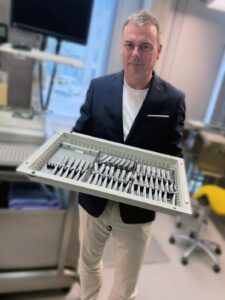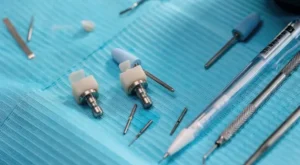
SprintRay announced the acquisition of the dental product portfolio of EnvisionTEC/ETEC (formerly part of Desktop Health). The deal includes patents, trademarks, inventory, and other intellectual property related to dental materials and 3D printing technologies, which the company positions as strengthening its focus on dentistry and ensuring the availability of certified materials and equipment for clinics and dental laboratories.
Portfolio and technological assets
As part of the deal, SprintRay acquired the technical and commercial assets of EnvisionTEC—one of the early companies in dental 3D printing, which had built up a substantial portfolio over >20 years with over 200 patents for hardware and material solutions.
- Hardware platforms: patented cDLM (continuous digital light manufacturing) technology in the Envision One system and the Einstein family of DLP-based printers;
- Materials: including Flexcera — a hybrid nano-ceramic resin for printing removable dentures, designated as FDA 510(k) Class II cleared, CE Marked, and MDR Class I certified;
- Intellectual property and inventory: patents, trademarks, material stock, and accompanying documentation.
Integration priorities and support
SprintRay has announced a series of operational initiatives to minimize disruption risks for current EnvisionTEC/Desktop Health users:
- Providing dedicated technical support for existing clients;
- Continuing the production and supply of EnvisionTEC and Desktop Health resins, including Flexcera, to ensure workflow continuity;
- Conducting cross-platform validation of material and printer compatibility between SprintRay and EnvisionTEC/Desktop Health platforms;
- Strengthening its position in the laboratory 3D printing market through technologies and materials tailored for dental laboratories.
Results
According to SprintRay, the deal provides the company with access to proven technologies, a substantial intellectual property portfolio, and an established customer base of dental clinics and laboratories, which is expected to enable the expansion of its product line for both chairside and laboratory applications.
Amir Mansouri, co-founder and CEO of SprintRay, stated that the acquisition ensures continued access for customers to tools and support, strengthens the company’s position in dental laboratories, and reaffirms its commitment to the mission of transforming dentistry through accessible and reliable 3D technologies.
Clinical significance
For clinics and dental laboratories, the key practical implications of the deal include:
- Supply and support guarantee: Continued technical support and supplies of EnvisionTEC/Desktop Health materials have been announced, reducing the risk of disruptions to current production and clinical protocols;
- Cross-validation potential: Conducting compatibility validations may expand the list of verified printer-material combinations, providing laboratories and clinics with greater flexibility in selecting certified workflows;
- Strengthening laboratory offerings: The integration of EnvisionTEC technologies could lead to the development of specialized solutions and materials for fabricating fixed restorations, removable dentures, and auxiliary products in dental laboratories;
- Regulatory status: No new clinical indications or changes to material registration statuses were announced at the time of the announcement—current markings (including FDA 510(k), CE, MDR) remain key guidelines for material usage.
Practical recommendations for clinics and laboratories
Recommended tactics for the transition period:
- Maintain current stocks of critical materials, including those used in certified workflows;
- Approve and document any changes in work procedures after receiving cross-validation results;
- Verify the labeling and manufacturer’s instructions before using materials in clinical or laboratory work;
- If necessary, contact the dedicated SprintRay support service in advance to schedule equipment maintenance and ensure operational continuity.
Expert commentary
From a technological integration perspective, key risks remain—potential differences in printing profiles (polymerization, post-processing, mechanical properties) when using resins on printers from different platforms, and the need to revalidate workflow parameters to ensure reproducibility and compliance with clinical requirements. For dental laboratories, this means that before mass adoption of new “material-printer” combinations, they should conduct test batches and mechanical/microscopic testing of the final restorations.