Main » Uncategorized » Oral Cancer Screening in Medical Education: The Gap Between Knowledge and Clinical Practice in the West Bank
Oral Cancer Screening in Medical Education: The Gap Between Knowledge and Clinical Practice in the West Bank
A study conducted on the West Bank revealed a significant gap between the theoretical knowledge of medical students about oncological risks and their clinical practice in oral cancer screening. This discrepancy indicates a critical need to improve educational programs and integrate dental knowledge into medical education.
Methodology and study sample
A cross-sectional study included a survey of 488 medical students and interns from five universities on the West Bank regarding their knowledge of oral cancer and clinical practice in the field of primary screening and prevention. Participants were assessed on two parameters: awareness of risk factors and actual conduct of clinical examination in routine practice.
Level of knowledge about risk factors for oral cancer development
The study demonstrated that awareness of risk factors was heterogeneous and dependent on the type of risk. The strongest knowledge concerned behavioral risk factors — tobacco smoking and alcoholism, which can be explained by more active dissemination of information about these potentially dangerous habits in general medical education.
However, significant gaps were revealed in the recognition of other important factors. Less than half of the participants correctly identified the tongue and floor of the mouth as high-risk anatomical sites for cancer development. Recognition of non-traditional risk factors was even lower: only one in three participants identified low consumption of fruits and vegetables as a potential risk factor, and fewer than a third mentioned poorly fitting dentures as a possible causative agent.
Discrepancy between knowledge and clinical practice
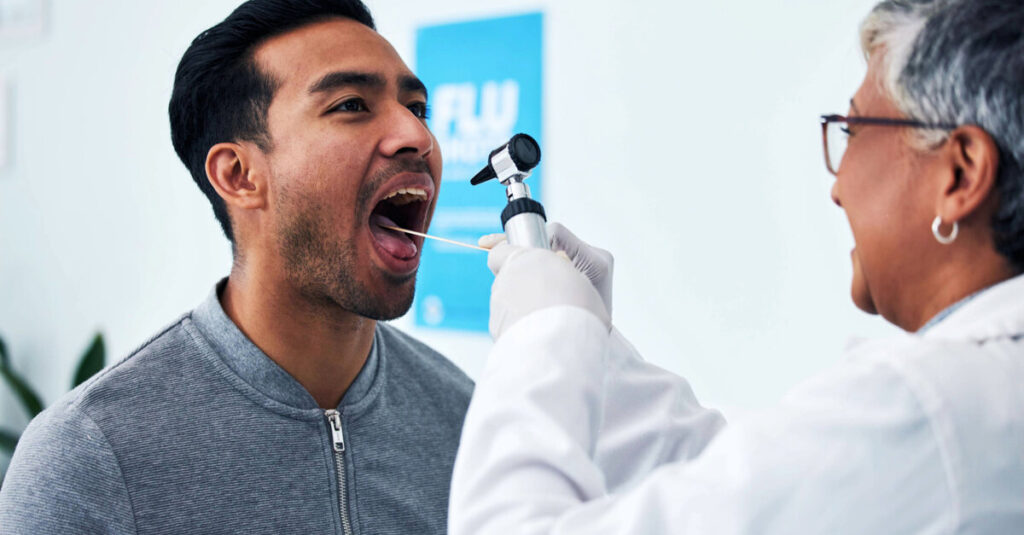
The most obvious discrepancy was found when comparing history-taking and physical examination. Although approximately four-fifths of participants reported that they regularly question patients about tobacco use, and nearly three-quarters provide advice on cessation, less than half report examination of the oral mucosa, and only two out of five spoke of active examination and assessment of suspicious lesions upon their detection.
The weak correlation between knowledge indicators and clinical practice points to the absence of a direct relationship between theoretical understanding of oncological risks and confidence in performing physical examination. This gap indicates the need to develop practical skills and clinical confidence, in addition to the translation of theoretical knowledge.
Impact of the stage of training on clinical competence
Indicators of clinical practice significantly increased in the fourth year of medical training, coinciding with the beginning of clinical rotations. This demonstrates the critical role of structured mentorship and practical experience in developing oral cancer screening skills. Earlier training limited to theoretical knowledge without practical application is insufficient for developing clinical competence in the field of oncological diagnosis.
Recommendations for improving educational programs
The study authors recommended implementing several key changes in medical education: earlier structured training in the fundamentals of oral cancer screening, increased volume of practical classes with simulation and real patients, strengthening collaboration between departments of medicine and dentistry. Such an integrated approach should begin in the early stages of medical training, rather than being postponed until clinical rotations.
These recommendations are consistent with the results of other studies confirming the effectiveness of structured educational programs in improving both theoretical knowledge and clinical practice among dental specialists and medical students.
Global context of gaps in oncological training
The obtained data are consistent with broader concerns about the translation of oncological knowledge into clinical practice. Similar gaps have been identified in other regions: previously, gaps were recorded in both theoretical and clinical knowledge of oral oncology among practicing dentists in Turkey, which also indicates the need for improved specialist training regardless of geographic region and health care system.
The study was published in the journal BMC Oral Health on July 31, 2026 and represents a significant contribution to understanding educational gaps in the field of oral oncology.
A prospective population-based cohort study examined for the first time the relationship between early childhood systemic inflammatory response and the
We use cookies to improve website performance, analyze traffic, and personalize content. You can accept all cookies or customize their use. Learn more in our Cookie Policy.
Functional
Always active
Technical storage or access is strictly necessary for the legitimate purpose of making possible the use of a particular service expressly requested by the subscriber or user, or solely for the purpose of carrying out the transmission of a message over an electronic communications network.
Preferences
The technical storage or access is necessary for the legitimate purpose of storing preferences that are not requested by the subscriber or user.
Statistics
Technical storage or access used solely for statistical purposes.The technical storage or access that is used exclusively for anonymous statistical purposes. Without a subpoena, voluntary compliance on the part of your Internet Service Provider, or additional records from a third party, information stored or retrieved for this purpose alone cannot usually be used to identify you.
Marketing
Technical storage or access is necessary to create user profiles for the purpose of sending advertising or to track a user across a website or multiple websites for similar marketing purposes.