Main » Uncategorized » Virtual Reality in Pediatric Dentistry: 25 Years of Research and the Transformation of Behavioral Management
Virtual Reality in Pediatric Dentistry: 25 Years of Research and the Transformation of Behavioral Management
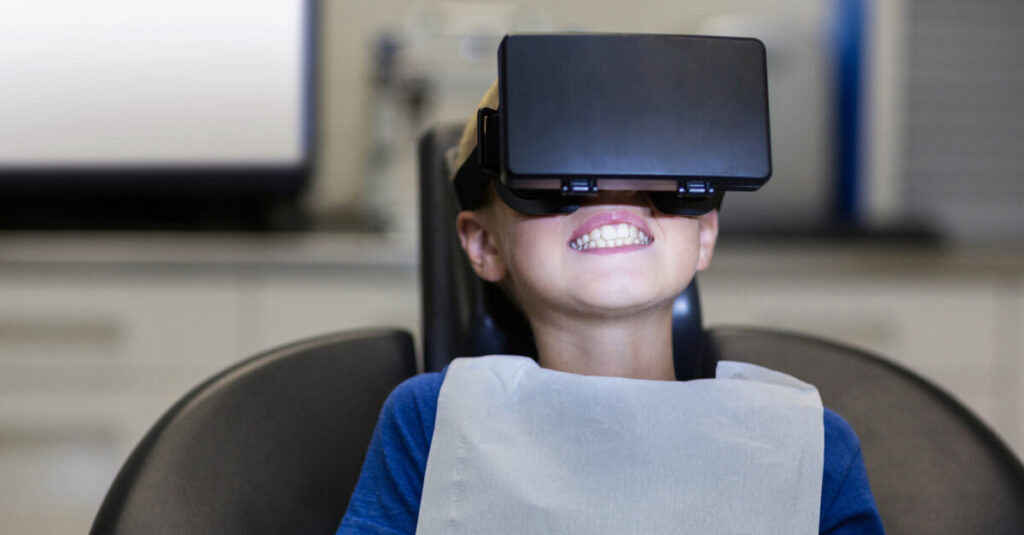
A new bibliometric analysis confirms that virtual reality has firmly taken the leading position in research on digital methods for managing patient behavior in pediatric dentistry. Accumulating clinical data demonstrate its effectiveness in reducing anxiety and pain during treatment.
Digital methods in managing children’s behavior
Traditional behavioral management techniques remain an integral part of pediatric dentist’s work when treating anxious and uncooperative patients. However, digital technologies are actively being implemented in this field. The latest bibliometric analysis, covering 25 years of global research, shows a transformation in the approach to managing children’s behavior through virtual reality (VR), audiovisual distraction, and mobile technologies. VR stands out as the most promising and developing research direction.
Growing attention to technologies
The analysis reflected a significant expansion of publications over the past decade. Researchers explain this by increased interest in non-pharmacological strategies aimed at improving children’s experience during dental visits, reducing anxiety, and enhancing cooperativeness.
Among all digital interventions, VR is the main subject of research. Clinical data indicate that immersive VR distraction typically reduces procedural anxiety and subjective pain perception during various interventions, including restorative procedures and local anesthesia administration. A 2023 systematic review, which included 22 randomized controlled trials, concluded that VR is effective in reducing anxiety and pain and improving overall treatment experience in children, although additional high-quality research is needed for standardization of clinical application.
Focus on short-term outcomes and research gaps
The bibliometric analysis revealed that audiovisual distraction remains an established area of research, but in recent years attention has shifted toward more immersive VR systems. However, research continues to focus predominantly on immediate, procedure-related outcomes — primarily on anxiety and pain. Long-term outcomes of oral health status and patient behavior have received less attention. The authors noted that addressing these gaps would enhance the clinical relevance of future studies.
International collaboration exists but remains concentrated in a limited number of countries and research groups, primarily in India, the United States, and Saudi Arabia with participation of some European and Asian centers. Intercontinental connections remain weak. The authors point out that cultural context, technological infrastructure, and content design affect the effectiveness and acceptability of digital methods, so multicenter and cross-cultural collaboration could improve the generalizability of results.
From concept to clinical practice
The growing volume of research demonstrates a transition of digital behavior management from an emerging concept to a useful supplement to traditional techniques. Although cost, equipment availability, and staff training remain barriers to widespread implementation, commercially available VR systems are becoming more accessible and easier to integrate into standard practice.
The review also points to significant gaps in available data. There is substantial variability in outcome measures and descriptions of intervention characteristics. Greater standardization would facilitate comparisons and translation of research into clinical practice.
The study “Digital behavior management in pediatric dentistry: A bibliometric analysis (2000–2025)” was published in July 2026 in Saudi Dental Journal.
Minimally invasive oral care (MIOC) represents a transition from a predominantly procedure-oriented model to a personalized approach in oral healthcare,
We use cookies to improve website performance, analyze traffic, and personalize content. You can accept all cookies or customize their use. Learn more in our Cookie Policy.
Functional
Always active
Technical storage or access is strictly necessary for the legitimate purpose of making possible the use of a particular service expressly requested by the subscriber or user, or solely for the purpose of carrying out the transmission of a message over an electronic communications network.
Preferences
The technical storage or access is necessary for the legitimate purpose of storing preferences that are not requested by the subscriber or user.
Statistics
Technical storage or access used solely for statistical purposes.The technical storage or access that is used exclusively for anonymous statistical purposes. Without a subpoena, voluntary compliance on the part of your Internet Service Provider, or additional records from a third party, information stored or retrieved for this purpose alone cannot usually be used to identify you.
Marketing
Technical storage or access is necessary to create user profiles for the purpose of sending advertising or to track a user across a website or multiple websites for similar marketing purposes.