Main » The life of a doctor » The history of creating a professional legacy: a family dental practice as a model of sustainable development
The history of creating a professional legacy: a family dental practice as a model of sustainable development
In an era of rapid technological change and transformation in private medical practice, examples of sustainable professional development based on continuity, strategic thinking, and a deep understanding of patient and staff needs acquire particular value. The story of Dr. Sangyeon Lee is not merely a tale of expanding a dental clinic, but an illustration of how personal dreams, family values, and sound management can forge an enduring professional legacy in dentistry.
Chapter 1. Immigration and professional formation
Dr. Sangyeon Lee immigrated to the United States from South Korea in 1975 with his parents and two older brothers. His childhood was spent in Michigan City, Indiana, where the foundations of his future career were gradually laid. After earning a Bachelor’s degree from Butler University, he graduated from the Indiana University School of Dentistry in 1991.
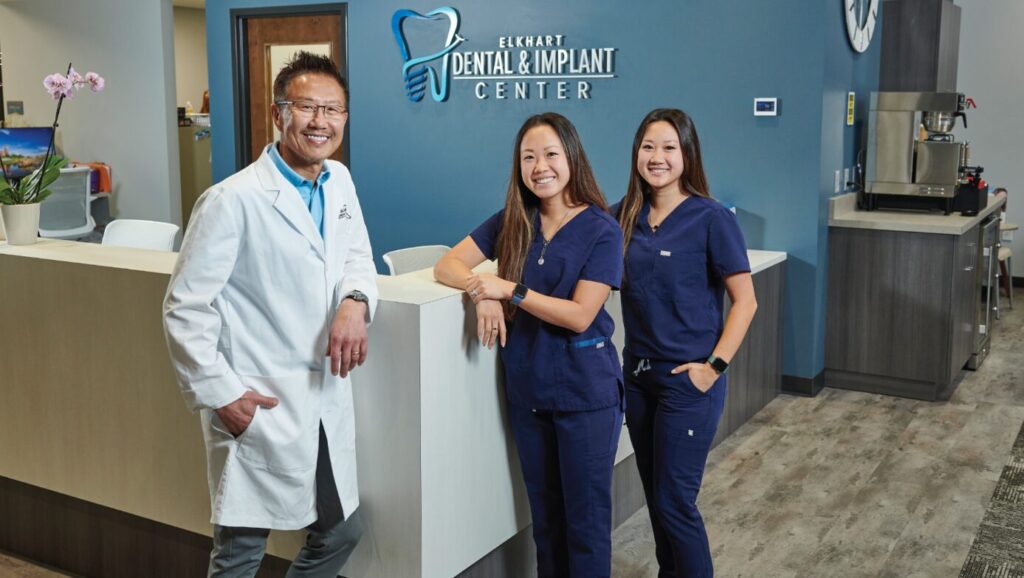
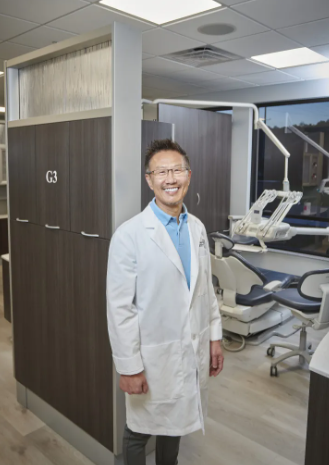
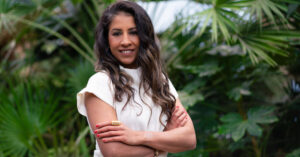
Dr. Sangyeon Lee
It is noteworthy that dentistry was not his initial professional choice — Dr. Lee planned a career in obstetrics and gynecology. However, a love for manual work and surgery, along with a mentor’s advice, led him to dentistry. After a year of working as an associate for Dr. Steven Hunt in Elkhart, he purchased the practice, officially becoming its owner on October 1, 1992.
Chapter 2. Family and the formation of a medical environment
Dr. Lee’s wife, Esther, is a radiologist specializing in mammography and works as part of Radiologic Associates in Northwest Indiana. The atmosphere of the medical profession surrounded their daughters, Sani and JJ, from an early age, which largely predetermined their career choices. Even in childhood, both daughters expressed a desire to become dentists, and over time, this family vision became a reality.
Chapter 3. Practice growth and the need for expansion
Dr. Lee’s practice initially grew to 13 dental chairs and served approximately 80 patients per day. Over the years, the clinic’s space was expanded twice; however, each update was accompanied by significant organizational challenges, especially while maintaining continuous patient care.
Approximately four years ago, it became evident that with the arrival of both daughters into the practice, the existing space would be insufficient. Considering plans to continue clinical practice and not contemplate early retirement, Dr. Lee made a strategic decision to construct a new building next to the old clinic.
Chapter 4. Design and construction of the new clinic
The design of the new center became a family affair: Esther Lee took on the role of project manager, receiving full autonomy in decision-making. Collaboration between the construction company, the Lee family, and Patterson Dental enabled the realization of the comprehensive project, despite delays caused by the pandemic and shortages of labor and materials.
The new Elkhart Dental and Implant Center, spanning 19,000 square feet, includes 23 dental chairs, four surgical suites, and two in-house dental laboratories. The clinic’s anticipated capacity is about 100 patients per day, and the staff is planned to increase from 24 to 35 people.
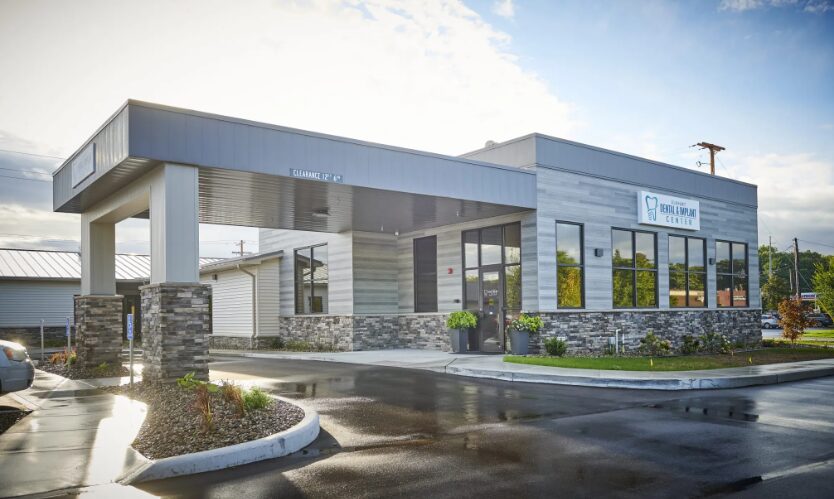
Elkhart Dental and Implant Center
Chapter 5. Design, service, and focus on comfort
The interior of the new clinic is executed in a modern style, with an emphasis on spaciousness and functionality. One of the fundamental decisions was the implementation of an initial reception area with a dedicated staff member greeting patients at the entrance. This approach enhances the level of service, especially for elderly patients and individuals with limited mobility.
The clinic is equipped with expanded sanitary facilities for people with disabilities, a beverage station for patients, and improved amenities for staff. For employees, a spacious lounge area, individual lockers, a laundry room, and a fully-equipped gym with 24/7 access are provided, including cardio machines, strength training equipment, and regular yoga classes.
Chapter 6. Equipment and technological advancement
Approximately 1.5 million dollars were invested in new equipment as part of the expansion. Out of the 23 dental chairs, 17 are brand new, and the layout is designed in an open-space format with modern storage modules. The practice significantly enhanced its sterilization department, increasing its area nearly fourfold.
Particular attention has been given to the development of digital technologies and laboratory processes. The size of the in-house laboratory was doubled, and the clinic’s plans include the active implementation of 3D printing, alongside already utilized CAD/CAM technologies such as CEREC for same-day crown fabrication.
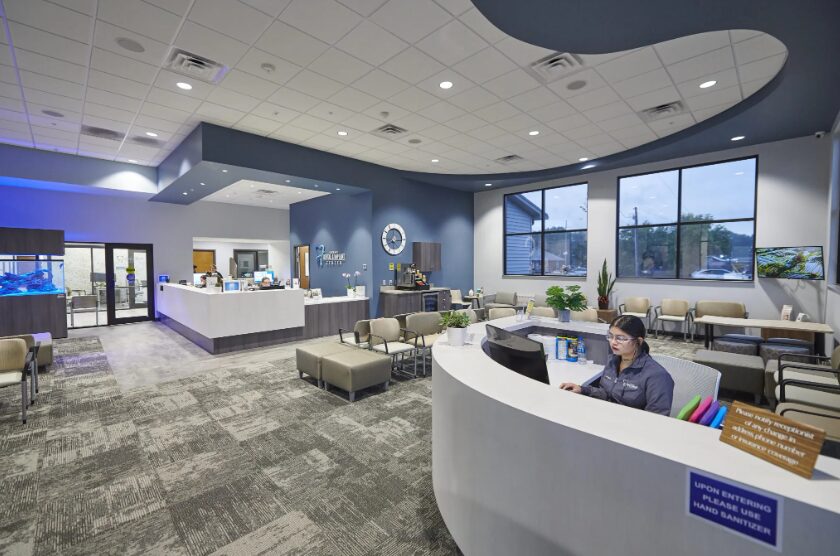
The reception area of the Elkhart Dental and Implant Center
Chapter 7. The “all under one roof” model and cultural inclusivity
Dr. Lee considers a key differentiator of the practice to be its focus on comprehensive treatment without the need to refer patients to external specialists. The clinic offers a wide range of services, including implantology, bone grafting, guided tissue regeneration, orthodontic treatment, and aesthetic procedures.
An additional advantage is the multilingual and multicultural team. Approximately 40% of the clinic’s patients are Spanish-speaking, and the staff is proficient in several languages, including Spanish, Portuguese, Chinese, Korean, and English. This fosters a high level of trust and comfort for patients from diverse cultural communities.
Chapter 8. The new generation of dentists and family mentorship
The arrival of the daughters in the practice became a catalyst for strategic changes. Dr. Sani notes that it was precisely the limited space in the old clinic that prompted her father to decide on building the new center. Both daughters were actively involved in selecting equipment and planning the work zones.
Working on a family team, according to them, provides a high level of mutual understanding, mentorship, and professional support, which is especially important during the initial stages of young doctors’ careers.
Chapter 9. Partnership with Patterson Dental
The key technological partner for the project was Patterson Dental, with whom Dr. Lee has collaborated for over 20 years. Patterson specialists were actively involved in the clinic’s design, equipment selection, and workflow optimization, including the integration of a centralized nitrous oxide delivery system to all dental chairs.
Conclusion. Legacy as a strategy for long-term success
The story of the Elkhart Dental and Implant Center demonstrates how a combination of personal motivation, family succession, thoughtful design, and technological investment can lead to the creation of a sustainable and competitive dental practice. This example underscores that a professional legacy is shaped not only by clinical outcomes but also by a culture of care—for patients, staff, and future generations of doctors.
Modern dentistry is developing as one of the most dynamic areas of medicine, intensively implementing digital and organizational innovations. Emotional
We use cookies to improve website performance, analyze traffic, and personalize content. You can accept all cookies or customize their use. Learn more in our Cookie Policy.
Functional
Always active
Technical storage or access is strictly necessary for the legitimate purpose of making possible the use of a particular service expressly requested by the subscriber or user, or solely for the purpose of carrying out the transmission of a message over an electronic communications network.
Preferences
The technical storage or access is necessary for the legitimate purpose of storing preferences that are not requested by the subscriber or user.
Statistics
Technical storage or access used solely for statistical purposes.The technical storage or access that is used exclusively for anonymous statistical purposes. Without a subpoena, voluntary compliance on the part of your Internet Service Provider, or additional records from a third party, information stored or retrieved for this purpose alone cannot usually be used to identify you.
Marketing
Technical storage or access is necessary to create user profiles for the purpose of sending advertising or to track a user across a website or multiple websites for similar marketing purposes.