
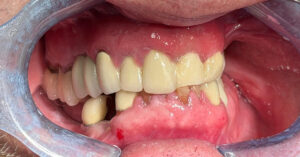
IPS E.max Zirconia: 2 million validation cycles and transformation of digital workflows in restoration
In an era of rapid digitalization contemporary dentistry is developing as one of the most dynamic fields, integrating digital workflows


Artificial intelligence is rapidly becoming a part of everyday dental practice, penetrating areas such as diagnostics, treatment planning, and patient monitoring. Alongside obvious benefits — improved efficiency, accuracy, and standardization of clinical processes — the use of AI raises new ethical, legal, and professional questions for the dental community. In the absence of unified universal standards, tools that help clinicians implement digital technologies safely and responsibly become especially relevant. It is in this context that the organization Dental Protection introduced a new framework for safe practice aimed at supporting dentists in integrating AI into clinical activities.
The safer practice framework launched by Dental Protection was developed as a practical tool to help dental professionals use artificial intelligence in clinical practice consciously and with minimized risks. The concept was authored by a team led by Dental Protection’s Dental Director, Raj Rattan.
The primary goal of the model is to create a clear and reproducible structure that helps clinicians maintain control over clinical decisions, even when actively using machine learning algorithms. The framework is oriented not toward replacing the physician but toward supporting their professional judgment in the context of digital transformation in dentistry.
The first element of the framework, labeled “informed,” is a process-oriented guide applied directly at the point of care. This component is designed to ensure the ethical and responsible use of AI in real time.
“Informed” emphasizes the necessity of active clinical supervision over recommendations generated by algorithms. It encourages shared decision-making, including discussing treatment options with the patient, and reduces the risk of so-called automation bias, where a clinician may uncritically rely on AI system conclusions. Thus, artificial intelligence is viewed as an auxiliary tool, not an autonomous source of clinical decisions.
The second key element of the framework — “records” — focuses on documenting clinical decisions involving artificial intelligence. This component entails recording the clinical rationale, the role played by AI in the decision-making process, as well as the final choice made by the clinician.
This approach aims to ensure transparency and reproducibility of clinical decisions. It is particularly important in the context of audits, dental-legal disputes, and potential judicial reviews. Documenting interactions with AI allows for a clear delineation of responsibility between the technology and the clinician, confirming that the final decision always rests with the specialist.

According to Dental Protection, the presented framework is designed to support dentists as the use of AI expands in areas such as diagnosis, treatment planning, and patient monitoring. The organization emphasizes that, despite the high potential of digital technologies to improve clinical outcomes and optimize workflows, their use inevitably comes with new risks.
Such risks include algorithmic errors, insufficient interpretability of results, potential data biases, and legal uncertainties. The safer practice framework offers a systematic approach to managing these risks, enabling the integration of AI into practice without compromising clinical responsibility and professional autonomy.
In a broader context, the initiative by Dental Protection reflects a growing awareness that the integration of AI into medicine and dentistry requires not only technical solutions but also clearly formulated ethical principles. The framework emphasizes the priority of patient interests, the necessity of informed consent, and the preservation of trust in the doctor-patient relationship.
Such an approach fosters the development of a new culture in digital dental practice, where innovation is accompanied by responsibility, transparency, and clinical reflection.
The safer practice framework presented by Dental Protection is a timely and significant step toward the safe integration of artificial intelligence into dentistry. The clear division into “informed” and “records” components creates an understandable structure that enables clinicians to use AI effectively without losing control over clinical decisions.
In the context of rapid digital technology development, such models become important benchmarks for the professional community. They help not only to mitigate risks but also to strengthen trust in AI as a tool capable of supporting, rather than replacing, clinical reasoning. Thus, the initiative by Dental Protection establishes a practical and ethical foundation for a sustainable and safe future for dentistry in the age of artificial intelligence.
In an era of rapid digitalization contemporary dentistry is developing as one of the most dynamic fields, integrating digital workflows
In the era of rapid digitalization, modern dentistry is developing as one of the most dynamic fields of medicine, requiring