Polychromatic composite veneering: in restorative practice and the transformation of the predictability of aesthetics

Modern restorative dentistry is undergoing an intensive transformation associated with the diffusion of digital technologies and new composite materials.

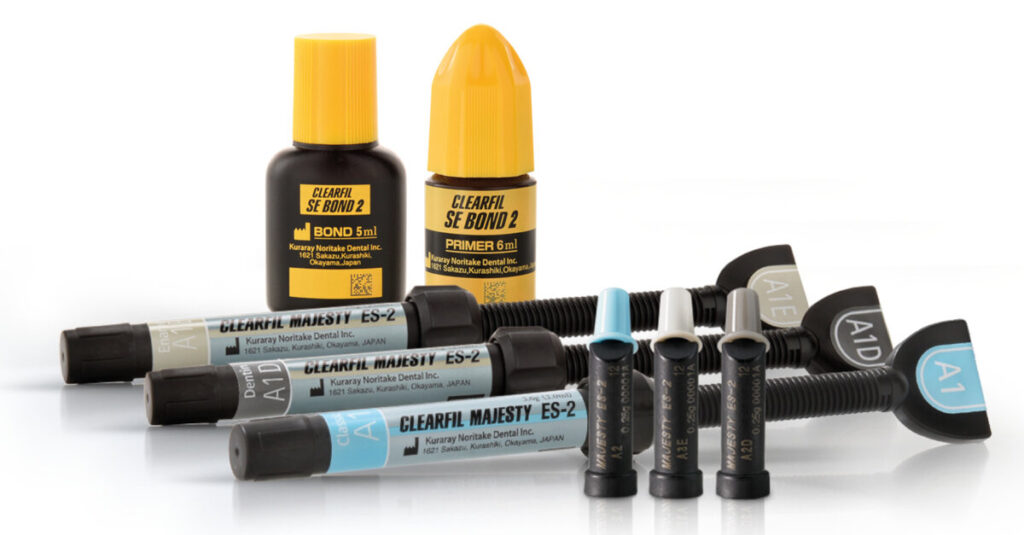
The key problem is ensuring aesthetic predictability with the possibility of subsequent modification of restorations without compromising healthy tissues. In the presented clinical case analysis the emphasis is placed on the practical application of polychromatic veneering with light-cured composites using CLEARFIL SE BOND 2 and CLEARFIL MAJESTY ES-2, with an analytical consideration of shade selection, adhesive protocol and the strategy for intraoral corrections.

Clinical case: initial situation and treatment plan

A young female patient presented complaints regarding the aesthetics and shape of previously placed composite veneers in the maxillary anterior group; on examination there were rough surfaces, stained restoration margins and compromised structural integrity, and a fixed retainer was present. The treatment plan included removal of the defective restorations and restoration of teeth №13–23 with direct polychromatic composite veneers aiming to achieve harmony of color and form with minimally invasive preparation.

Polychromatic layering technique: shades and optical strategy

To reproduce the complex optics of natural teeth a bilinear shade assessment was applied — sequential layering of dentin and enamel trial layers to evaluate the cumulative effect; additionally cross-polarized photography was used to eliminate glare and objectify shade perception. During the restoration the dentin framework was modeled in A1D tone with pronounced mamelons, incisal areas were formed using white tinting spots, a thin layer of transparent Blue was applied to provide opalescence and depth; such a multilayered strategy allows reproduction of internal structure, optical saturation and the natural gradient of translucency.

Adhesive ecosystem: cavity preparation and clinical protocol

The working field was isolated with a rubber dam, the retainer was removed, preparation was performed under magnification and cold light with the aim of preserving the micro-volume of dentin and enamel. After selective etching of the enamel with phosphoric acid a two-step self-etch adhesive CLEARFIL SE BOND 2 was applied, providing a combination of micromechanical and chemical adhesion to tooth tissues and to the composite; thorough dehydration, adherence to conditioning time and even application of the primer are critically important in the process for predictable bonding. Completion of the clinical phase included finishing and polishing with the TWIST DIA instrument to achieve a smooth surface and correct optical finalization, and an aligner was issued to the patient to protect the result until the next visit.

Revision and navigation of modifications: intraoral repair protocol

At the revision appointment the patient requested a reduction of incisal translucency and lengthening of the central incisors with a soft incisal edge line, which required conservative adjustments. The labial surfaces were slightly reduced with diamond burs, then air-abrasion with 50 μm aluminum oxide particles was performed to increase microtopography and adhesive area; prior to restorative refinement phosphoric acid was applied, silane treatment when necessary and re-application of CLEARFIL SE BOND 2, after which an additional build-up with CLEARFIL MAJESTY ES-2 in shades A1D and A1E was carried out with layered final contouring and polishing. Such a protocol ensures reliable integration of the new layer with the existing restoration and minimizes the risk of chipping or delamination.

Practical significance, evidence and implementation

An approach combining a reproducible layering technique and a strict adhesive protocol increases the predictability of the aesthetic outcome with minimal invasion; digital photography serves not only as a documenting tool but also as an instrument of clinical navigation and standardization. For wide implementation of such protocols their systemic validation within studies with clinical outcomes, development of guidelines based on evidence-based medicine and educational initiatives to raise the competence of practicing clinicians are necessary. Interdisciplinary cooperation, synchronization of standards and access to proven educational platforms accelerate the integration of modern materials and techniques into everyday practice, reducing barriers to implementation and improving the quality of dental care.

Source

Original publication

Leave a Reply

Your email address will not be published. Required fields are marked *

Other news

Subscription to thousands of useful articles, 600 lessons, reviews & ratings

Subscribe to the newsletter

More news in our Telegram!

Congratulations!
You have successfully registered