Main » Uncategorized » Nuvola SPRINT and Freedom Mini: integration of digital orthopedics and myofunctional therapy
Nuvola SPRINT and Freedom Mini: integration of digital orthopedics and myofunctional therapy
Modern dentistry is actively undergoing a digital and functional transformation, shaping new approaches to pediatric orthopedics and orthodontics based on the integration of technologies and motor therapy.
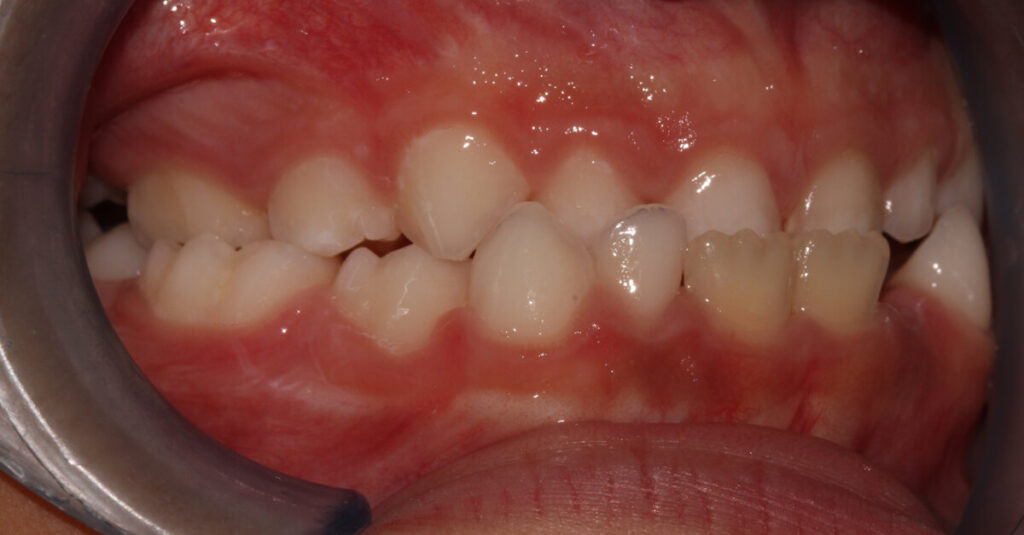
The main problem remains early transverse maxillary deficiencies, accompanied by posterior crossbites and breathing disorders, which require reproducible, clinically confirmed and minimally invasive solutions; the presented protocol combines a digital thermoformed conformer and a masticatory myofunctional device to combine continuous and cyclic impact on the palatal suture.
Transformation as a key factor
Transverse maxillary deficiency and posterior crossbite in young children are a clinically significant problem with a prevalence approaching 10% in children under eight years of age; this necessitates early diagnosis, standardization of treatment protocols and the application of evidence-based medicine when choosing a treatment strategy. In conditions of limited bone volume and active growth, key criteria for choosing a method are predictability of outcomes, minimal invasiveness and reproducibility of maneuvers, which allows reducing the risk of excessive orthopedic load and ensuring stability of retraction effects.
Therapeutic ecosystem: Nuvola SPRINT and Freedom Mini — fabrication protocol and wearing regimen
Nuvola SPRINT combined with the myofunctional device Freedom Mini is considered as a single therapeutic ecosystem, where the thermoformed conformer provides continuous passive stretching, and Freedom Mini creates directed cyclic masticatory loads to activate the perioral musculature and stimulate adaptive transverse palatal expansion. Fabrication is based on digital scanning of the patient and stepwise expansion of approximately 0.50 mm per phase — such a stepped protocol allows control of tissue regeneration and reduces the risk of excessive strain in the area of the palatal suture; the design includes two transpalatal bars for rigidity and two lingual contacts approximately 1.4 mm in diameter for monitoring and stimulation of tongue positioning.
The wearing regimen provides for continuous wear of the thermoformed conformer with periodic replacement according to the expansion plan, combined with short-term cyclic use of Freedom Mini during meals or special exercises — this combination of continuous and cyclic loading ensures biologically guided remodeling; the digital platform simplifies planning and progress control, reduces the number of palatal fixations and increases patient convenience.
Rome as a strategic site
The clinical program implemented in collaboration with the pediatric clinic Bambino Gesù in Rome emphasizes the importance of interdisciplinary cooperation — orthodontists, pediatricians, ENT specialists, myofunctional therapy specialists and physiotherapists work within a unified clinical trajectory; this approach accelerates the implementation of innovations and provides clinical validation in the context of pediatric medicine, where careful monitoring of growth, breathing function and speech development is required.
Clinical validation: results and stability
In the presented clinical observations, an increase in intercanine width of more than 3 mm and intermolar width of more than 4 mm was recorded over the planned treatment period, while the data remained stable at 24 months of follow-up with adherence to the wearing regimen and daily exercises; such indicators indicate the reproducibility of morphological transformation and clinically confirmed long-term efficacy in the context of early intervention. Important factors are compliance, adequate patient selection based on criteria of transverse deficiency and absence of contraindications to orthopedic loading, as well as regular documentation with digital scans for objective assessment of changes.
Mechanism of action and motor readaptation
The mechanics of the system are based on combined effects: the thermoformed conformer creates constant passive stretching of the palatal suture and parallel tissues, whereas Freedom Mini generates directed cyclic forces that activate the masticatory muscles and contribute to adaptive transverse expansion. Clinically, this means not only orthopedic correction but also training of orofacial functions — restoration of nasal breathing, correction of tongue position, improvement of postural patterns in children with hypotonia. Intervention in early critical periods of motor pattern formation increases the chance of integration of correct orofacial motor patterns and positively affects further development of respiratory and speech functions.
Conclusion
Nuvola SPRINT combined with Freedom Mini demonstrates potential as an integrated digital-functional platform for early correction of transverse maxillary deficiency; key advantages are controlled stepwise expansion, minimal palatal fixation, combination of continuous and cyclic impact and convenience of the digital workflow. For clinical practice this implies the need for clear diagnosis and patient selection, monitoring of compliance and outcomes using digital scans, interdisciplinary coordination with ENT and myofunctional specialists, as well as further prospective studies and randomized studies to confirm efficacy and standardize protocols on a large scale.
Modern dentistry is undergoing a rapid digital transformation requiring the integration of clinical and educational technologies to enhance the quality
We use cookies to improve website performance, analyze traffic, and personalize content. You can accept all cookies or customize their use. Learn more in our Cookie Policy.
Functional
Always active
Technical storage or access is strictly necessary for the legitimate purpose of making possible the use of a particular service expressly requested by the subscriber or user, or solely for the purpose of carrying out the transmission of a message over an electronic communications network.
Preferences
The technical storage or access is necessary for the legitimate purpose of storing preferences that are not requested by the subscriber or user.
Statistics
Technical storage or access used solely for statistical purposes.The technical storage or access that is used exclusively for anonymous statistical purposes. Without a subpoena, voluntary compliance on the part of your Internet Service Provider, or additional records from a third party, information stored or retrieved for this purpose alone cannot usually be used to identify you.
Marketing
Technical storage or access is necessary to create user profiles for the purpose of sending advertising or to track a user across a website or multiple websites for similar marketing purposes.