Main » Uncategorized » Localization of Ivoclar production: six sites and transformation of global standardization
Localization of Ivoclar production: six sites and transformation of global standardization
The global dental industry is undergoing a profound transformation driven by geopolitical tensions, trade barriers and supply chain disruptions, requiring a new approach to risk management.
In these conditions, localization of production and integration of manufacturing standards become key elements of a strategy to ensure clinical predictability, material validation and quality control across clinics and laboratories.
Localization as a key factor
Localization of production is considered not only as a means of reducing logistical risks, but also as a tool for forming a reproducible manufacturing paradigm — with an emphasis on standardization of validation procedures, quality control of raw materials and confirmed clinical efficacy of materials and devices. In practical terms, this means achieving comparability of parameters: mechanical properties of materials, biocompatibility, shade stability, adhesion and compatibility with digital workflows (CAD/CAM, 3D printing) — at a level that allows a clinic to expect comparable clinical outcomes from batches produced in different regions.
For the dental community, transparency of validation procedures is important — availability of quality control documents, test protocols, stability reports and clinical observations; at the same time, manufacturers need to ensure that local manufacturing processes comply with global technical specifications and regulatory requirements.
Logistics and production: coordination and standardization
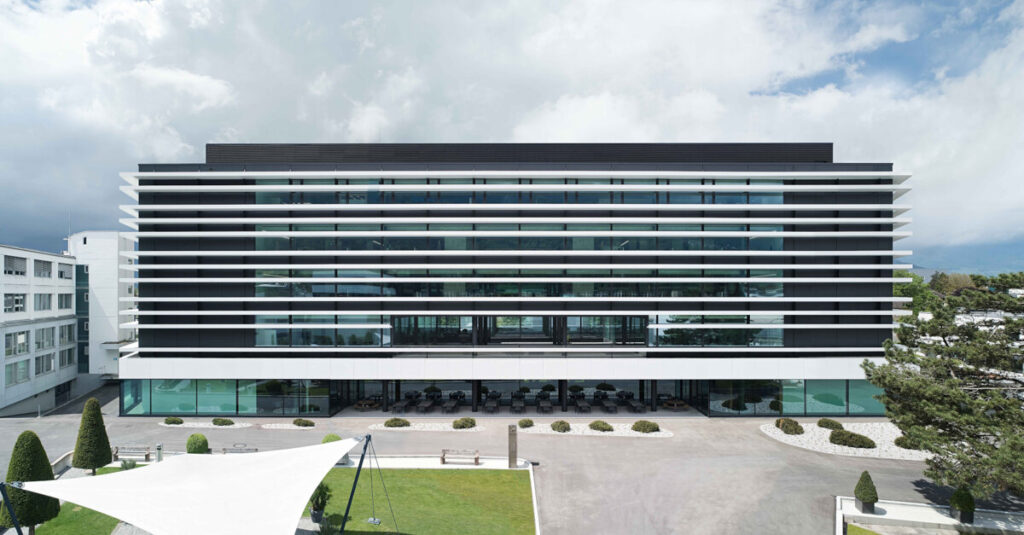
Coordination of logistics and production within Ivoclar’s global network includes centers and warehouses in Ellwangen (opened 2021), Leicester (launched 2023), São Paulo (warehouse and service center 2024), as well as sites in Schaan, Bürs, Manila, Natrunse and Summerset — with a planned site in Shanghai, which demonstrates a strategy of regional proximity and supply diversification. The conversion of the center in Amherst is aimed at automating warehouse operations and increasing reproducibility of supplies, which accelerates integration of unified quality standards and logistical SOPs.
Automation and reproducibility
Automation of warehouse processes and unification of procedures — are key drivers for reducing variability of supplies, lowering logistical errors and ensuring traceability of batches. For dental materials, this is critical in the context of ensuring identical indicators for adhesion, polymerization, microstructure and sterility between different batches and sites.
Minhang as a strategic site
The choice of Minhang is justified by a developed industrial and transport infrastructure, access to qualified labor and the presence of a business ecosystem conducive to diffusion of technologies and accelerated communication with clinical and research partners. A local site provides shortening of supply chains, accelerates the introduction of new materials and allows rapid adaptation of manufacturing processes to regional regulatory requirements and clinical practice.
From the standpoint of sustainable development, it is important to consider the environmental aspects of local production — optimization of packaging, reduction of emissions in logistics, management of production waste — which aligns with clinical and public expectations regarding safety and environmental responsibility.
Clinical and regulatory implications for practice
For dentists, localization of production means increased predictability of material properties, faster access to innovations and reduced delivery times, but at the same time requires clinicians’ attention to compliance documents, batch traceability, participation in post-market surveillance and reporting of adverse events. It is important for clinicians to maintain a dialogue with manufacturers on validation of new materials under local production conditions, participate in local validation studies and rely on clinical protocols confirming the equivalence of materials produced at different sites.
Ivoclar’s Local4Local initiative demonstrates a pragmatic implementation of the strategy of bringing production closer to markets and can serve as a model for maintaining standardization, ensuring quality and accelerating the adoption of clinically significant innovations — provided there is transparent validation, strict regulatory compliance and active engagement with the clinical community.
We use cookies to improve website performance, analyze traffic, and personalize content. You can accept all cookies or customize their use. Learn more in our Cookie Policy.
Functional
Always active
Technical storage or access is strictly necessary for the legitimate purpose of making possible the use of a particular service expressly requested by the subscriber or user, or solely for the purpose of carrying out the transmission of a message over an electronic communications network.
Preferences
The technical storage or access is necessary for the legitimate purpose of storing preferences that are not requested by the subscriber or user.
Statistics
Technical storage or access used solely for statistical purposes.The technical storage or access that is used exclusively for anonymous statistical purposes. Without a subpoena, voluntary compliance on the part of your Internet Service Provider, or additional records from a third party, information stored or retrieved for this purpose alone cannot usually be used to identify you.
Marketing
Technical storage or access is necessary to create user profiles for the purpose of sending advertising or to track a user across a website or multiple websites for similar marketing purposes.