Main » New in Dentistry » Kuraray — 100 Years of Innovation in Dentistry: Scientific Continuity, Global Strategy, and Creating New Value in Clinical Practice
Kuraray — 100 Years of Innovation in Dentistry: Scientific Continuity, Global Strategy, and Creating New Value in Clinical Practice
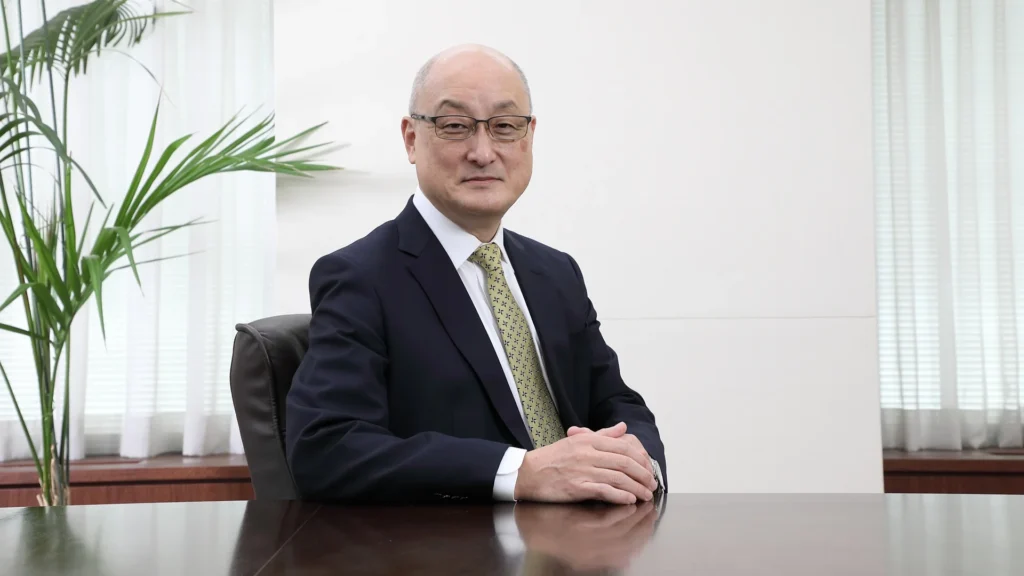
The publication dedicated to the 100th anniversary of Kuraray is an interview with Satoshi Yamaguchi, President of the Kuraray Noritake Dental division, and reflects the strategic vision for the development of modern dentistry through the lens of scientific innovation and international cooperation. The material demonstrates how a century of accumulated experience is transformed into relevant solutions for clinical practice, and also highlights the role of fundamental research and evidence-based data in building trust within the professional community.
Special attention in the article is paid not so much to the company’s historical path but to the understanding of its current mission — creating added value in dentistry through a combination of scientific validity, stable product quality, and a focus on real clinical needs. This approach allows us to view Kuraray not merely as a manufacturer of materials but as an active participant in shaping the modern dental paradigm.
Professional path and management philosophy
Satoshi Yamaguchi describes his career as a sequential journey from scientific research to international business management, which allowed him to form a comprehensive understanding of the industry. Starting in the research division, he later gained experience in marketing and managing regional structures, including activities in Europe and the United States. This path became the foundation for forming a global management approach focused on considering the cultural and professional characteristics of different markets.
The interview emphasizes that dental practice in different regions of the world is characterized by different priorities: in some countries, the emphasis is on aesthetics, in others — on treatment efficiency or its economic accessibility. Understanding these differences allows the company to adapt its solutions to specific conditions, thereby ensuring higher clinical relevance of the products.
Scientific foundation and technological leadership
One of the key factors in Kuraray’s success is its reliance on scientifically proven technologies. The development of the MDP monomer is cited as an example, which became a global standard in adhesive dentistry due to its high bond strength even with such complex materials as metal and zirconia.
This example illustrates the company’s broader strategy aimed at creating materials capable of functioning in the oral cavity as closely as possible to natural tooth tissues. At the same time, special attention is paid to durability, which is viewed as a combination of mechanical strength and the preservation of aesthetic characteristics in the long term. This approach reflects the desire to form sustainable clinical solutions that meet the modern requirements of evidence-based medicine.
The importance of international experience and global markets
The interview also reveals the importance of the European market as one of the key factors in the company’s development. The stringent regulatory requirements in place in Europe contribute to raising product quality standards and the accuracy of scientific information. These developments are then used when adapting products for other regions, including the United States, Asia, and South America.
At the same time, the importance of collaboration with local specialists, educational institutions, and professional communities is emphasized. This format of interaction allows for considering the real needs of practicing clinicians and contributes to the more effective implementation of innovations into clinical practice. As a result, a global network of knowledge exchange is formed, in which scientific developments receive practical confirmation and further development.
Modern materials and the concept of universality
In the discussion of new products, it is noted that modern dentists need solutions that combine high efficiency with ease of application. This is precisely the requirement met by the Universal Excellence concept, which underlies the company’s new materials. It involves the creation of universal solutions that allow reducing the number of treatment stages and minimizing the likelihood of errors.
The developed materials are aimed at simplifying clinical protocols while maintaining a high level of quality and reliability. This approach contributes to increasing the doctor’s work efficiency and reducing cognitive load, which is especially important in the context of modern clinical practice characterized by high intensity and the need for rapid decision-making.
The future of dentistry: sustainability and trust
Speaking about the future, Satoshi Yamaguchi emphasizes that the company’s 100th anniversary is not only an occasion for summing up results but also a starting point for further development. At the center of the future strategy is the idea of creating sustainable solutions that take into account both patient needs and the environmental aspects of production. Particular importance is attached to building trust with the dental community. This is achieved by providing transparent, scientifically based information, as well as through active interaction with the professional audience via conferences, publications, and digital communication channels.
Thus, the company strives not only to develop innovative materials but also to shape an information environment conducive to their competent and effective use.
Conclusion
The publication under review demonstrates that the development of modern dentistry is impossible without a close connection between science, technology, and clinical practice. Kuraray’s experience, accumulated over a hundred years, shows that sustainable progress is achieved not through isolated innovations but through systematic work based on scientific data and oriented toward the real needs of specialists.
The relevance of this topic is driven by the need to form reliable and effective solutions in the face of growing demands for the quality of dental care. The presented material allows us to conclude that the future of the industry is linked to the further integration of scientific developments, global experience, and the principles of sustainable development, which ultimately contributes to improving the quality of life for patients and increasing the effectiveness of clinical practice.
We use cookies to improve website performance, analyze traffic, and personalize content. You can accept all cookies or customize their use. Learn more in our Cookie Policy.
Functional
Always active
Technical storage or access is strictly necessary for the legitimate purpose of making possible the use of a particular service expressly requested by the subscriber or user, or solely for the purpose of carrying out the transmission of a message over an electronic communications network.
Preferences
The technical storage or access is necessary for the legitimate purpose of storing preferences that are not requested by the subscriber or user.
Statistics
Technical storage or access used solely for statistical purposes.The technical storage or access that is used exclusively for anonymous statistical purposes. Without a subpoena, voluntary compliance on the part of your Internet Service Provider, or additional records from a third party, information stored or retrieved for this purpose alone cannot usually be used to identify you.
Marketing
Technical storage or access is necessary to create user profiles for the purpose of sending advertising or to track a user across a website or multiple websites for similar marketing purposes.