Main » Uncategorized » Integration of 3D printing and CAD/CAM in dentistry: nine printers and the transformation of clinico-laboratory cooperation
Integration of 3D printing and CAD/CAM in dentistry: nine printers and the transformation of clinico-laboratory cooperation
Modern dentistry is undergoing a large-scale digital transformation in which digital tools and integrated workflows are restructuring professional roles and clinical trajectories.
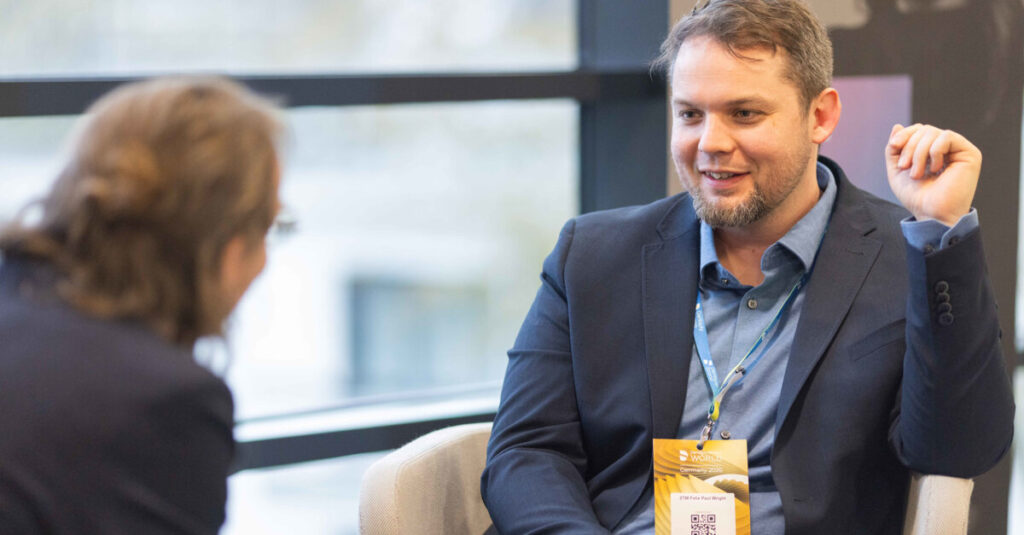
In this context the key factor of progress becomes not only the development of technologies but also the effective translation of knowledge between laboratories and clinics; an interview with master technician Felix Paul Wright at Dentsply Sirona World Germany in Bonn demonstrates the practical aspects of integrating CAD/CAM, 3D printing and artificial intelligence, the material represents an extended interview with analytical reflection on practice, including examples of clinical cooperation and the implementation of digital protocols.
3D-печать как ключевой фактор
3D printing radically accelerates the design and production of complex restorations, increases reproducibility and predictability of clinical outcomes; the presence of nine 3D printers in Wright’s laboratory illustrates the transition from single prototyping to an industrial organization of small series and certified workflows.
From the standpoint of clinical significance 3D printing is used for the manufacture of surgical guides, temporary restorations, laboratory models, bases of removable dentures and casting models — while key factors remain post-processing control, polymerization and certification of biocompatible materials; this requires strict validation of each stage — from printer calibration and layer control to documentation of polymerization conditions and mechanical testing.
Цифровой рабочий процесс: интеграция и предсказуемость
Integrated CAD/CAM process in the clinic ensures predictability and reduction of treatment time intervals, becoming a standard tool for collaboration between technicians and clinicians; this includes intraoral scanning, processing of tomographic DICOM data, virtual planning, transfer of STL/PLY files to the laboratory and fit control on models or directly in the oral cavity.
Practical effectiveness is achieved through standardized communication protocols — unified rules for file labeling, requirements for tolerances and preprint verification, verification of fit on digital models and end-to-end protocols for validation of fit and occlusion; in such a scenario the laboratory acts not only as a manufacturer but also as a clinical partner in planning, simulation and outcome prediction.
Образовательная экосистема: структура и содержание
Continuous professional development becomes part of an educational ecosystem based on evidence-based medicine and synchronization of standards; Wright’s career — beginning in 2006 and confirmed mastery in 2017 — serves as an example of a reproducible path from practice to mastery through targeted training and practice.
Форматы подготовки и роль искусственного интеллекта
An effective educational program combines hands-on in-person courses, case-oriented remote learning, internships in clinics and laboratories, as well as the implementation of AI tools to accelerate the design stage and the verification of options; artificial intelligence in this context acts as an assistant in generating restorative proposals and as a tool for standardizing routine tasks, which partially compensates for staff shortages and improves the quality of the initial digital data.
Бонн как стратегическая площадка
Dentsply Sirona World Germany in Bonn functions as a platform for transnational cooperation, where demonstration of workflows in real clinics allows rapid assessment of the applicability of new protocols; the presence of manufacturers, educational programs and clinical cases accelerates the diffusion of clinically validated solutions and contributes to the formation of industry standards.
Выводы и рекомендации для клиницистов и лабораторий
Modern dentistry is evolving as an integrated ecosystem in which digital technologies, clinical cooperation and knowledge exchange form a new culture of precision and standardization; for clinicians and technicians this means the need to invest in quality systems, validation of work protocols, regular interdisciplinary communication and participation in targeted educational initiatives — only such an approach ensures predictability of clinical outcomes, patient safety and cost optimization when scaling digital processes.
We use cookies to improve website performance, analyze traffic, and personalize content. You can accept all cookies or customize their use. Learn more in our Cookie Policy.
Functional
Always active
Technical storage or access is strictly necessary for the legitimate purpose of making possible the use of a particular service expressly requested by the subscriber or user, or solely for the purpose of carrying out the transmission of a message over an electronic communications network.
Preferences
The technical storage or access is necessary for the legitimate purpose of storing preferences that are not requested by the subscriber or user.
Statistics
Technical storage or access used solely for statistical purposes.The technical storage or access that is used exclusively for anonymous statistical purposes. Without a subpoena, voluntary compliance on the part of your Internet Service Provider, or additional records from a third party, information stored or retrieved for this purpose alone cannot usually be used to identify you.
Marketing
Technical storage or access is necessary to create user profiles for the purpose of sending advertising or to track a user across a website or multiple websites for similar marketing purposes.