Main » Uncategorized » Implant Solutions World Summit 2026: more than 1000 specialists from 49 countries and formation of an integrated educational-digital paradigm
Implant Solutions World Summit 2026: more than 1000 specialists from 49 countries and formation of an integrated educational-digital paradigm
Modern implantology stands at the intersection of clinical practice and digital technologies, forming an interdisciplinary paradigm of dental care delivery. The key challenge for the field is the standardization of digital protocols and the increase of predictability of clinical outcomes while ensuring the reproducibility of procedures across different clinical sites and laboratories.
Event and its significance
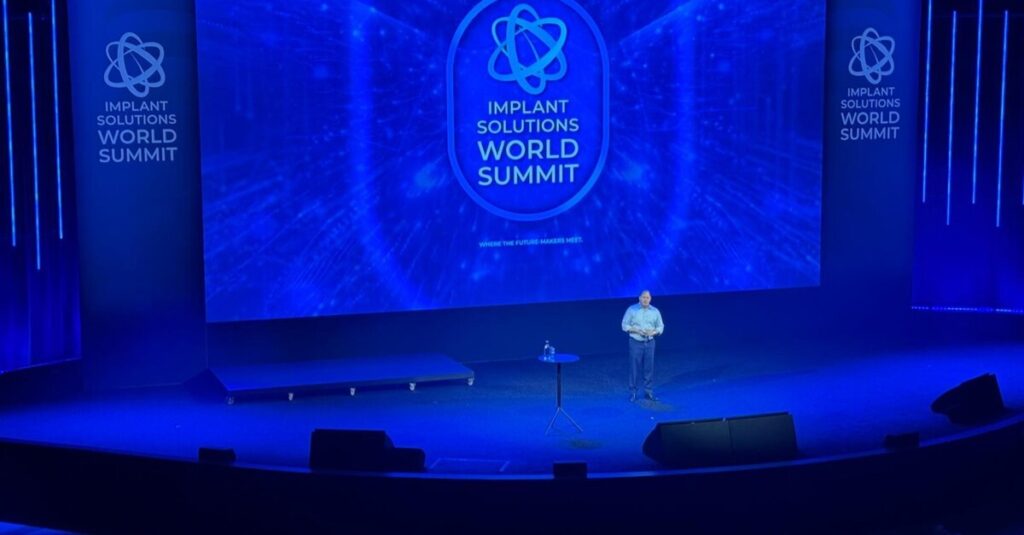
The implantology forum Implant Solutions World Summit 2026 in Gothenburg gathered more than 1 000 specialists from 49 countries, reflecting the transnational diffusion of knowledge and clinical practices; the event serves as a platform for the verification of working protocols, the exchange of clinical research results and the discussion of ways to integrate digital solutions into routine therapy.
Educational ecosystem as a key factor
The international composition of instructors, representing 15 countries, indicates a transformation of the educational model — from local courses to multinational modules synchronized by criteria of quality and clinical validity. The combination of master classes and scientific sessions provides sequential training in the skills of planning, navigation and implantation with an emphasis on the reproducibility of technique in complex clinical situations.
Role of laboratory technicians and product experts
The participation of laboratory technicians and industry representatives ensures the prompt integration of prosthetic solutions and CAD/CAM digital workflows — this is critical for the harmonization of interdisciplinary treatment stages, from digital scanning and virtual planning to the production of final restorations and their clinical validation.
Scientific program: content and structural approach
The forum program covered modules on peri-implantitis management, esthetic strategies, ridge augmentation and full prosthetic reconstructions, based on the principles of evidence-based medicine; digital workflows and navigation were presented as elements that provide not only visualization but also increased predictability of interventions, accuracy of implant positioning and control over osseointegration.
Digital planning and guided surgery
The integration of digital planning with guided surgery reduces operative risks and treatment time, increases the correspondence between planned and achieved outcomes, however for clinical implementation standards for verification of accuracy, protocols for calibration of navigation systems and multicenter clinical evaluations of reproducibility are required.
Gothenburg as a strategic venue
Swedish Exhibition and Congress Centre functions as a professional ecosystem, where the exhibition area allows direct evaluation of implant systems, bone regeneration materials and digital solutions; the Inspiration Hub plays a special role as a tool for interprofessional education and practical validation of new working protocols.
Interaction between clinic and industry
Access to product experts facilitates the accelerated transition from demonstration to clinical application of validated solutions, while transparency of effectiveness data, discussion of contraindications and training in complication management are important — for example, algorithms for diagnosis and treatment of peri-implantitis, methods of vertical and horizontal augmentation, selection of transitional and final restorations in full rehabilitation.
Practical recommendations and expert commentary
The following directions are relevant for clinical practice: the implementation of a unified format for documenting digital studies, the development of protocols for validation of navigation system accuracy, the creation of local training centers with the participation of laboratories and industry — all this should be combined with registration of treatment outcomes and analysis of complications in long-term follow-ups; as an expert recommendation — when implementing digital protocols it is advisable to conduct pilot multidisciplinary projects with subsequent evaluation of clinical and patient-oriented outcomes.
Conclusion
Implant Solutions World Summit demonstrates that modern implantology is developing as an integrated ecosystem based on knowledge exchange, digital technologies and clinical cooperation; international symposia act as a catalyst for standardization, increased accuracy and accelerated implementation of innovations into everyday practice.
The World Health Organization supports strengthened cooperation between health and environmental control authorities to accelerate the phase-out of dental amalgam
We use cookies to improve website performance, analyze traffic, and personalize content. You can accept all cookies or customize their use. Learn more in our Cookie Policy.
Functional
Always active
Technical storage or access is strictly necessary for the legitimate purpose of making possible the use of a particular service expressly requested by the subscriber or user, or solely for the purpose of carrying out the transmission of a message over an electronic communications network.
Preferences
The technical storage or access is necessary for the legitimate purpose of storing preferences that are not requested by the subscriber or user.
Statistics
Technical storage or access used solely for statistical purposes.The technical storage or access that is used exclusively for anonymous statistical purposes. Without a subpoena, voluntary compliance on the part of your Internet Service Provider, or additional records from a third party, information stored or retrieved for this purpose alone cannot usually be used to identify you.
Marketing
Technical storage or access is necessary to create user profiles for the purpose of sending advertising or to track a user across a website or multiple websites for similar marketing purposes.