Main » Technologies » IDEX Istanbul 2026: Digital transformation and technological vectors for the future of dentistry
IDEX Istanbul 2026: Digital transformation and technological vectors for the future of dentistry
Modern dentistry is at a stage of profound technological transformation, in which digital solutions, artificial intelligence, and new materials are gradually shaping a fundamentally different model of clinical practice. In this context, international industry exhibitions and scientific congresses are becoming key platforms for showcasing innovations, exchanging knowledge, and shaping global professional trends.
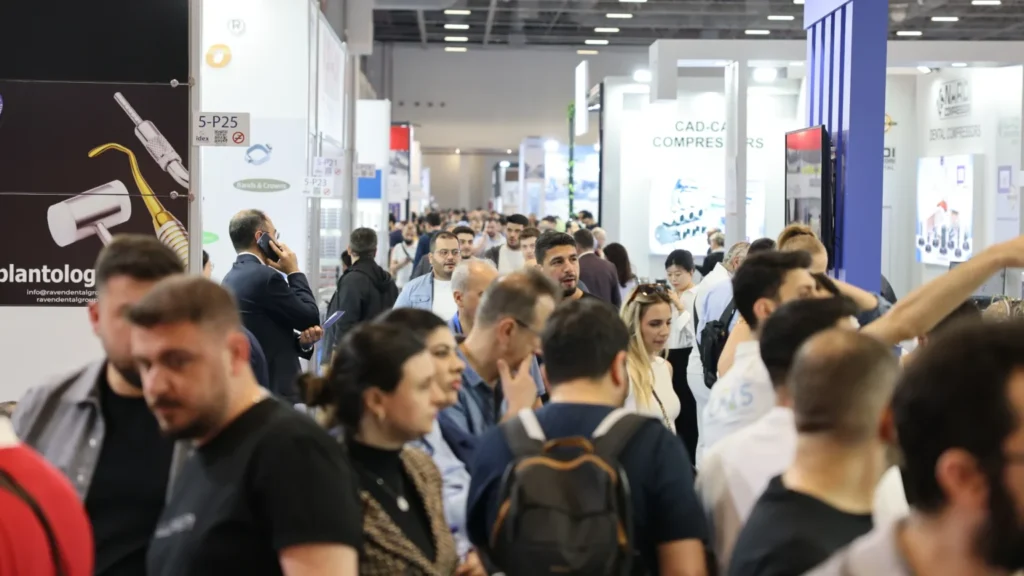
The publication under review is devoted to the international exhibition and conference IDEX Istanbul 2026, which is positioned as one of the largest events in the field of dentistry, bringing together specialists, manufacturers, and researchers from around the world. The event not only reflects current industry achievements but also sets the direction for its further development, focusing attention on technologies capable of changing clinical practice in the coming years.
Scale of the event and its significance for global dentistry
According to the data presented, IDEX Istanbul 2026 will take place from April 15 to 18 at the Istanbul Expo Center and will bring together more than 750 companies and over 7,000 brands showcasing the latest solutions in dental equipment and materials. The event is expected to attract over 100,000 professionals, including dentists, technicians, and industry representatives from Europe, Asia, the Middle East, and Africa.
Such scale makes the event not just an exhibition but a global platform for professional interaction. The high proportion of international participants underscores its role as a hub for forming business and scientific connections that contribute to the development of the industry at a transnational level.
Key technological directions: from digitalization to intelligent systems
One of the central themes of IDEX Istanbul 2026 will be the demonstration of technologies shaping the future of dentistry. The publication notes that among the solutions presented, special emphasis will be placed on systems based on artificial intelligence, which enable the automation of diagnostics and increase the accuracy of clinical decisions. Such developments open up new possibilities for early disease detection and treatment personalization.
No less significant is the development of CAD/CAM technologies, which provide a complete digital treatment cycle — from scanning to the fabrication of restorations. These solutions already make it possible to significantly reduce treatment time and increase its predictability. Complementing this trend are three-dimensional printing technologies, which are becoming an important tool in the production of prosthetic structures, surgical templates, and other customized devices.
Important roles are also occupied by imaging and diagnostic systems, including digital radiography and tomography, as well as robotic and automated solutions that increase the precision and efficiency of clinical procedures. Collectively, these technologies form the foundation of a new paradigm of dentistry focused on digital integration and a high degree of automation.
Biomaterials and sustainable development in dentistry
In addition to digital technologies, significant attention at the exhibition is given to new biocompatible and environmentally sustainable materials. The development of such solutions reflects the growing interest in issues of safety, durability, and environmental responsibility in medical practice.
Modern materials not only improve clinical outcomes but also reduce negative environmental impact, which is becoming an important factor in the context of the global transition to sustainable development. In this context, dentistry is gradually integrating into a broader environmental discourse, which previously was not a priority for the industry.
Scientific and educational program as a factor in professional development
An important component of IDEX Istanbul 2026 is an extensive educational program, including more than 150 lectures, hands-on workshops, and demonstrations. Within the framework of these events, participants will be able to learn about the latest clinical techniques, discuss complex cases, and acquire practical skills under the guidance of leading experts.
Such a format not only facilitates the transfer of knowledge but also fosters the formation of a professional community in which experience is shared and new approaches to treatment are developed. This is particularly important in the context of rapid technological development, where continuous learning becomes a necessary condition for professional competence.
International cooperation and economic significance
IDEX Istanbul serves not only as a scientific and technological platform but also as an important element of the global economy of the dental industry. The event facilitates the establishment of business contacts, expansion of sales markets, and the formation of long-term partnerships between companies and specialists. Participants have the opportunity to interact directly with manufacturers, evaluate new products, and make investment decisions, making the exhibition a significant tool for business development. Furthermore, the high concentration of international delegations enhances the event’s role as a hub for global cooperation in the field of dentistry.
Significance for the future of dental practice
Analysis of the presented material allows us to conclude that IDEX Istanbul 2026 reflects the key directions of transformation in dentistry. The integration of artificial intelligence, the development of digital technologies, the introduction of new materials, and the strengthening of the educational component form a comprehensive approach to the development of the industry. Such events play an important role in accelerating the adoption of innovations, as they create conditions for their demonstration, discussion, and practical implementation. As a result, a more dynamic and technologically advanced system of dental care is formed.
Conclusion
Thus, IDEX Istanbul 2026 represents a significant event reflecting the current and future trends in the development of dentistry. The exhibition demonstrates that the future of the industry is linked to digitalization, automation, and interdisciplinary integration, as well as to the increasing role of science and education. The relevance of this topic is driven by the need to adapt dental practice to new technological conditions, in which efficiency, precision, and sustainability become key quality criteria. The presented material confirms that international professional platforms play an important role in shaping these processes, ensuring the transition of dentistry to a qualitatively new level of development.
Contemporary dentistry is rapidly transforming under the influence of digital technologies and interdisciplinary approaches, altering clinical and educational practices worldwide.
Dental technicians and the digital future: why adaptation secures the profession Introduction Julia Glancey, a dental technician and commentator, published
We use cookies to improve website performance, analyze traffic, and personalize content. You can accept all cookies or customize their use. Learn more in our Cookie Policy.
Functional
Always active
Technical storage or access is strictly necessary for the legitimate purpose of making possible the use of a particular service expressly requested by the subscriber or user, or solely for the purpose of carrying out the transmission of a message over an electronic communications network.
Preferences
The technical storage or access is necessary for the legitimate purpose of storing preferences that are not requested by the subscriber or user.
Statistics
Technical storage or access used solely for statistical purposes.The technical storage or access that is used exclusively for anonymous statistical purposes. Without a subpoena, voluntary compliance on the part of your Internet Service Provider, or additional records from a third party, information stored or retrieved for this purpose alone cannot usually be used to identify you.
Marketing
Technical storage or access is necessary to create user profiles for the purpose of sending advertising or to track a user across a website or multiple websites for similar marketing purposes.