Main » The life of a doctor » Global Horizons of Dental Science: The Role of the IADR in Shaping the Future of Oral Health Research
Global Horizons of Dental Science: The Role of the IADR in Shaping the Future of Oral Health Research
Modern dentistry is undergoing a phase of profound transformation, within which scientific research is becoming a key factor in improving the quality of medical care and enhancing public health. In the context of the rapid development of digital technologies, biomedical approaches, and interdisciplinary connections, international scientific organizations capable of uniting research efforts around the world are of particular importance. One such structure is the International Association for Dental, Oral, and Craniofacial Research (IADR), which plays a strategic role in shaping the scientific agenda and implementing innovations.
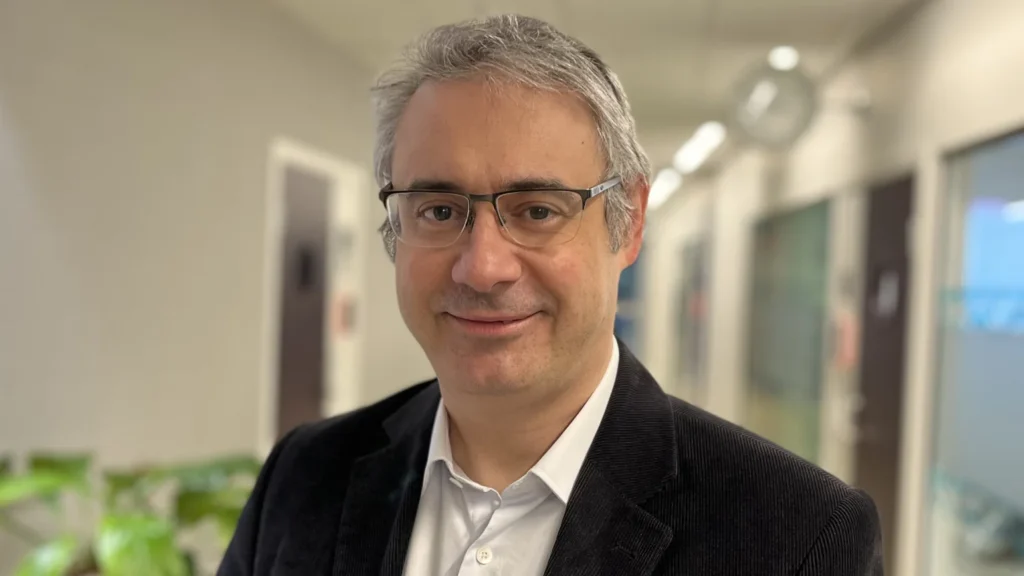
An interview with the IADR President-Elect Professor Georgios N. Belibasakis provides an important source for understanding current trends in dental science. The material under review allows not only to trace the professional journey of the scientist but also to identify the key directions for the development of global research in the field of oral health, as well as to assess the significance of international cooperation in this area.
Professional trajectory and significance of the election
Professor Georgios N. Belibasakis, holding the position of Professor of Clinical Biology of Oral Infections at the Karolinska Institutet, was elected Vice President of the IADR, marking an important stage in his scientific and organizational activities. His career is closely linked to the development of dental science, and his involvement with the association began during his student years, underscoring the depth of his engagement with the professional community.
The scientist himself views his election not only as a personal achievement but also as an expression of trust from the international scientific community. Of particular symbolic significance is the fact that he became the second representative from Sweden and the first scientist of Greek origin to hold this position in the organization’s over one-hundred-year history. This circumstance reflects a trend towards the internationalization of scientific leadership and the expansion of geographical representation in global scientific institutions.
Strategic priorities for the development of the scientific community
One of the key areas of activity outlined by Professor Belibasakis is strengthening the IADR as a global platform for scientific research oriented towards practical application and improving the quality of medical care. In the context of the increasing complexity of dental diseases, the translation of scientific results into clinical practice is becoming particularly relevant, requiring coordination of efforts among researchers, clinicians, and educational institutions.
Special attention is paid to the development of international cooperation and interdisciplinary interaction. Contemporary challenges in dentistry are driven not only by biological but also by social, environmental, and genetic factors, requiring the integration of knowledge from various fields of science. In this context, the IADR acts as a connecting link, ensuring the exchange of knowledge between different scientific disciplines and regions of the world.
Interdisciplinarity as the foundation of scientific progress
The growing importance of interdisciplinary research in dentistry is driven by the need for a comprehensive approach to the study of oral diseases. Professor Belibasakis emphasizes that effective solutions to scientific problems are only possible by combining the efforts of specialists in microbiology, immunology, clinical medicine, and other related disciplines.
The practical experience of the scientist, working at the intersection of various scientific fields, confirms that the most significant discoveries occur precisely at the crossing of disciplinary boundaries. In this regard, the IADR actively supports the creation of interdisciplinary research groups, the organization of joint scientific sessions, and the development of digital platforms that facilitate communication among scientists around the world.
Support for young researchers as an investment in the future
The development of scientific potential is impossible without the active involvement of young specialists. In this regard, one of the IADR’s priorities is supporting early-career researchers through mentorship programs, expanding opportunities for obtaining grants, and participation in international scientific networks.
The integration of young scientists into the professional community is seen as a strategic objective aimed at ensuring the sustainability and continuity of scientific leadership. Creating favorable conditions for professional growth contributes not only to the individual development of researchers but also to strengthening the global scientific ecosystem.
The problem of global inequality in scientific research
Despite significant achievements, dental science faces the challenge of uneven distribution of research resources. In countries with limited capabilities, access to scientific infrastructure and funding remains restricted, hindering full participation in global scientific processes.
To overcome these barriers, the implementation of programs to develop research capacity, the creation of partnerships between universities, and the expansion of knowledge exchange through digital technologies are proposed. International organizations capable of coordinating efforts and providing access to educational and scientific resources play an important role in this process.
Digital technologies and artificial intelligence in dentistry
The current stage of scientific development is characterized by the active implementation of digital technologies and artificial intelligence methods. In dentistry, this is manifested in the use of molecular diagnostics, big data analysis, and the development of innovative treatment methods.
Professor Belibasakis emphasizes that the IADR must not only facilitate the introduction of innovations but also ensure their responsible use. The growing number of studies related to the application of artificial intelligence requires the development of common standards and ethical norms, which makes the role of the association particularly significant in the context of the digitalization of science.
Conclusion
Analysis of the interview with Professor Georgios N. Belibasakis allows us to conclude that modern dental science is at a stage of active globalization and technological renewal. International organizations such as the IADR play a key role in coordinating scientific efforts, developing interdisciplinary connections, and ensuring equal access to research resources.
The relevance of the topic under consideration is driven by the need to form a sustainable and inclusive scientific environment capable of effectively responding to contemporary challenges. In the context of growing global health problems, the development of dental science acquires not only professional but also social significance, becoming an important element in ensuring the quality of life of populations around the world.
Thus, the strategic initiatives outlined in the interview reflect the key directions for the development of the industry and underscore the importance of integrating scientific knowledge, innovative technologies, and international cooperation to achieve sustainable progress in the field of oral health.
We use cookies to improve website performance, analyze traffic, and personalize content. You can accept all cookies or customize their use. Learn more in our Cookie Policy.
Functional
Always active
Technical storage or access is strictly necessary for the legitimate purpose of making possible the use of a particular service expressly requested by the subscriber or user, or solely for the purpose of carrying out the transmission of a message over an electronic communications network.
Preferences
The technical storage or access is necessary for the legitimate purpose of storing preferences that are not requested by the subscriber or user.
Statistics
Technical storage or access used solely for statistical purposes.The technical storage or access that is used exclusively for anonymous statistical purposes. Without a subpoena, voluntary compliance on the part of your Internet Service Provider, or additional records from a third party, information stored or retrieved for this purpose alone cannot usually be used to identify you.
Marketing
Technical storage or access is necessary to create user profiles for the purpose of sending advertising or to track a user across a website or multiple websites for similar marketing purposes.