Main » Technologies » Formnext 2026 and the role of the UK: additive manufacturing technologies as a driver of transformation in dentistry and industry
Formnext 2026 and the role of the UK: additive manufacturing technologies as a driver of transformation in dentistry and industry
Additive manufacturing, better known as 3D printing, has become one of the key drivers of technological transformation in medicine and dentistry in recent years. The ability to create complex, customized structures with high precision opens up new horizons for both clinical practice and laboratory production. In this context, international exhibitions dedicated to additive technologies play a crucial role, serving as platforms for demonstrating innovations and shaping the global agenda of the industry.
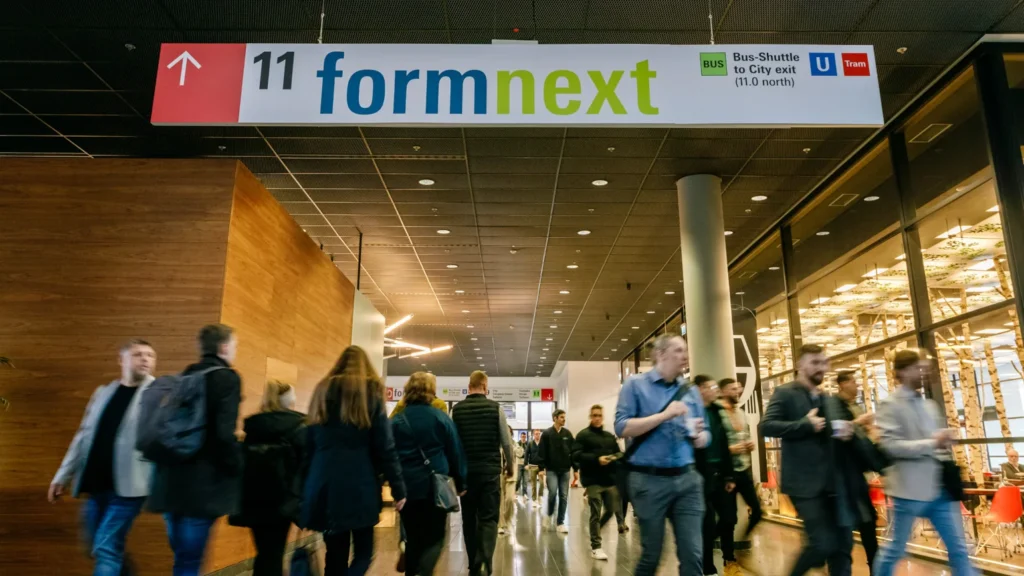
The publication dedicated to the Formnext 2026 exhibition reflects the significance of this event as a central hub for additive manufacturing. Special attention is given to the selection of the United Kingdom as the partner country, symbolizing recognition of its leading role in the development of 3D printing technologies and related industrial solutions.
Scale of the event and its global significance
According to the data presented, Formnext 2026 will take place from November 17 to 20 in Frankfurt am Main and will bring together approximately 800 exhibitors and 38,000 visitors from around the world. These figures confirm the exhibition’s status as one of the largest international events in the field of additive manufacturing. Formnext has long moved beyond the traditional exhibition format, becoming a multifunctional platform that combines an expo, scientific program, themed forums, and business events. This format not only facilitates technology demonstration but also promotes active knowledge exchange, partnership building, and professional community development. The high level of international participation, including a significant proportion of exhibitors from various countries, underscores the global nature of the event and its importance for the worldwide development of the industry.
The UK as partner country: reasons for the choice and its significance
The designation of the United Kingdom as the partner country for Formnext 2026 is due to its strong position in the field of additive manufacturing. The publication notes that the country has a well-developed ecosystem, including equipment manufacturing, software development, research, and the implementation of technologies across various industries. Experts emphasize that the success of the British industry is largely linked to the close integration of scientific research and industrial production, as well as the active development of startups alongside large companies. The country’s strengths span areas such as materials development, mechanical engineering, software solutions, and the application of technologies in high-tech sectors, including healthcare.
The UK’s participation as partner country implies its active presence both in the exhibition area and in the scientific and educational program, thereby strengthening the country’s influence on shaping the event’s technological agenda.
Additive technologies in dentistry: from innovation to standard
A special place in the publication is given to the role of dentistry as one of the most rapidly growing areas of additive manufacturing application. It is noted that the dental industry has become one of the most successful examples of 3D printing implementation due to the need to create highly complex, customized structures. Modern digital workflows in dentistry include the modeling, production, and post‑processing of items such as crowns, bridges, orthodontic appliances, surgical guides, and removable dentures. The use of 3D printing significantly reduces production time, increases accuracy, and lowers product costs.
Formnext 2026 will serve as a platform for showcasing the full range of such solutions, covering the entire digital cycle — from software to materials and equipment. This underscores the exhibition’s role as a key source of innovation for dental practice.
Cross-industry nature of additive manufacturing development
Although dentistry occupies an important place on the Formnext agenda, the exhibition covers a significantly broader range of industries. Specifically, additive technologies are being actively implemented in aviation, energy, automotive manufacturing, and medicine, where they are used to produce functional components and optimize production processes. Such cross-industry integration accelerates technological development, as innovations developed in one field quickly find applications in others. As a result, a unified technological ecosystem is formed, in which dentistry is one of the key, but not the only, directions.
Scientific and educational program and professional interaction
Formnext 2026 offers not only an exhibition but also an extensive educational program, including lectures, themed forums, and discussion panels. These events allow professionals to learn about the latest research, discuss practical aspects of technology application, and exchange experiences. Of particular importance is the opportunity for direct interaction between developers, manufacturers, and end‑users of the technologies. This format accelerates the implementation of innovations and fosters the formation of sustainable professional connections.
Significance for the future of dentistry and industry
Analysis of the publication allows us to conclude that Formnext 2026 reflects key trends in the development of additive manufacturing, including digitalization, automation, and product customization. In dentistry, these processes are particularly evident, as it is here that the demands for accuracy and personalization reach their highest level. The selection of the United Kingdom as the partner country highlights a shift of innovation hubs toward nations with advanced scientific and technical infrastructure and a high degree of integration between science and business. This underscores the global nature of technological competition and the need for international cooperation.
Conclusion
Thus, Formnext 2026 represents a significant event reflecting the current state and future prospects of additive manufacturing. The participation of the United Kingdom as the partner country enhances the international character of the exhibition and underscores its role as a platform for shaping the technological future.
The relevance of this topic is driven by the fact that additive technologies are becoming an integral part of both industrial manufacturing and dental practice. Their further development and integration into clinical processes will shape the future of medicine, ensuring a higher level of accuracy, efficiency, and personalization of treatment.
Advancement of materials for dental 3D printing significantly expands the possibilities for manufacturing personalized temporary restorations and prosthodontic constructions directly
We use cookies to improve website performance, analyze traffic, and personalize content. You can accept all cookies or customize their use. Learn more in our Cookie Policy.
Functional
Always active
Technical storage or access is strictly necessary for the legitimate purpose of making possible the use of a particular service expressly requested by the subscriber or user, or solely for the purpose of carrying out the transmission of a message over an electronic communications network.
Preferences
The technical storage or access is necessary for the legitimate purpose of storing preferences that are not requested by the subscriber or user.
Statistics
Technical storage or access used solely for statistical purposes.The technical storage or access that is used exclusively for anonymous statistical purposes. Without a subpoena, voluntary compliance on the part of your Internet Service Provider, or additional records from a third party, information stored or retrieved for this purpose alone cannot usually be used to identify you.
Marketing
Technical storage or access is necessary to create user profiles for the purpose of sending advertising or to track a user across a website or multiple websites for similar marketing purposes.