Main » Uncategorized » Environmental footprint of periodontal care: 2–10-fold increase and formation of a paradigm of sustainable clinical effectiveness
Environmental footprint of periodontal care: 2–10-fold increase and formation of a paradigm of sustainable clinical effectiveness
Modern dentistry is undergoing a period of profound transformations in which issues of clinical effectiveness intertwine with the environmental challenges of global health; one of the key barriers to implementation is the absence of a quantitative assessment of the environmental footprint in the management of patients with periodontitis, which impedes the integration of sustainable practices; a recently presented life cycle assessment serves not merely as an analytical tool but as an element that allows correlating clinical outcomes with environmental costs; below follows an analytical presentation and interpretation of the results with an emphasis on evidence-based medicine and the continuous development of professional practice.
The key clinical and organizational findings of the study are highlighted below, and practical recommendations for clinical periodontal practice are also proposed; life cycle assessment (LCA) is considered as a tool for integrating clinical effectiveness and environmental sustainability, allowing quantitative correlation of interventions with their cumulative impact on the environment.
Prevention as a key factor
The life cycle assessment study demonstrates that the transition from prevention to clinical treatment is accompanied by a significant increase in environmental burdens, with professionally provided periodontal care for an average patient associated with an impact approximately 2–4 times higher than daily preventive measures — in advanced stages of periodontitis the indicator increases up to tenfold, which underscores the correlation between disease progression and environmental costs.
Key drivers of environmental burden are the frequency of visits, patient and staff transportation, energy intensity of dental facilities, the use of clinical equipment and disposable materials; from a clinical point of view this means that preventive measures aimed at controlling inflammation and eliminating risk factors possess both medical and environmental benefit, which should be reflected in the priorities of specialty programs and in clinical algorithms.
Expert commentary: in practical periodontology emphasis should be increased on early diagnosis, individualized prevention and motivational support for patients — such measures not only improve periodontal outcomes but also reduce the overall environmental burden by decreasing the number of invasive interventions and repeat visits.
The clinic as an instrument and a new reality
The analysis emphasizes that clinical practice is an element of a complex ecosystem where organizational and technological decisions influence the environmental profile of the care provided; integration of digital solutions, optimization of workflows and standardization of protocols allow reducing negative environmental consequences without compromising the quality of clinical outcomes.
Digital technologies and regenerative methods
The study confirms that the introduction of high-precision digital navigation systems, CAD/CAM processes and regenerative technologies contributes to the reduction of unnecessary procedures, increased reproducibility of interventions and the acceleration of validation of clinical standards; at the same time it is important to assess not only clinical effectiveness but also the cumulative life cycle of the materials and devices used — energy consumption of clinical processes and durability of materials directly affect the final environmental burden.
Practical recommendations: optimization of appointment schedules to reduce transportation burden, telemedicine and remote monitoring of periodontal status, centralized planning of procedures and the use of reusable equipment where justified from the standpoint of asepsis and efficiency — all of this will reduce the carbon footprint while maintaining or improving clinical outcomes.
Educational ecosystem: structure and content
The results of the study, published in the online issue of Journal of Dentistry in September 2026 and developed in cooperation with Procter & Gamble, demonstrate the need to form an interdisciplinary educational ecosystem based on evidence-based medicine and continuous development, which would ensure synchronization of standards and accelerate the diffusion of sustainable practices.
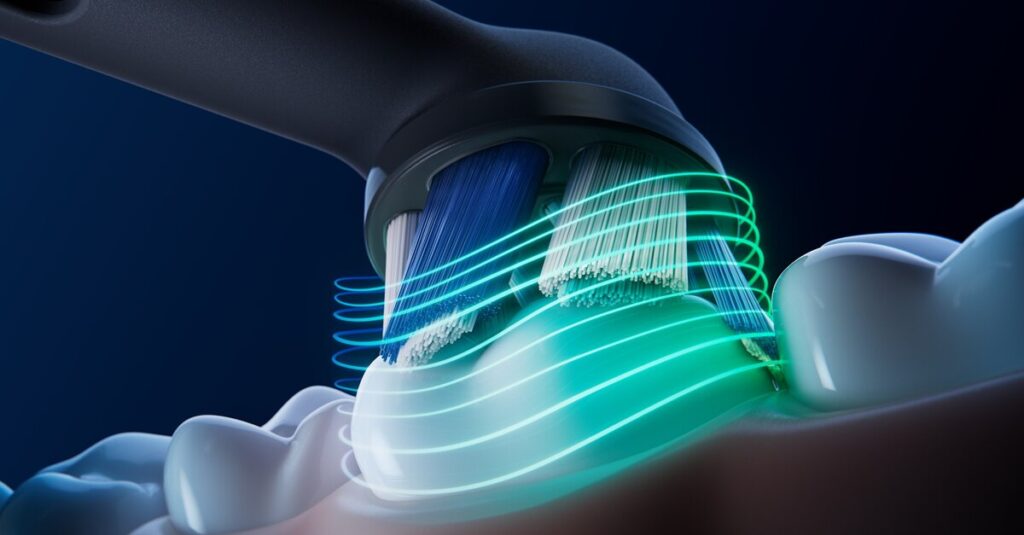
The educational program should integrate training in life cycle assessment methods, the economics of sustainable healthcare and practical algorithms for reducing the environmental impact of clinical activity; comparison of home care using manual and electric toothbrushes showed no statistically significant difference in environmental impact, while patient behavior — in particular water consumption during toothbrushing — emerges as a significant modifying factor that is amenable to correction through education and motivation.
Recommendation for universities and continuing education courses: introduce modules on sustainable clinic management, LCA assessment in dentistry and methods of behavioral intervention for patients, emphasizing that environmentally rational practice must be clinically justified and evidence-based.
Conclusion
The life cycle assessment study demonstrates that modern dentistry is developing as an integrated ecosystem where prevention and optimization of clinical processes are key factors of sustainability; clinicians and administrative leaders must work together to implement digital technologies, standardization of protocols and educational initiatives to reduce the environmental footprint without compromise to clinical effectiveness.
The relevance of this approach is determined by the need for accelerated implementation of innovations and improvement of the quality of medical care in the digital age — international research and educational initiatives play a key role in shaping a professional culture oriented toward predictability, standardization and continuous development.
We use cookies to improve website performance, analyze traffic, and personalize content. You can accept all cookies or customize their use. Learn more in our Cookie Policy.
Functional
Always active
Technical storage or access is strictly necessary for the legitimate purpose of making possible the use of a particular service expressly requested by the subscriber or user, or solely for the purpose of carrying out the transmission of a message over an electronic communications network.
Preferences
The technical storage or access is necessary for the legitimate purpose of storing preferences that are not requested by the subscriber or user.
Statistics
Technical storage or access used solely for statistical purposes.The technical storage or access that is used exclusively for anonymous statistical purposes. Without a subpoena, voluntary compliance on the part of your Internet Service Provider, or additional records from a third party, information stored or retrieved for this purpose alone cannot usually be used to identify you.
Marketing
Technical storage or access is necessary to create user profiles for the purpose of sending advertising or to track a user across a website or multiple websites for similar marketing purposes.