Dentsply Sirona has provided state-of-the-art dental equipment to Smile Train partner centers in India, China, and Indonesia to enhance diagnostic accuracy and improve clinical workflows in the treatment of patients with cleft lip and palate.
The initiative aims to expand access to digital technologies in regional centers providing comprehensive treatment for patients with cleft lip and palate, including preoperative planning, orthodontic support, and prosthetic rehabilitation.
Delivery methodology
Equipment
The deliveries included a set of digital devices focused on 3D data acquisition and digital modeling:
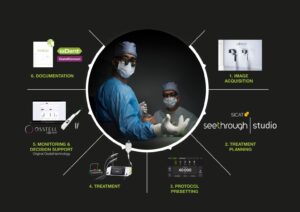
- The intraoral scanner Primescan — for obtaining digital 3D impressions of the oral cavity, reducing the need for traditional impression materials;
- The extraoral X-ray unit Orthophos S 3D — for panoramic and three-dimensional imaging of the maxillofacial region (including CBCT modes for anatomical assessment of the alveolar ridge, nasolacrimal structures, and pathologies crucial for planning cleft treatment surgeries);
- The inEos X5 laboratory digital scanner — for high-precision scanning of impressions and models to facilitate CAD/CAM planning of prosthetic and orthodontic appliances.
Staff training
According to the source, hospital staff in Xi’an received training on using Primescan, which involves working with digital workflows: scanning, post-processing STL/PLY files, and integration with orthodontic and surgical planning software.
Results and expected clinical impact
These donations are part of a long-term partnership between Dentsply Sirona and Smile Train: since the collaboration began, the company has carried out 34 equipment transfers to partner centers worldwide. The provided tools are expected to enhance the efficiency of case diagnosis and documentation, simplify follow-up protocols, and improve the quality of dental care for patients before and after surgeries.
Clinical benefits for practitioners
- Reduced use of traditional impression materials (alginate, silicones) during orthodontic and prosthetic planning stages;
- Increased accuracy of transfer measurements when fabricating temporary and permanent restorations, as well as orthodontic appliances;
- The ability to integrate digital data (intraoral scans + CBCT) for 3D surgical planning and assessment of nasal cavity anatomy, alveolar ridges, and occlusion;
- Simplification of long-term documentation and telemedicine consultations with reference centers.
Practical implications and recommendations
The implementation of digital 3D imaging and intraoral scanners in centers treating patients with clefts holds practical value for the multidisciplinary team—oral and maxillofacial surgeons, orthodontists, prosthodontists, and speech therapists. Recommended steps for technology integration:
- Develop standardized protocols for scanning and storing digital data for subsequent comparative analysis and scientific case registration;
- Provide staff training on correlating intraoral scan data with CBCT to enhance surgical and restorative planning;
- Implement CAD/CAM digital workflows for fabricating orthodontic models, appliances, and prosthetic structures to improve accuracy and reduce treatment time;
- Monitor clinical outcomes and patient satisfaction when transitioning to digital methods, including the accuracy of restoration fit and the reduction of adjustments.
Epidemiological context
The global incidence of children born with cleft lip and/or palate is approximately 1 in 700; prevalence rates in the Asia-Pacific region are among the highest, underscoring the importance of expanding access to modern diagnostic and treatment resources in the region.
Forecast
The provision of Primescan and Orthophos S 3D in the context of cleft correction can significantly enhance the preoperative assessment of maxillofacial structure relationships, as well as the quality of digital impressions for orthodontic and prosthetic planning. To maximize clinical benefits, it is crucial to integrate these devices into a unified digital workflow and ensure continuous training for clinical staff in processing and interpreting 3D data.