Main » New in Dentistry » Coordinated Dental Care for Cancer Patients: How a New Care Model Improves Access to Treatment After Head and Neck Cancer
Coordinated Dental Care for Cancer Patients: How a New Care Model Improves Access to Treatment After Head and Neck Cancer
In the United Kingdom, patients who have completed treatment for head and neck cancer often find themselves in a vulnerable position after the acute phase of oncology care ends. Despite the high risk of chronic oral complications, access to regular and specialized dental care for them remains limited. A new model of coordinated dental care, implemented in West Yorkshire County, demonstrates how structured interdisciplinary networks can close this systemic gap and improve long-term outcomes for patients.
Dental Consequences of Head and Neck Cancer Treatment
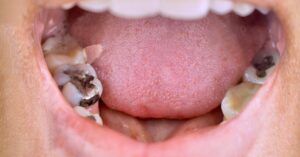
Patients who have undergone surgical, radiation, or combined treatment for head and neck tumors often face significant and persistent oral health issues. Among the most common complications are reduced salivary flow, a sharp increase in caries risk, radiation-induced mucosal changes, impaired masticatory function, and, in some cases, the development of osteoradionecrosis. These problems frequently overlap with an initially poor oral health status, which substantially complicates subsequent dental management.
Social and Structural Barriers to Accessing Care
The challenges are not only clinical but also social. The incidence of head and neck cancer is higher in socioeconomically disadvantaged regions, where access to dental care is already limited. After discharge from specialized oncology centers, patients often struggle to find primary care dentists with sufficient training and confidence to manage this category of patients. Additional barriers include uncertainty in referral pathways, financial aspects, and the lack of clear mechanisms for collaboration between different levels of care.
Establishing a Dental Care Network in West Yorkshire
To address this issue, a specialized dental care network was established in West Yorkshire, integrating tertiary specialized centers, selected general dental practices, and Community Dental Services—a structure contracted with the UK National Health Service and designed for patients not suitable for standard outpatient care.
A key element of the model was not so much additional financial burden but rather the clear organization of processes. The system includes targeted training for dentists, formalized referral pathways for patients back to specialists when necessary, and ongoing communication between tertiary and primary care levels. This creates a sense of clinical confidence for doctors and provides patients with a reliable and clear path for supportive treatment after completing cancer therapy.
Results and Professional Perception of the Model
Early results of the network’s effectiveness evaluation, presented in a scientific publication, show an increase in dentists’ confidence in key aspects of treatment, including dental disease prevention, primary pathology stabilization, and the implementation of restorative interventions. Importantly, the model addresses not only the deficit in clinical skills but also systemic issues—concerns about compensation, uncertainty in clinical pathways, and limited access to specialized consultation.
Alignment with NHS Strategy and Broader Context
The initiative in West Yorkshire fully aligns with the latest NHS recommendations, which emphasize the need for specialized dental pathways for cancer patients. This is particularly relevant in the context of reduced government funding for dental care, which threatens sustainable access to treatment for vulnerable population groups.
The project also resonates with the growing international consensus on the central role of oral health in the overall well-being of cancer survivors. Supportive dental care is becoming not a secondary but a key component of quality of life and rehabilitation.
Conclusion: A Scalable Model for the Future
The experience of West Yorkshire clearly demonstrates that improving dental care for patients after head and neck cancer is possible without major financial investments, provided there is thoughtful coordination, targeted training, and clear integration between care levels. The success of this model suggests its potential for adaptation in other regions and countries.
In an environment of increasing strain on healthcare systems, precisely such networked, interdisciplinary approaches could become the key to ensuring equitable and quality dental care for the most vulnerable patients.
The World Health Organization supports strengthened cooperation between health and environmental control authorities to accelerate the phase-out of dental amalgam
We use cookies to improve website performance, analyze traffic, and personalize content. You can accept all cookies or customize their use. Learn more in our Cookie Policy.
Functional
Always active
Technical storage or access is strictly necessary for the legitimate purpose of making possible the use of a particular service expressly requested by the subscriber or user, or solely for the purpose of carrying out the transmission of a message over an electronic communications network.
Preferences
The technical storage or access is necessary for the legitimate purpose of storing preferences that are not requested by the subscriber or user.
Statistics
Technical storage or access used solely for statistical purposes.The technical storage or access that is used exclusively for anonymous statistical purposes. Without a subpoena, voluntary compliance on the part of your Internet Service Provider, or additional records from a third party, information stored or retrieved for this purpose alone cannot usually be used to identify you.
Marketing
Technical storage or access is necessary to create user profiles for the purpose of sending advertising or to track a user across a website or multiple websites for similar marketing purposes.