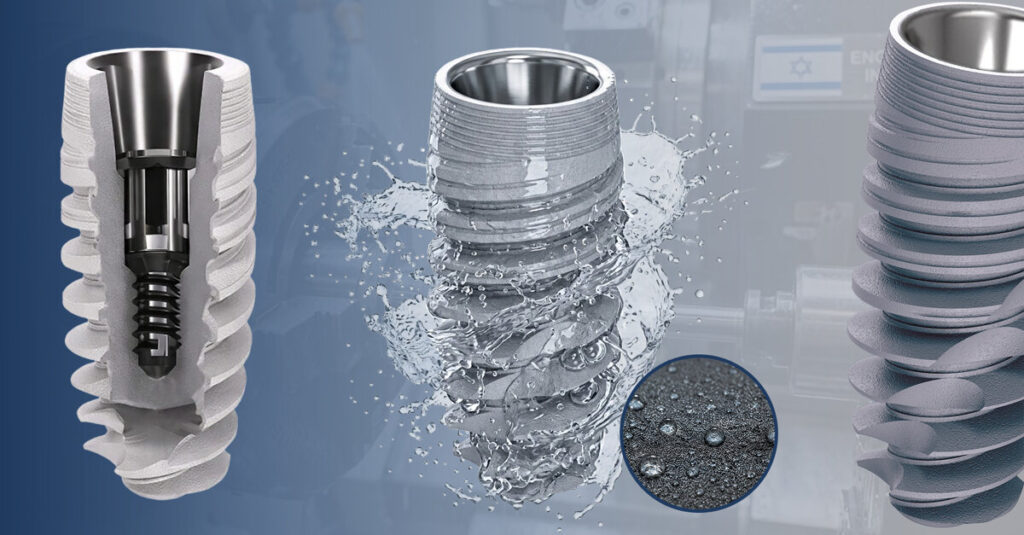

Conical Connection Uni-Platform: Interface Stability and Unification of Implant Prosthetic Lines

The production of implants with reliable fixation is becoming increasingly critical for the long-term success of restoration. Israeli company IDL Dental Technologies has developed 16° Uni-Platform — a unified conical Morse taper connection applied across all major implant product lines.

Design and Integration Mechanics

The fundamental principle of IDL Uni-Platform is based on friction fit of components: the abutment and implant interact along a conical surface rather than meeting at a flat shoulder. Under loading, this geometry redirects forces into the implant body instead of concentrating stress at the crown interface, ensuring the system behaves as a single entity rather than two connected elements.

Key Advantages of the System

Stability at the Interface

Microgap between components and micromotion are constant factors in two-component implants. The friction connection of IDL Uni-Platform reduces the effective microgap and limits mobility under loading, which is associated with a more favorable response of periimplant tissues.

Platform Shift

The abutment is narrower than the implant platform, creating an internal recess at the interface. This provides additional space for periimplant tissues and is associated with less marginal bone resorption.

Mechanical Stability

Tight interaction in the Morse taper system limits microleakage and helps preserve screw preload under cyclic loading — particularly important for monolithic restorations and immediate loading protocols.

Practical Unification

The use of a single connection across all systems (Progressive, Core, Zygomatic) significantly simplifies logistics: the clinic does not need to maintain separate sets of prosthetic components for each implant type, and the workflow remains consistent regardless of the clinical indication.

Clinical Relevance of Conical Connections

While other types of connections remain relevant, conical connections are increasingly becoming the standard in addressing interface stability and periimplant tissue management.

Source

Original publication

Leave a Reply

Your email address will not be published. Required fields are marked *

Other news

Subscription to thousands of useful articles, 600 lessons, reviews & ratings

Subscribe to the newsletter

More news in our Telegram!

Congratulations!
You have successfully registered