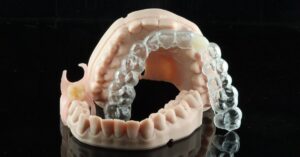
Clayton Christensen’s “The Innovator’s Dilemma”: How dentistry implements digital technologies

Clayton Christensen’s book “The Innovator’s Dilemma” examines why successful companies sometimes lose their leadership to new technologies and how to avoid such mistakes in product and service management.

Why is this important for practicing dentists and clinic managers?

Modern dentistry is actively integrating digital technologies — from CAD/CAM and intraoral scanners to cloud-based practice management systems and teledentistry—making Christensen’s principles directly applicable to clinical practice and clinic management.

Impact on clinical workflows

Disruptive solutions often do not initially compete on traditional clinical metrics (impression accuracy, marginal fit) but create new workflows: remote monitoring of orthodontic treatment, chairside milling of temporary restorations, integration of CBCT and intraoral scans into a unified DICOM/layered database.

Risks for major software vendors and equipment manufacturers

Vendors focused on improving existing products for large clinics may miss early signs of new solutions initially adopted by small laboratories, startups, or individual practices with niche specializations (e.g., digital implantology for single-stage protocols).

Practical recommendations for dentists and clinic leaders

To minimize the risk of the “innovator’s dilemma,” it is recommended to combine clinical expertise with innovation management practices.

  • Dedicate resources to experimental projects: create pilot groups to test new devices and software outside the clinic’s main operational activities.
  • Integration and modularity: when selecting digital solutions, prioritize systems with open APIs and compatible DICOM/HL7 interfaces to simplify the integration of CAD/CAM, CBCT, and PMS.
  • Clinical value assessment: test innovations based on clinical outcomes—appointment duration, marginal fit accuracy, finishing time, and patient satisfaction.
  • Separate business models: launch new services (teledentistry, remote consultations, subscriptions to digital workflows) within a distinct organizational unit to avoid stifling innovation with the bureaucratic demands of the main clinic.
  • Staff training and change management: the implementation of intraoral scanners, milling machines, or cloud-based PMS requires thoughtful preparation of assistants, technicians, and dentists to ensure the quality of care.
  • Regulatory and safety considerations: account for FDA/CE requirements and national medical device regulations, as well as patient data protection standards (including encryption and compliance with local personal data processing requirements).

How to evaluate investments in new technologies

Evaluation criteria

  • Clinical Efficacy: Does the technology improve treatment outcomes, reduce complications, or lower readmission rates?
  • Economic Return: Payback through reduced appointment times, increased throughput, or new revenue streams (e.g., digital patient services).
  • Interoperability: Ability to integrate with existing laboratory systems, radiology archives, and practice management software.
  • Workflow Flexibility: How well the technology adapts to existing clinical protocols without compromising treatment quality.

Conclusion and practical clinical application

Christensen’s principles help dentists and clinic managers systematically approach innovation: isolate pilot projects from core operations, focus on clinical and economic value, and ensure patient data compatibility and security.

By following these approaches, dental practices can leverage the benefits of new digital technologies — from improving the accuracy of prosthetic restorations to expanding teledentistry — while simultaneously reducing the risk of losing competitiveness.

Leave a Reply

Your email address will not be published. Required fields are marked *

Other news

Subscription to thousands of useful articles, 600 lessons, reviews & ratings

Subscribe to the newsletter

More news in our Telegram!

Congratulations!
You have successfully registered