Main » Uncategorized » CEDE exhibition in Poznan: more than 10 000 specialists and the formation of a reproducible digital clinical paradigm
CEDE exhibition in Poznan: more than 10 000 specialists and the formation of a reproducible digital clinical paradigm
Modern dentistry is undergoing a profound transformation in which digital technologies, interdisciplinary approaches and clinical cooperation are shaping new paradigms of practice.
In this context the key factor of progress becomes not only the integration of digital workflows into clinical protocols, but also the standardization of educational programs and the validation of new methods, which makes events like CEDE an important bridge between industry and clinical practice.
Exposition as a key factor
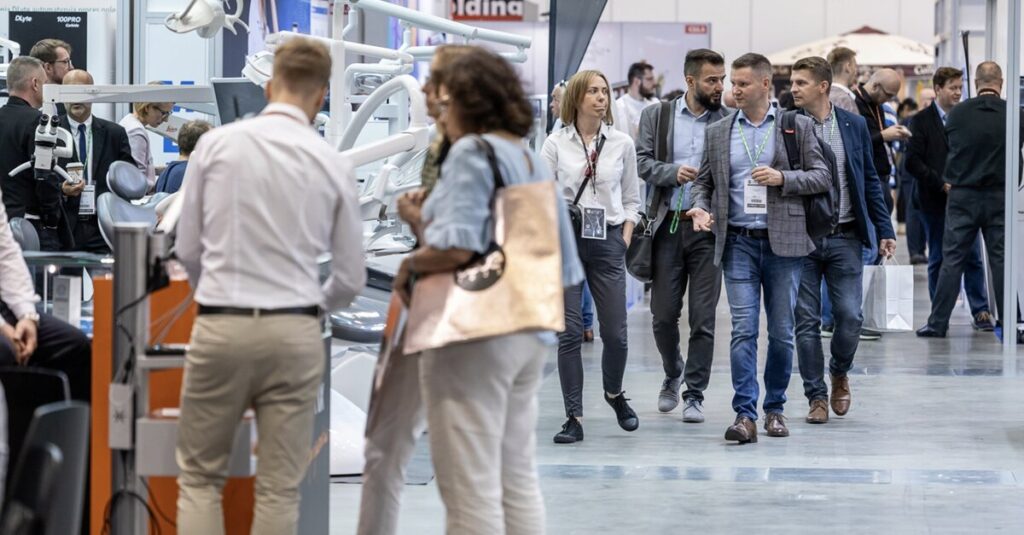
The CEDE exposition is considered not merely as a commercial showcase, but as a platform for practical validation of workflows, assessment of equipment compatibility and material-oriented protocols; more than 10 000 visitors and nearly 200 companies confirm the high interest in reproducible integration of technologies into clinical practice.
From the clinician’s point of view the exposition provides an opportunity for direct assessment of parameters critical to treatment quality — the accuracy of CAD/CAM restorations, the resolving power of intraoral scanners, CBCT visualization metrics and the compatibility of materials with provisional and permanent restorations; for educators and clinic directors the exhibition becomes an environment for synchronizing educational standards and defining criteria for the inclusion of technologies into treatment protocols.
Educational program: structure and content
The CEDE program combines prosthetics conferences, practical master classes and pediatric dentistry sections, providing a balance of theory and practice based on clinically validated cases; emphasis is placed on reproducibility of results, a criterial approach to outcome assessment and the translation of evidence-based medicine into everyday practice.
Practical master classes and interdisciplinarity
Practical sessions on digital smile design, the creation of surgical guides and the use of intraoral scanners are implemented as modules for increasing clinical predictability — participants acquire skills in CBCT-based planning, performing virtual prosthetic design and manufacturing restorations taking into account biomechanics and hygienic requirements; interdisciplinary lectures promote the integration of periodontology, orthodontics and implantology into a unified treatment algorithm.
From an educational standpoint it is important that such courses are competency-oriented: the setting of learning objectives, standardized criteria for assessment of practical skills and the discussion of complication management algorithms — these are elements that enhance the quality and reproducibility of subsequent clinical practice.
Poznan as a strategic venue
The return of CEDE to Poznan and the move to June has logistical and strategic justification: reduction of competition with autumn events, an increase in time windows for business negotiations and equipment testing during hands-on sessions; local infrastructure and access to university clinics strengthen the academic component and support transnational cooperation.
The hybrid format of events expands access to lectures and demonstrations for an international audience, which is important for the dissemination of standardized protocols and the collection of multicenter data necessary for the clinical validation of new methods.
Conclusions and expert commentary
CEDE functions as an integration ecosystem where manufacturers, clinicians and educators jointly form clinically applicable and reproducible solutions; the key elements remain the standardization of educational programs, the validation of workflows and a focus on the evidence base when implementing digital technologies.
For dentists the practical recommendation is as follows: evaluate new technologies through the prism of reproducibility and conformity to clinical protocols, actively participate in hands-on sessions for correct transfer of skills into practice and initiate intra-clinic validation algorithms when implementing new workflows.
Contemporary dentistry is undergoing a period of accelerated digital transformation, forming new standards of clinical practice and educational ecology. The
We use cookies to improve website performance, analyze traffic, and personalize content. You can accept all cookies or customize their use. Learn more in our Cookie Policy.
Functional
Always active
Technical storage or access is strictly necessary for the legitimate purpose of making possible the use of a particular service expressly requested by the subscriber or user, or solely for the purpose of carrying out the transmission of a message over an electronic communications network.
Preferences
The technical storage or access is necessary for the legitimate purpose of storing preferences that are not requested by the subscriber or user.
Statistics
Technical storage or access used solely for statistical purposes.The technical storage or access that is used exclusively for anonymous statistical purposes. Without a subpoena, voluntary compliance on the part of your Internet Service Provider, or additional records from a third party, information stored or retrieved for this purpose alone cannot usually be used to identify you.
Marketing
Technical storage or access is necessary to create user profiles for the purpose of sending advertising or to track a user across a website or multiple websites for similar marketing purposes.