Main » The life of a doctor » Between science and practice: how modern dental communities are shaping a new clinical reality
Between science and practice: how modern dental communities are shaping a new clinical reality
The question of the gap between scientific research and everyday clinical practice remains one of the key challenges of modern medicine. Despite the rapid development of the evidence base, the implementation of scientific knowledge into the actual work of physicians often occurs with a significant delay. This is particularly relevant for dentistry, where clinicians make daily decisions under conditions of limited time, high workload, and a variety of clinical cases.
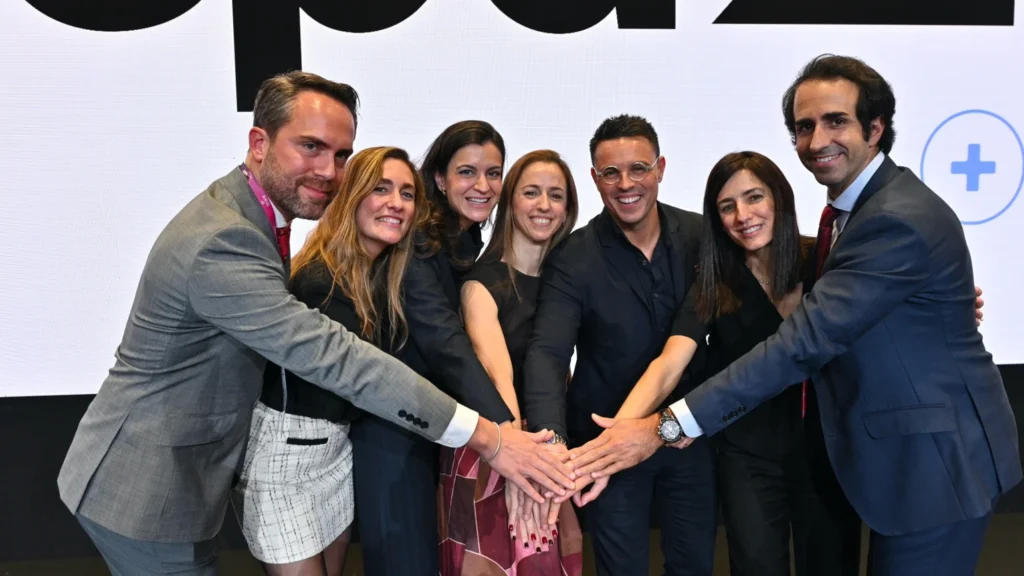
Against this backdrop, the activities of professional organizations take on particular importance. They act as intermediaries between academic science and practicing specialists, transforming complex scientific data into understandable and applicable clinical protocols. The focus of the material under review is the position of the Spanish Society of Periodontology and Osseointegration (SEPA), for whom bridging this gap is one of its strategic goals. The text presented below is an expanded translation and analytical reworking of the original article, supplemented with interpretations and journalistic‑scientific emphases that reveal its significance in the broader context of the development of dentistry.
The role of professional communities in translating scientific knowledge
According to the original material, one of the fundamental priorities of SEPA is to bridge the gap between scientific achievements and their practical application in the clinic. This task becomes particularly urgent in the context of the rapid accumulation of scientific information, when it is becoming increasingly difficult for clinicians to navigate the flow of research and integrate it into daily practice.
This approach reflects a broader trend in medicine, where professional organizations are increasingly taking on the function of “translators” of science. Their activities are aimed not only at generating knowledge but also at its adaptation, standardization, and dissemination among practicing specialists. SEPA, in particular, actively implements educational programs, scientific congresses, and international initiatives, creating a sustainable ecosystem for professional development. These tools not only transmit knowledge but also create a space for discussion, critical analysis, and adaptation to the real‑world conditions of clinical practice.
The scientific base as the foundation of clinical decisions
One of the key aspects of SEPA’s activities is its focus on evidence‑based medicine. Modern clinical guidelines developed on the basis of international research and expert consensus are becoming the foundation for decision‑making in dental practice. In this context, initiatives aimed at simplifying and systematizing scientific data play an important role. For example, SEPA’s international projects allow complex clinical recommendations to be transformed into practical algorithms accessible for use in a physician’s daily work.
This approach improves the quality of medical care by reducing the variability of clinical decisions and ensuring more predictable treatment outcomes. At the same time, it facilitates the learning and professional development process, making current knowledge accessible to a wider range of specialists.
Integration of innovations into everyday practice
Modern dentistry is undergoing a phase of active technological transformation, where digital solutions, artificial intelligence, and new diagnostic methods are becoming an integral part of clinical work. In this regard, the task of integrating innovations takes on particular importance. As noted in materials related to SEPA’s activities, the implementation of new technologies must be accompanied by their critical evaluation and adaptation to real‑world clinical conditions.
It is important to emphasize that this is not about the mechanical implementation of innovations but about forming a thoughtful approach in which technologies are used to increase accuracy, personalization, and treatment effectiveness. This approach avoids excessive technologization and maintains a balance between scientific progress and clinical appropriateness.
Interdisciplinarity as a condition for development
One of the key principles of modern dentistry is interdisciplinary interaction. Oral diseases are increasingly viewed in the context of the overall condition of the body, requiring collaboration between dentists, physicians, researchers, and other specialists. SEPA congresses and educational programs demonstrate a commitment to building precisely this model of interaction. They bring together specialists from different fields, creating conditions for knowledge exchange and the development of comprehensive treatment approaches. This is especially important in the context of chronic diseases, where treatment effectiveness largely depends on the coordination of actions among various medical specialists.
Significance of the initiative for the future of dentistry
Bridging the gap between science and practice has not only professional but also social significance. The quality of medical care and the level of public health directly depend on how quickly and effectively scientific achievements are implemented into clinical practice. In a context where more than one billion people worldwide suffer from periodontal diseases, the need to implement evidence‑based approaches becomes obvious. SEPA’s activities in this context can be seen as a model demonstrating how professional communities can influence the development of the entire industry. Their role lies not only in disseminating knowledge but also in shaping new standards of medical practice.
Conclusion
Analysis of the material under review allows us to conclude that the key direction for the development of modern dentistry is the integration of scientific knowledge into everyday clinical activity. Initiatives such as those implemented by SEPA demonstrate the effectiveness of a systematic approach that includes education, research, and interdisciplinary collaboration. Their significance extends beyond the professional community, influencing the quality of medical care and public health as a whole.
In the future, we can expect a further strengthening of the role of such organizations, which will not only adapt scientific achievements but also actively shape the directions of dentistry’s development. In this sense, bridging the gap between science and practice becomes not just a task but a strategic condition for the sustainable development of the entire healthcare system.
Modern dentistry is developing as one of the most dynamic areas of medicine, intensively implementing digital and organizational innovations. Emotional
We use cookies to improve website performance, analyze traffic, and personalize content. You can accept all cookies or customize their use. Learn more in our Cookie Policy.
Functional
Always active
Technical storage or access is strictly necessary for the legitimate purpose of making possible the use of a particular service expressly requested by the subscriber or user, or solely for the purpose of carrying out the transmission of a message over an electronic communications network.
Preferences
The technical storage or access is necessary for the legitimate purpose of storing preferences that are not requested by the subscriber or user.
Statistics
Technical storage or access used solely for statistical purposes.The technical storage or access that is used exclusively for anonymous statistical purposes. Without a subpoena, voluntary compliance on the part of your Internet Service Provider, or additional records from a third party, information stored or retrieved for this purpose alone cannot usually be used to identify you.
Marketing
Technical storage or access is necessary to create user profiles for the purpose of sending advertising or to track a user across a website or multiple websites for similar marketing purposes.