Main » Uncategorized » Article text: Project Steady: six-month European study and formation of an inclusive care paradigm
Article text: Project Steady: six-month European study and formation of an inclusive care paradigm
Modern dental practice is undergoing a profound transformation in which digital technologies, interdisciplinary cooperation and access policy play a key role.
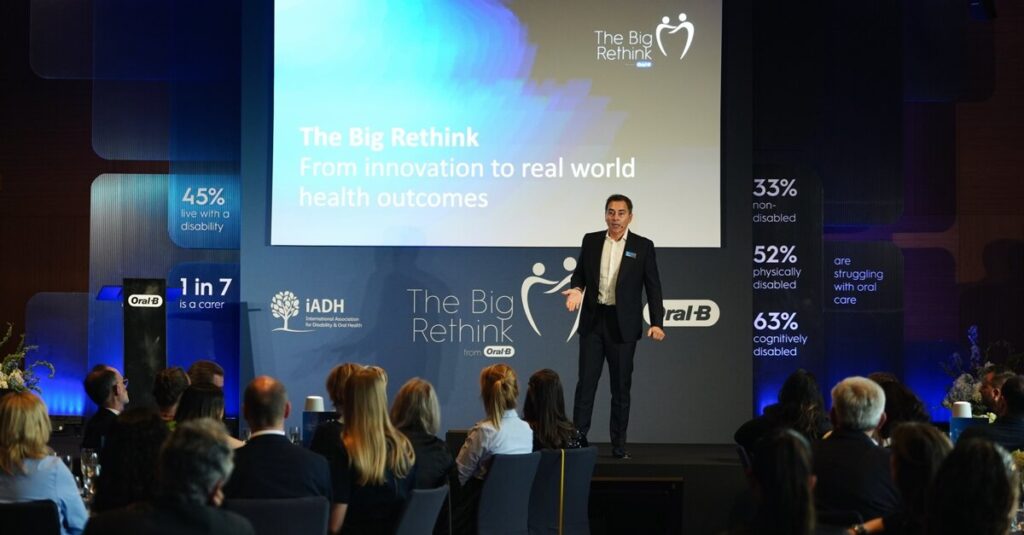
Project Steady — a six‑month European study initiated by Oral‑B in partnership with the International Association for Disability and Oral Health — was based on systematized feedback from patients, caregivers and clinicians and aimed at validation of adaptive solutions and standardization of practices for patients with disabilities.
Inclusion as a key factor
Baseline analytics show that four out of ten Europeans identify themselves as having a disability, which changes the profile of population demand and requires integration of accessibility into clinical strategy rather than just into marketing.
In the clinical context this means a systemic assessment of the patient’s functional limitations — hand motor skills, coordination, cognitive functions, ability to self‑care — and subsequent adaptation of home hygiene recommendations, device selection and educational interventions with an emphasis on reproducibility and clinical evidence.
Research ecosystem: structure and content
The project included data collection from patients, caregivers and dentists, pilot evaluation of adaptive brush heads for electric toothbrushes and analysis of clinical outcomes over six months.
Study design and clinical validation
In the pilot phase nine out of ten participants who used an adaptive brush head demonstrated a reduction in plaque sites, two out of five — an improvement in gingival condition, which confirms the clinical value of practical solutions and the need for further standardization of assessment metrics; for reproducibility and scaling standardized outcomes are required — plaque index, bleeding on probing (BOP), gingival index, probing depth measures, as well as Patient‑Reported Outcome Measures (PROMs) and data on caregiver engagement.
Expert commentary: the pilot data provide a rationale for integrating adaptive devices into routine practice, however guideline development requires large randomized studies with controlled outcomes and prolonged follow‑up, as well as methodological unification of data collection between countries.
Europe as a strategic platform
The project’s multinational coverage made it possible to test solutions in a transnational environment, identify barriers to implementation in different healthcare systems and synchronize practices through engagement with organizations advocating for the rights of persons with disabilities.
The politico‑practical significance lies in the fact that clinical research in this area goes beyond pilot projects and becomes a tool for developing agreed standards that affect regulatory requirements, reimbursement and training programs for professionals.
Educational ecosystem: structure and content
The Disability Champions program provides for the appointment of an internal team lead responsible for accessibility, communication and organizational procedures, the implementation of learning modules and trainings focused on reproducible clinically validated care algorithms for patients with special needs.
Practical implementation requires development of modular training programs for clinical staff, regular competency assessment, use of digital educational platforms and simulation cases, integration of materials into clinic protocols and consideration of caregivers’ roles when planning home care.
Practical recommendations for clinicians
Assess the patient’s functional status, define the goal of the hygiene program and select adaptive devices with subsequent validation of effectiveness at follow‑up visits using objective measures — plaque index, BOP, probing depth, PROMs — document caregiver involvement, train the team and record care protocols for reproducibility; use digital tools for remote monitoring and continuous feedback, engage with patient advocacy organizations to adapt services and lobby for changes in reimbursement and standards.
Conclusion
Project Steady demonstrates that modern dentistry is evolving as an integrated ecosystem based on knowledge exchange, digital technologies and clinical cooperation; accelerated implementation of inclusive solutions requires standardization of outcomes, educational synchronization and cross‑sector interaction to increase the predictability and quality of clinical outcomes for patients with disabilities.
New EFP–EAPD consensus supports age-specific periodontal assessment and management for children and adolescents Introduction / background A joint consensus report
In modern implantology, based on digital technologies and interdisciplinary clinical practice, the problem of chronic inflammation around implants, caused by
We use cookies to improve website performance, analyze traffic, and personalize content. You can accept all cookies or customize their use. Learn more in our Cookie Policy.
Functional
Always active
Technical storage or access is strictly necessary for the legitimate purpose of making possible the use of a particular service expressly requested by the subscriber or user, or solely for the purpose of carrying out the transmission of a message over an electronic communications network.
Preferences
The technical storage or access is necessary for the legitimate purpose of storing preferences that are not requested by the subscriber or user.
Statistics
Technical storage or access used solely for statistical purposes.The technical storage or access that is used exclusively for anonymous statistical purposes. Without a subpoena, voluntary compliance on the part of your Internet Service Provider, or additional records from a third party, information stored or retrieved for this purpose alone cannot usually be used to identify you.
Marketing
Technical storage or access is necessary to create user profiles for the purpose of sending advertising or to track a user across a website or multiple websites for similar marketing purposes.