Main » New in Dentistry » Anesthetic buffering technology: How Onset EZ accelerates anesthesia
Anesthetic buffering technology: How Onset EZ accelerates anesthesia
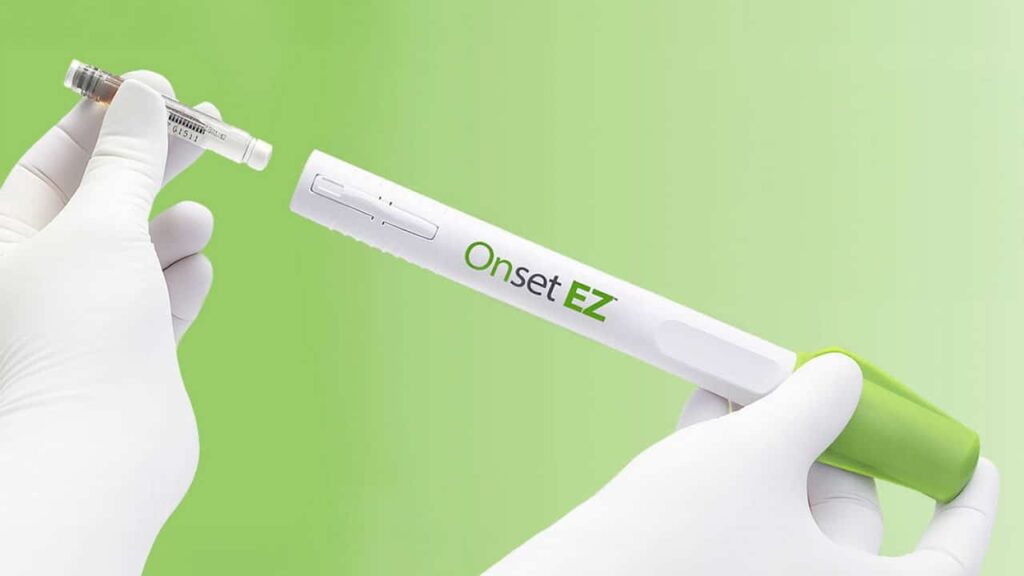
Onpharma announced the market release of the portable pen-style device Onset EZ for buffering local anesthetic solutions immediately before injection.
According to the manufacturer, the device is designed to increase the pH of the cartridge toward more neutral values in order to reduce injection pain and accelerate the onset of anesthesia.
Methodology and device
Onset EZ is supplied as a sterile 8.4% sodium bicarbonate solution in water for injection. The pen is designed to mechanically deliver a dose of bicarbonate for buffering individual cartridges — supporting up to 30 procedures per pen.
The manufacturer states that buffering occurs “within seconds,” the device requires no specialized training, generates no additional sharps waste, and remains functional for over 30 days after initial opening.
Results and commercial data
The company reports that previous products in the Onset series have been used to buffer over 10 million cartridges in the United States. In the press release, Onpharma representatives emphasize that the device is designed to be stationed in every operatory for quick access and to streamline routine buffering.
Clinical significance
Practical characteristics of the device specified by the manufacturer:
Each pen provides buffering for up to 30 cartridges;
Pen remains functional for over > 30 days after opening (according to the manufacturer);
No extended staff training required;
It is recommended to have one pen in each operatory for ease of use.
For clinical practice, this implies a potential simplification of the anesthetic preparation algorithm (fewer auxiliary instruments, faster procedure). However, when implementing, it is important to consider the specifics of particular anesthetics and the clinic’s safety protocols.
Clinical and technical remarks (expert commentary)
Mechanism and expected effect
Buffering local anesthetics with bicarbonate increases the proportion of the non-ionized form of the anesthetic, which may contribute to a faster onset of action and reduced pain during injection. This explains the clinical rationale for using such devices.
Compatibility and Limitations
When planning the use of Onset EZ, the following points must be considered:
Buffering anesthetics containing adrenergic agonists (epinephrine) may theoretically affect the stability and shelf life of vasoconstrictors; the manufacturer is obliged to provide data on compatibility and stability after buffering;
The timing and volume of bicarbonate added to the cartridge are critical — clinically validated protocols (ratio, waiting time before injection) must be followed to minimize the risk of inefficacy or precipitate formation;
Visual inspection of the cartridge for precipitate or cloudiness after buffering is recommended, along with the use of aseptic technique during handling;
Independent clinical studies confirming the manufacturer’s claimed advantages (speed of onset, pain reduction, long-term pen safety) are not presented in the press release — until such data is available, it is advisable to begin with pilot implementation and outcome monitoring in your practice.
Practical recommendations for dentists
Before implementing into routine practice:
Familiarize yourself with the manufacturer’s instructions and compatibility data for specific brands and concentrations of anesthetics;
Conduct internal validation: assess ease of use, speed of onset, and subjective patient pain ratings on a small sample;
Implement protocols for monitoring signs of precipitate, changes in solution color, or reduced anesthetic efficacy;
Train staff in aseptic standards when handling cartridges and storing pens.
Inference
Onset EZ is positioned as a convenient and rapid solution for buffering local anesthetics in clinical dental practice. Conceptually, the device aligns with established mechanisms for enhancing the quality of infiltration anesthesia. However, for widespread adoption, it is recommended to address compatibility issues with vasoconstrictor-containing solutions and await independent clinical data on safety and efficacy.
Modern dentistry is developing under conditions of rapid growth in clinical capabilities. New materials, digital technologies, imaging methods, and treatment
The global dental industry is undergoing an intensive digital and technological transformation requiring new cooperation between clinical, industrial and educational
We use cookies to improve website performance, analyze traffic, and personalize content. You can accept all cookies or customize their use. Learn more in our Cookie Policy.
Functional
Always active
Technical storage or access is strictly necessary for the legitimate purpose of making possible the use of a particular service expressly requested by the subscriber or user, or solely for the purpose of carrying out the transmission of a message over an electronic communications network.
Preferences
The technical storage or access is necessary for the legitimate purpose of storing preferences that are not requested by the subscriber or user.
Statistics
Technical storage or access used solely for statistical purposes.The technical storage or access that is used exclusively for anonymous statistical purposes. Without a subpoena, voluntary compliance on the part of your Internet Service Provider, or additional records from a third party, information stored or retrieved for this purpose alone cannot usually be used to identify you.
Marketing
Technical storage or access is necessary to create user profiles for the purpose of sending advertising or to track a user across a website or multiple websites for similar marketing purposes.