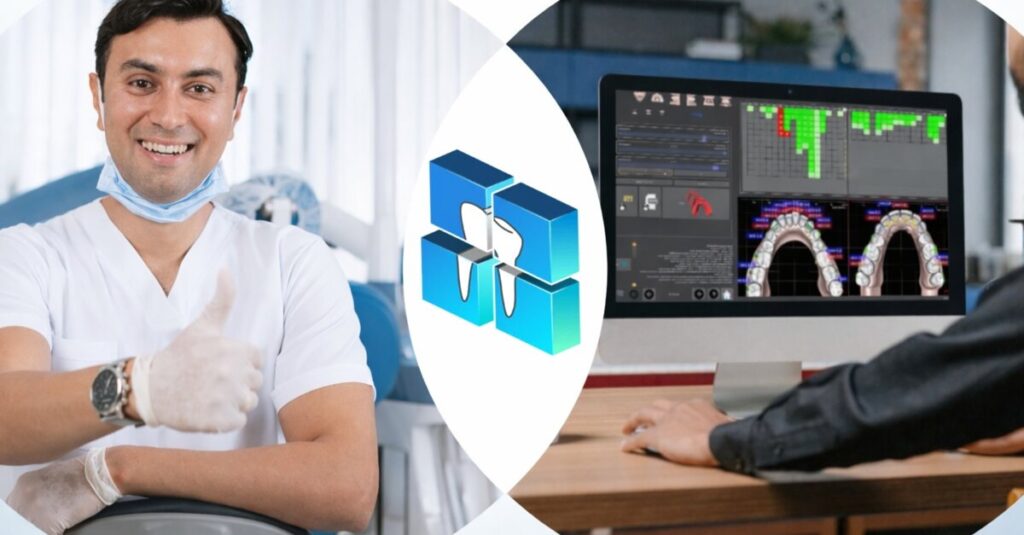

Digital transformation in dentistry is redefining the traditional division of responsibility between the clinical practice and the laboratory. The software platform Digital Technical Studio (DTS) from Polorto demonstrates how integrated digital protocols enable a dentist and specially trained clinical staff to perform individual technical procedures that previously required laboratory support.
Redefining roles in the digital process
The dentist remains responsible for diagnosis, treatment planning and clinical decision-making, including those supported by digital tools. At the same time, standardized digital protocols allow the practice to perform certain technical stages while preserving the role of the dental technician in complex cases.
As noted by Polish orthodontist Dr Klaudia Mastalerz, DTS provides complete clinical control: “I can plan and produce orthodontic appliances directly in my office, accelerating therapy, increasing predictability of outcomes and enabling efficient task distribution within the practice”.
Collaboration between dentist and technician
DTS is designed not to exclude the technician from the process, but to support a different collaboration model. The dentist establishes the treatment concept and therapeutic goals, and can prepare an initial digital design. When laboratory involvement is required, the technician refines the details, completes the final product and focuses on the most complex and labor-intensive production stages.
Technical expertise remains particularly important when designing complex removable appliances; performing work requiring precise modeling; addressing atypical clinical situations; executing prosthetic work with multi-stage processing and high esthetic precision.
Procedures supported in the clinical practice
As part of the Polorto digital ecosystem (including DDP AI and DDP-Ortho), DTS supports a wide range of procedures: conversion of intraoral scan files into diagnostic models and preparation of models for 3D printing; design of guides for indirect bracket bonding; creation of model series for thermoformed orthodontic aligners; design of individual retainers; planning of short finishing aligner series when clinically necessary; virtual preparation as the basis for further planning.
The role of the digital assistant
DTS creates the opportunity to introduce the position of digital assistant — a specially trained member of the clinical team. Under the dentist’s supervision, such a specialist can follow standardized protocols, prepare files for 3D printing, indirect bonding templates and retainers.
Potential benefits include reduction of the operational cycle, lower outsourcing costs, freeing the dentist from technical tasks and increasing process consistency. Additional information can be found at www.ddp.systems.