Main » Uncategorized » GC Europe Campus in Leuven: 260 academic days and formation of a transnational educational ecosystem
GC Europe Campus in Leuven: 260 academic days and formation of a transnational educational ecosystem
Contemporary dentistry is undergoing a profound digital and clinical transformation that requires coordinated integration of theory and practice to improve quality of care.
The key challenge is the formation of clinical confidence through practical experience and clinically validated reproducible protocols, which makes in-person educational platforms critically important for translating innovations into everyday practice.
Educational ecosystem as a key factor
GC Europe is building an educational ecosystem aimed at the standardization and validation of clinical protocols at a transnational level; the key elements of this system are interdisciplinary learning pathways, synchronization of standards, creation of conditions for reproducibility of techniques and strengthening of evidence-based medicine in daily clinical practice.
From the clinician’s point of view, the following components of the educational ecosystem are important: a systematic hands-on program, the ability to control variables in preclinical and clinical settings, exchange of case data and integration of digital workflows with practical laboratory sessions — all of which contribute to reducing variability of clinical outcomes and increasing the reliability of applied methods.
Program and its breakdown: structure and content
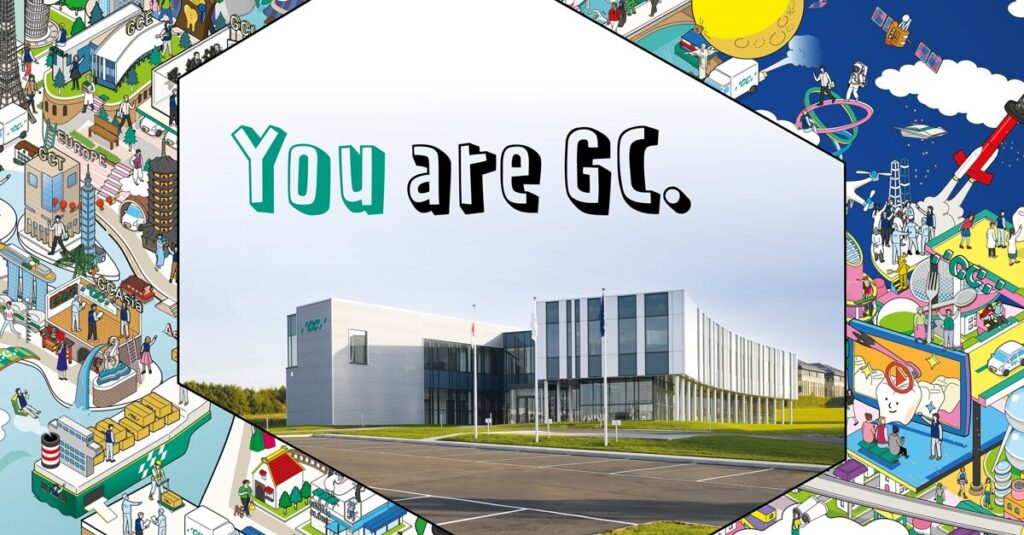
GC Europe Campus in Leuven demonstrates a large-scale educational infrastructure: up to 260 training days per year on a 1 600 m² site, two specialized training laboratories for 18 participants each — for intensive practical sessions, a clinical treatment room with digital radiography and multimedia streaming — for demonstration in real clinical settings, while up to 100 participants can observe workflows simultaneously.
Practical integration is implemented through combining preclinical simulated cases and demonstrations on patients or models using digital technologies — intraoral digital radiography, CAD/CAM workflows, digital documentation of clinical outcomes; this allows the formation of reproducible protocols for adhesive restorative therapy, preparatory stages for prosthetic constructions and protocols for handling modern biocompatible materials.
The architecture of the courses is aimed at knowledge translation: simulation trainings and calibration sessions to reduce inter-operator variability, demonstrations of infection control and manipulation techniques, discussion of algorithms for material selection and sequence of treatment stages — all elements are aimed at improving the quality of clinical decisions and the predictability of outcomes.
Metrics and reach
The campaign is characterized by significant indicators: more than 3 000 educational sessions across Europe and almost 20 000 registered users on the platform, which testifies to a profound transformation of the educational model and a large-scale reach of practicing specialists; this provides the opportunity to collect representative data on the application of materials and procedures in various clinical conditions.
Leuven as a strategic venue: the function of the offline center in a hybrid ecosystem
The location in Leuven functions as a node of a transnational educational network, providing an influx of specialists, exchange of experience and accelerated implementation of reproducible, clinically validated protocols; the offline center serves not only the role of skills training but also primary validation of methods under controlled conditions.
Learning management and certification is implemented through a convenient registration process and a transparent certificate management system, which increases the predictability of specialists’ career development and allows institutes and clinics to integrate learning results into the system of continuous professional development.
Expert commentary
For clinicians it is important to understand that the value of such campuses lies not only in access to new materials, but also in the ability to standardize techniques through strictly regulated protocols, validation in clinical and laboratory settings, outcome monitoring and exchange of objective data. I recommend including in the educational trajectory elements: preclinical calibration of operators, comparison of clinical photographs and radiographs before and after treatment, standardized protocols for preparation and finishing of restorations, as well as long-term follow-up of clinical outcomes to assess the effectiveness of new materials and methods.
Conclusion
GC Europe Campus demonstrates a model of an integrated educational ecosystem where in-person trainings, digital platforms and clinical validation are combined for accelerated implementation of innovations and improvement of the quality of medical care in the digital age; for practicing dentists this provides tools to increase reproducibility and the evidence basis of everyday clinical decisions.
Modern restorative dentistry is undergoing an intensive phase of digital and clinical transformation, during which approaches to materials and restoration
The global dental industry is undergoing a profound transformation driven by geopolitical tensions, trade barriers and supply chain disruptions, requiring
We use cookies to improve website performance, analyze traffic, and personalize content. You can accept all cookies or customize their use. Learn more in our Cookie Policy.
Functional
Always active
Technical storage or access is strictly necessary for the legitimate purpose of making possible the use of a particular service expressly requested by the subscriber or user, or solely for the purpose of carrying out the transmission of a message over an electronic communications network.
Preferences
The technical storage or access is necessary for the legitimate purpose of storing preferences that are not requested by the subscriber or user.
Statistics
Technical storage or access used solely for statistical purposes.The technical storage or access that is used exclusively for anonymous statistical purposes. Without a subpoena, voluntary compliance on the part of your Internet Service Provider, or additional records from a third party, information stored or retrieved for this purpose alone cannot usually be used to identify you.
Marketing
Technical storage or access is necessary to create user profiles for the purpose of sending advertising or to track a user across a website or multiple websites for similar marketing purposes.