Dental technicians and the digital future: why adaptation secures the profession
Introduction
Julia Glancey, a dental technician and commentator, published an editorial on 7 May 2026 describing the rapid shift from manual laboratory workflows to digital processes and the implications for the dental-technical profession. She frames digital tools—such as intra-oral scanners, CAD/CAM software, milling machines and 3D printers—as transformative enablers that reconfigure how restorations are designed, communicated and produced, while emphasising that professional skill remains central.
What the editorial describes
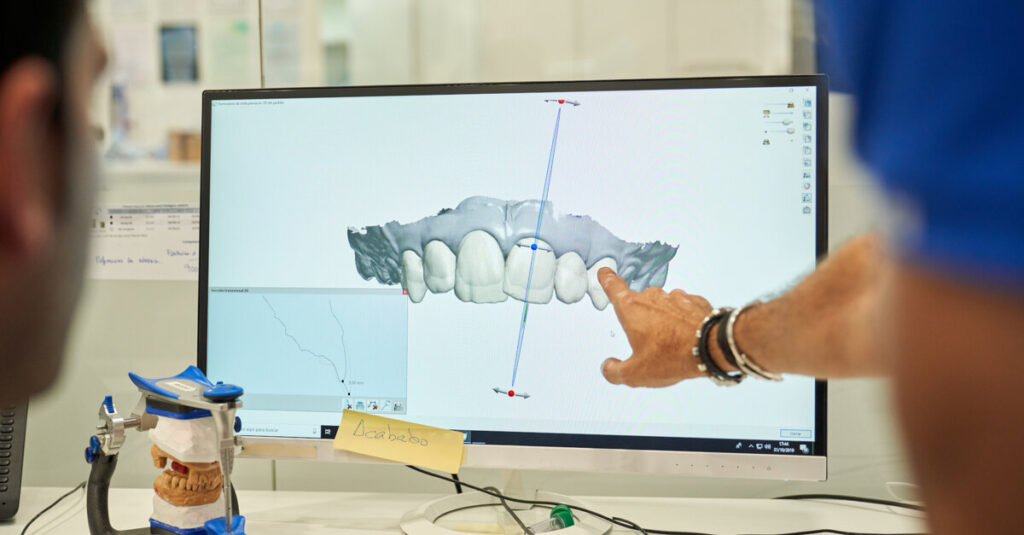
Glancey outlines how digital workflows have evolved beyond crown-and-bridge into applications for both fixed and removable prosthetics. Digital impression capture can deliver files to the laboratory instantaneously, enabling technicians to begin digital design and planning much sooner than with traditional physical impressions and cast models. She highlights practical examples—designing a partial immediate denture from intra-oral scan files in the time it would previously have taken to pour and set a plaster model, and using smile-preview tools to integrate a proposed wax-up into a patient photograph.
The article also details expanding technician roles enabled by digitisation, including CAD and CAM specialists, implant-planning technicians who support clinicians’ digital workflows, remote laboratory services, and more active participation in collaborative treatment planning. Glancey notes the potential for real-time collaboration via video calls and screen-sharing to reduce ambiguous laboratory dockets and decrease subsequent adjustments.
Key points and conclusions
- Digital technologies improve turnaround times, increase reproducibility and can streamline laboratory workflows when used to their full potential.
- These technologies do not replace clinical and technical expertise. Knowledge of anatomy, occlusion, materials and aesthetic principles remains essential, and digital systems often demand deeper technical understanding.
- Rather than eliminating jobs, digitisation creates new specialist roles and opportunities for technicians to expand their scope, communicate more directly with clinicians and patients, and contribute to treatment planning.
- Finishing tasks—staining, glazing, nuanced aesthetic adjustments—still rely on human craftsmanship; the anticipated model is a hybrid workflow combining digital design/manufacturing with manual artistry.
- Glancey warns that the declining number of experienced technicians threatens capacity, turnaround and quality, and she argues that embracing new technologies and continuous learning is necessary to maintain the profession’s relevance.
- As she summarises: “Digital tools are only as good as the clinician and technician using them.”
Relevance for dental practice
For clinicians, the shift described has practical implications for referral and laboratory interaction. Rapid digital transfer enables earlier laboratory input and may support same-day planning conversations. Greater technician involvement in digital treatment planning and implant workflows can improve predictability and reduce iterative adjustments. For laboratory owners and technicians, investment in training and selective adoption of digital equipment can open new service lines (for example, remote design services or specialist CAD/CAM workflows) and strengthen collaborative relationships with referring clinicians.
Limitations and context
The piece is an editorial perspective rather than original research; it does not present quantitative data or comparative studies. Glancey’s observations are experiential and advocacy-oriented: she emphasises the opportunities of digital adoption while cautioning that skilled judgement and manual expertise remain indispensable. Specific economic, regulatory or practical barriers to digitisation in diverse laboratory settings are not explored in depth.
Glancey closes with a business-school aphorism to underline her central message on adaptation: “It is not the most intellectual of the species that survives; it is not the strongest that survives; but the species that survives is the one that is able best to adapt and adjust to the changing environment in which it finds itself.” — Leon C. Megginson (1963).
SOURCE
https://www.dental-tribune.com/news/dental-technicians-and-the-digital-future-why-embracing-change-secures-the-profession/