Main » Reviews and ratings » Implantology 2026: statistics, technologies, and the new logic of growth in dental practice
Implantology 2026: statistics, technologies, and the new logic of growth in dental practice
Implantology in the 21st century has ceased to be a niche area of dentistry, becoming one of the key drivers of development for the entire industry. Increasing life expectancy, changing patient esthetic expectations, and the rapid development of digital technologies are creating a unique environment in which implant treatment is becoming the standard rather than the exception. The relevance of this topic lies in the fact that implantology today is at the intersection of clinical medicine, engineering technologies, and healthcare economics. The presented material, based on an article from the Off the Cusp platform, is an expanded translation with analytical reflection on key statistical data, technological trends, and practical tools shaping the development of implantology in 2026.
Scale and dynamics of the market: implantology as a growing segment of medicine
Current statistical data demonstrate steady growth in the implantology segment. It is estimated that about 3 million patients in the United States already have dental implants, with approximately 500,000 new procedures performed annually. Demographic changes are a key factor in this growth. It is expected that by 2030, the population over 65 years of age will exceed the number of young people under 18, which will inevitably lead to an increase in the number of patients with partial or complete edentulism.
Despite the scale of the market, its growth potential remains significant. Only about 40,000 dentists in the United States actively perform implant placements, out of a total of approximately 200,000 specialists, indicating substantial room for practice expansion. Thus, implantology represents not only a clinical direction but also a strategic opportunity for growth for dental organizations.
Materials and clinical effectiveness: a balance of tradition and innovation
The classic standard of implantology remains titanium implants, which are used in approximately 93% of cases due to their high biocompatibility and durability. However, in recent years, there has been growing interest in zirconia implants, which offer several advantages, including hypoallergenicity, corrosion resistance, and a more esthetic appearance. The clinical effectiveness of implantation remains high: success rates for procedures reach 95–98%, and the service life of implants is often measured in decades. These data confirm that implantology is one of the most predictable and reliable fields of modern dentistry, contributing to its further adoption among patients.
Digital diagnostics: the foundation of modern implantology
One of the key areas of development in implantology is the implementation of digital diagnostic and treatment planning technologies. Modern clinics are increasingly using digital intraoral sensors and imaging systems, which allow for accurate data on bone tissue condition and the patient’s anatomical features.
Of particular importance is cone‑beam computed tomography (CBCT), which is considered the “gold standard” of diagnostics due to its ability to produce three‑dimensional images with high detail. Intraoral scanning complements this process, providing high accuracy of digital models and simplifying the subsequent fabrication of prosthetic restorations. Together, these technologies form the foundation for personalized and predictable treatment.
CAD/CAM and 3D printing: a new logic for production
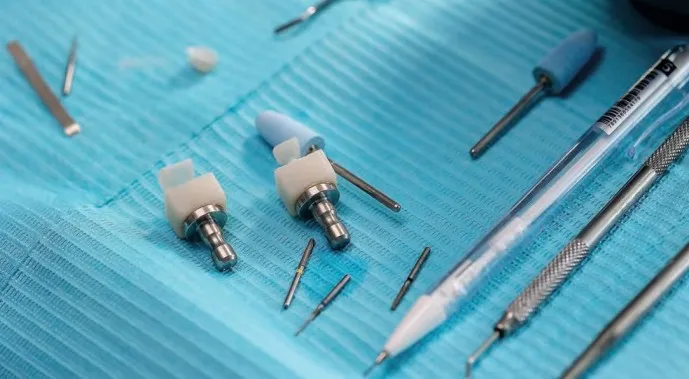
Modern implantology actively integrates CAD/CAM and 3D printing technologies, which makes it possible to significantly change the approach to manufacturing prosthetic restorations. The use of CAD/CAM systems allows for the design and fabrication of abutments and prosthetic restorations directly in the clinic, reducing dependence on laboratories and accelerating the treatment process.
The addition of 3D printing to these technologies opens up new possibilities: the creation of surgical guides, models, and temporary restorations becomes available on demand. Moreover, advances in materials science suggest that in the near future, 3D printing will also be used to create permanent restorations. Thus, digital manufacturing is shaping a new model of dental practice, in which speed, accuracy, and individualization become key parameters.
Support and prevention: an underestimated success factor
Implantation does not end with the placement of the prosthesis — the long‑term success of treatment directly depends on subsequent care and prevention of complications.
Particular attention is paid to preventing peri‑implantitis, which can lead to implant loss. In this regard, specialized hygiene products, including interdental brushes, irrigators, and professional implant care instruments, play an important role. Clinical teams should also use tools for preventive maintenance that do not damage the implant surface, which requires additional training and equipment. Thus, supportive therapy becomes an integral part of implant treatment, determining its long‑term effectiveness.
Technology as a factor of competitiveness
Modern implantology practice is increasingly dependent on the level of technological equipment. The use of digital diagnostic systems, CAD/CAM, and 3D printing not only improves treatment quality but also enhances the clinic’s economic performance. Reduced treatment time, lower laboratory service costs, and increased patient satisfaction create a competitive advantage, particularly in a growing market. Furthermore, the implementation of digital solutions contributes to process standardization and reduces dependence on individual factors, which is especially important for network dental organizations.
Conclusion
Implantology in 2026 is a dynamically developing field at the intersection of medicine and technology. Growing demand driven by demographic changes is combined with the implementation of digital solutions, shaping a new model of dental practice.
The relevance of this field is determined not only by its clinical significance but also by its economic potential. For dental organizations, implantology is becoming one of the key areas of development, capable of ensuring sustainable growth and improving the quality of medical care. In the future, we can expect further integration of artificial intelligence, the development of new biomaterials, and the expansion of digital manufacturing capabilities. However, it is already clear today that the success of implantology practice is determined not only by the skill of the physician but also by the depth of implementation of modern technologies that ensure accuracy, efficiency, and long‑term treatment stability.
Modern dentistry is unimaginable without high-precision rotary instruments, among which straight and contra-angle handpieces hold a special place. These devices
We use cookies to improve website performance, analyze traffic, and personalize content. You can accept all cookies or customize their use. Learn more in our Cookie Policy.
Functional
Always active
Technical storage or access is strictly necessary for the legitimate purpose of making possible the use of a particular service expressly requested by the subscriber or user, or solely for the purpose of carrying out the transmission of a message over an electronic communications network.
Preferences
The technical storage or access is necessary for the legitimate purpose of storing preferences that are not requested by the subscriber or user.
Statistics
Technical storage or access used solely for statistical purposes.The technical storage or access that is used exclusively for anonymous statistical purposes. Without a subpoena, voluntary compliance on the part of your Internet Service Provider, or additional records from a third party, information stored or retrieved for this purpose alone cannot usually be used to identify you.
Marketing
Technical storage or access is necessary to create user profiles for the purpose of sending advertising or to track a user across a website or multiple websites for similar marketing purposes.