Main » Uncategorized » AI-assisted software development in dentistry: 5-step workflow and transformation of the educational ecosystem
AI-assisted software development in dentistry: 5-step workflow and transformation of the educational ecosystem
Modern dentistry is undergoing a rapid digital transformation requiring the integration of clinical and educational technologies to enhance the quality of care grounded in evidence-based medicine.
Summary and practical significance
AI‑assisted workflow is described in a technical report as a practical approach enabling the clinician-dentist without formal education in software engineering to rapidly create specialized applications for scientific research, training courses and clinical digitalization. The report contains an analytical description, resources and practical recommendations with a step-by-step structure and links to open source code, which increases reproducibility and lowers barriers to implementation in educational and clinical settings.
Ecosystem as a key factor: five-step workflow
A key factor of progress is not only the availability of computational tools but also the ability of the clinical team to transform domain knowledge into software solutions supported by generative AI. The authors propose a five-step workflow including identification of the clinical need, description of functionality in plain language, code generation using AI, testing and refinement, preparation of documentation and publication, which provides early validation of requirements and synchronization of standards in an interdisciplinary ecosystem. It is important to consider AI tools not only as code generators but also as means of integrating clinical, pedagogical and engineering knowledge to accelerate the diffusion of innovations.
Educational ecosystem: structure and content
To demonstrate the approach, the report presents three open applications, each aimed at educational or research tasks and implemented within 22 to 32 hours, which illustrates the predictability of prototyping. VirtualEndo Converter converts STL files obtained from CBCT for visualization in augmented and virtual reality; MeshComparisonTool provides quantitative three-dimensional morphological comparisons; DentalEmergencyTrainer simulates emergency telephone scenarios in dental trauma for practicing telephone triage skills and clinical decision-making. These tools serve both as training modules and as prototypes for further clinical validation.
Munich as a strategic venue and international cooperation
The communication from authors in Munich, published in Journal of Dentistry on 26 June 2026, emphasizes the role of local research centers and international collaboration in transforming the methodology of developing digital solutions. Of particular value is the detailed guidance on the workflow, including benchmarks for validation, security issues and maintaining code quality, which is critical when integrating into clinical protocols and considering regulatory requirements and standards for quality management and data protection.
Limitations and requirements for validation
The authors emphasize that AI‑assisted coding does not replace a professional team of developers and does not eliminate the need for assessment of the quality, safety, robustness and maintenance of software, which requires the involvement of software engineers and cybersecurity specialists. The deployment of prototypes generated by AI must be accompanied by clinical validation, reproducibility testing, risk management, documentation of the software lifecycle and compliance with personal data protection requirements; it is also critically important to ensure anonymization and alignment with local ethical and regulatory norms.
Perspectives for professional education and clinical practice
The report demonstrates the necessity of including training in generative AI tools in continuing professional development programs, which will contribute to the standardization of methods, reduction of implementation barriers and the formation of a new professional culture oriented toward accuracy and reproducibility. Generative AI is regarded as a tool for democratizing innovation, allowing clinicians to transform clinical knowledge into applied digital solutions provided there is a rigorous evidence base and integration with existing clinical protocols.
Practical recommendations for clinician-dentists
I recommend considering the AI‑assisted workflow as a strategic tool for prototyping and pedagogical initiatives, engaging software specialists at the stages of architecture and validation, planning clinical studies to assess the effectiveness and safety of the developed applications, implementing version control and testing processes, ensuring compliance with patient confidentiality requirements and documentation for regulatory purposes; such measures will increase the chances of successful integration and scaling of solutions in clinical practice.
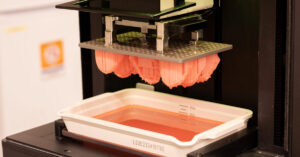
Digitalization and additive technologies are radically transforming the dental industry, forming new production and clinical development paradigms. The key challenge
We use cookies to improve website performance, analyze traffic, and personalize content. You can accept all cookies or customize their use. Learn more in our Cookie Policy.
Functional
Always active
Technical storage or access is strictly necessary for the legitimate purpose of making possible the use of a particular service expressly requested by the subscriber or user, or solely for the purpose of carrying out the transmission of a message over an electronic communications network.
Preferences
The technical storage or access is necessary for the legitimate purpose of storing preferences that are not requested by the subscriber or user.
Statistics
Technical storage or access used solely for statistical purposes.The technical storage or access that is used exclusively for anonymous statistical purposes. Without a subpoena, voluntary compliance on the part of your Internet Service Provider, or additional records from a third party, information stored or retrieved for this purpose alone cannot usually be used to identify you.
Marketing
Technical storage or access is necessary to create user profiles for the purpose of sending advertising or to track a user across a website or multiple websites for similar marketing purposes.