Main » Uncategorized » HySolate SyntX Dam: standardization of isolation in 2 sizes and formation of reproducible clinical protocols
HySolate SyntX Dam: standardization of isolation in 2 sizes and formation of reproducible clinical protocols
Modern dentistry is undergoing constant transformation in which new materials and clinical protocols are integrated to increase the predictability of treatment, while the key challenge remains ensuring rapid, safe, and reproducible isolation of the working field without the risk of allergic reactions.
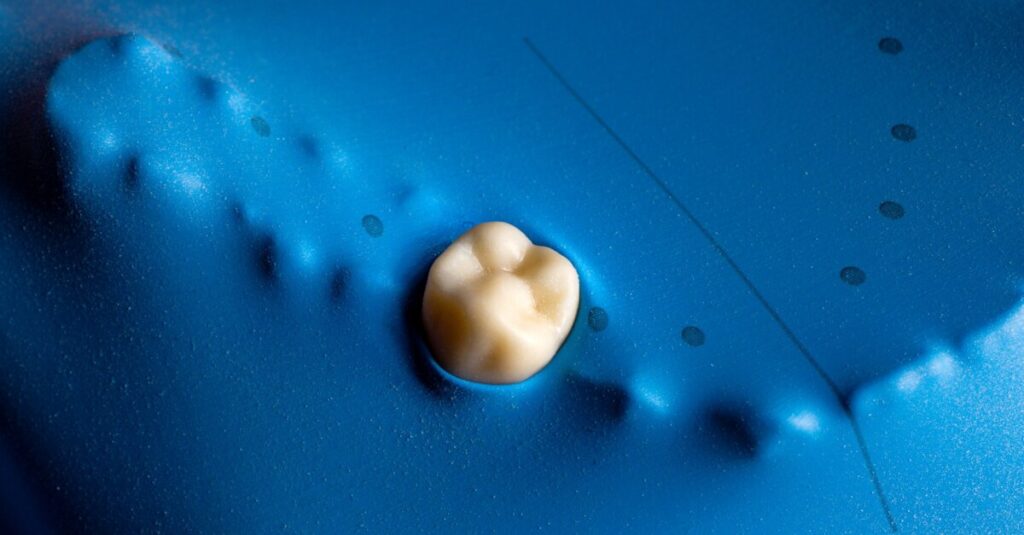
HySolate SyntX Dam from COLTENE is presented as a combination of a polyisoprene film and a preprinted tooth positioning template to accelerate and standardize the placement of the rubber dam in the clinic; the material is positioned with a practical focus on clinical applicability and education.
Material as a key factor
The choice of isolation material directly affects gingival margin retraction, the seal of the working field, and patient safety; in the case of HySolate SyntX Dam the basis is polyisoprene, often referred to as synthetic latex, which demonstrates high elasticity and tear resistance, important when working in limited access and when significant soft tissue retraction is required.
Physico-mechanical properties
Polyisoprene has high tensile strength and sufficient elasticity to form a tight fit around prepared teeth, while its behavior upon puncture and stretching influences the requirements for instruments and rubber dam placement technique; in clinical practice this means a potential reduction in the number of repeat manipulations and a decreased risk of contamination of the working field.
Clinical reproducibility and safety
The key aspect is the reproducibility of the material’s application across different operators and clinics; the standardization of the film and its integration into treatment algorithms contributes to shortening the learning curve and reducing outcome variability; regarding the risk of allergic reactions it should be noted that polyisoprene as a synthetic material reduces the likelihood of sensitization compared with natural latex, however preoperative screening algorithms and documentation of allergies remain mandatory.
Preprinted template: functionality and time savings
The preprinted tooth positioning template serves not only as a visual guide but also as clinical navigation — it reduces preparation time, increases the predictability of perforation placement, and reduces the need for adjustments during rubber dam placement; as a result, the product functions both as an isolation barrier and as a tool for standardizing the workflow.
Impact on rubber dam placement protocol
The integration of the template into work instructions allows formalization of preparation steps: selection of holes according to the template, sequence of fixation, and sequential quality control points; this facilitates the implementation of a unified protocol within the team — from the assistant to the lead clinician — and increases procedural consistency in multi-operator work.
Langenau as a strategic site
Manufacture and market launch are carried out from Langenau, Germany, where COLTENE develops a transnational production and training ecosystem; the product range includes two sizes — 127 × 127 mm and 152 × 152 mm — supplied in packs of 30 sheets and wholesale packs of 75 sheets, which gives the clinic the option to choose based on procedure volume and cost-effectiveness, while packaging solutions become a tool for cost management and procedure standardization.
Educational integration: cooperation and validation
COLTENE accompanies the launch with a series of practical masterclasses and online training through its own academy, providing interdisciplinary cooperation and clinical validation of application algorithms; the availability of case studies and practical recommendations on the company’s social networks further stimulates continuous skill development and contributes to faster and safer product adoption into everyday practice.
Conclusion
HySolate SyntX Dam demonstrates an approach to dentistry development as an integrated ecosystem where digital tools, standardized materials, and educational support combine to improve the accuracy and reproducibility of clinical protocols; the relevance of such a format is driven by the need for accelerated innovation adoption, improved quality of medical care, and the formation of a new professional culture oriented toward standardization and continuous learning.
We use cookies to improve website performance, analyze traffic, and personalize content. You can accept all cookies or customize their use. Learn more in our Cookie Policy.
Functional
Always active
Technical storage or access is strictly necessary for the legitimate purpose of making possible the use of a particular service expressly requested by the subscriber or user, or solely for the purpose of carrying out the transmission of a message over an electronic communications network.
Preferences
The technical storage or access is necessary for the legitimate purpose of storing preferences that are not requested by the subscriber or user.
Statistics
Technical storage or access used solely for statistical purposes.The technical storage or access that is used exclusively for anonymous statistical purposes. Without a subpoena, voluntary compliance on the part of your Internet Service Provider, or additional records from a third party, information stored or retrieved for this purpose alone cannot usually be used to identify you.
Marketing
Technical storage or access is necessary to create user profiles for the purpose of sending advertising or to track a user across a website or multiple websites for similar marketing purposes.