Main » New in Dentistry » Simplifying digital orthodontics: how the updated SureSmile platform reflects a new era of clinical workflows
Simplifying digital orthodontics: how the updated SureSmile platform reflects a new era of clinical workflows
Orthodontics is undergoing a period of rapid change associated with the active introduction of digital technologies into everyday clinical practice. In recent years, digital modeling, aligners, cloud platforms, and data management systems have become an integral part of patient treatment. However, along with the expansion of technological capabilities, a new problem has emerged — the increasing complexity of workflows. Modern orthodontic practices are forced to work daily with large volumes of data, coordinate interaction between doctors, staff, and digital laboratories, and control numerous stages of treatment.
In these conditions, software ceases to be just an auxiliary tool. It becomes a central element of the clinical infrastructure, on which the speed of decision‑making, communication efficiency, and quality of patient treatment directly depend. This is why the update of the SureSmile platform, presented by Dentsply Sirona, has attracted significant attention from industry specialists. The new version of the system was developed with an emphasis on simplifying navigation, increasing ease of use, and optimizing daily workflows, reflecting a broader trend in the development of digital dentistry.
The growth of digital load and the need to simplify interfaces
One of the key reasons for the software modernization was the increasing complexity of digital workflows. Modern orthodontic clinics are serving an increasing number of patients while simultaneously using digital treatment planning, imaging systems, laboratory services, and data exchange platforms. As a result, a significant portion of specialists’ time begins to be spent not on treatment itself but on managing the digital environment.
At Dentsply Sirona, it is emphasized that the efficiency of clinical work today is largely determined by the convenience of software solutions. If the interface requires many actions to perform simple tasks, this increases the burden on staff and reduces the overall productivity of the practice. That is why the updated version of SureSmile was focused primarily on reducing the complexity of daily interaction with the system. This approach aligns with the current trend in medical software development, in which priority is given not only to functionality but also to user experience. Increasingly, developers strive to create systems that work within the logic of the physician’s clinical thinking, rather than requiring the specialist to adapt to the peculiarities of the interface.
New architecture for working with patient data
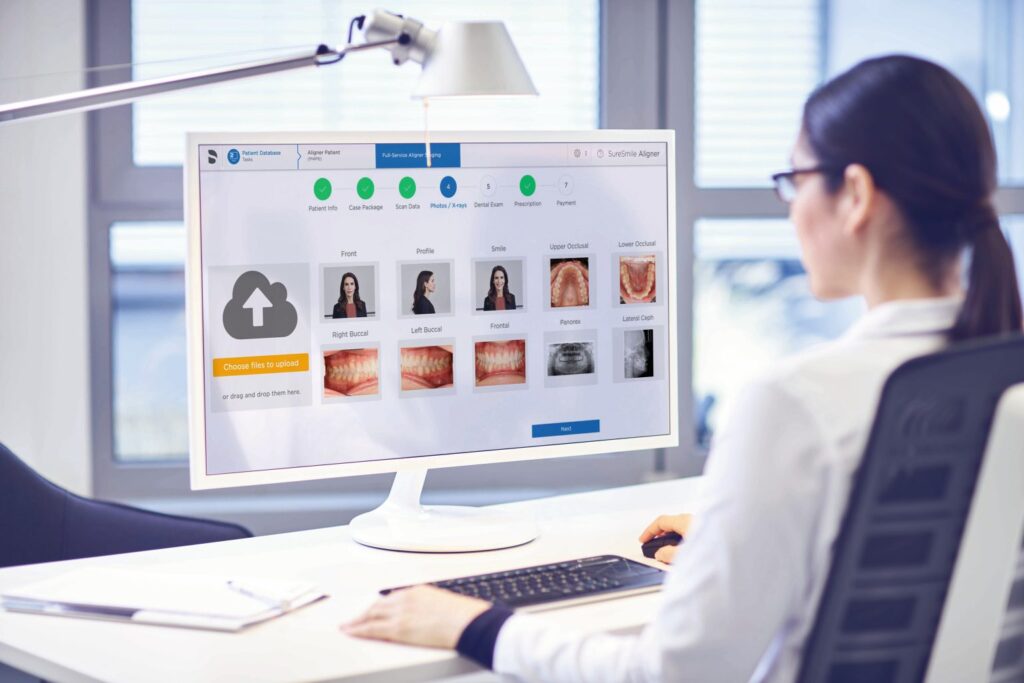
One of the most noticeable changes was the redesigned patient overview system. Now specialists can see treatment status, case history, and key clinical information in a more structured and visual format. This allows them to navigate data more quickly and make decisions without the need to switch between numerous sections of the program. In fact, this represents a shift toward a more centralized model of clinical information management. This approach is especially important in conditions where aligner treatment involves long‑term patient follow‑up and constant monitoring of numerous therapy stages. An additional advantage is the standardization of terminology and instructions within the platform. This reduces the likelihood of errors associated with data interpretation and also increases consistency of work among different team members.
Improving interaction between the clinic and the digital laboratory
Particular attention in the updated version of SureSmile is paid to communication between the clinical practice and the digital laboratory. In modern orthodontics, this aspect is becoming increasingly important, since a significant part of the production processes is carried out remotely. Any delays in information exchange can affect treatment timelines and the efficiency of specialists. The new interface for interacting with the laboratory was designed for faster data exchange and a reduction in the number of intermediate steps. According to the developers, this should reduce case processing time and increase the transparency of the entire treatment process. Such changes reflect the general transition of the dental industry toward a model of integrated digital ecosystems, in which different participants in treatment work within a single information space.
Mobility and flexibility as new practice standards
A significant element of the update was the ability to upload patient photos directly from mobile devices. At first glance, this feature may seem secondary, but in reality it addresses an important demand of modern dentistry — the need to increase workflow flexibility. Mobile solutions speed up information exchange between staff, reduce dependence on stationary workstations, and enable more rapid case management. This is especially relevant for large clinics and network practices, where coordination of actions among various specialists plays a key role. Furthermore, the system allows certain types of treatment corrections to be processed without the need to re‑upload new patient photos within a set period after the initial order. This helps reduce administrative burden and accelerate the progression of clinical cases.
Integration into the DS Core ecosystem and the development of connected dentistry
The updated version of SureSmile is part of Dentsply Sirona’s broader strategy to develop the concept of connected dentistry — networked dentistry based on the continuous exchange of data between various components of the digital infrastructure. The central element of this strategy is the DS Core platform, which ensures the integration of devices, software, and clinical information.
The use of a unified digital environment allows doctors to access data regardless of the device, maintain consistent communication, and monitor the progress of treatment at all stages. This approach becomes especially relevant against the backdrop of the ongoing digitalization of the medical industry, where data is gradually turning into the main resource for managing treatment quality. In essence, we are talking about the formation of a new model of dental practice, in which individual programs cease to exist in isolation and become part of a unified decision‑making ecosystem.
Human‑centered design as a new philosophy of medical software
One of the most important aspects of the update is the change in the very approach to designing medical digital systems. Company representatives emphasize that the goal of the development was to create software that aligns with the orthodontist’s workflow and helps the specialist focus on the patient rather than on managing the interface. This principle reflects the global trend in the development of medical technologies. Today, the effectiveness of digital solutions is assessed not only by the number of functions but also by their ability to reduce the cognitive load on the physician. The less time a specialist spends on administrative operations, the more resources remain for clinical work and patient interaction.
Thus, modern software is becoming not just an automation tool but a full‑fledged participant in the treatment process, influencing the organization of work throughout the clinic.
Conclusion: simplification as the main vector of digital orthodontics development
The update of the SureSmile platform demonstrates an important stage in the evolution of digital orthodontics, in which priority is shifting from simply expanding functionality to creating a more convenient, intuitive, and integrated working environment. The new capabilities of the system are aimed at increasing the efficiency of daily processes, improving communication between treatment participants, and reducing the administrative burden on specialists. The relevance of such solutions is driven by the rapid growth of digitalization in the dental industry. As technology becomes more complex, the need to adapt it to the real needs of doctors and staff increases. This is why interface convenience, speed of operation, and quality of interaction between various digital tools are becoming just as important factors as the clinical capabilities of the software itself.
Thus, the development of SureSmile reflects a broader process of transformation in modern dentistry, where the main task is not simply the introduction of new technologies but the creation of an intelligent digital environment that allows specialists to work more efficiently and patients to receive higher quality and more predictable treatment.
We use cookies to improve website performance, analyze traffic, and personalize content. You can accept all cookies or customize their use. Learn more in our Cookie Policy.
Functional
Always active
Technical storage or access is strictly necessary for the legitimate purpose of making possible the use of a particular service expressly requested by the subscriber or user, or solely for the purpose of carrying out the transmission of a message over an electronic communications network.
Preferences
The technical storage or access is necessary for the legitimate purpose of storing preferences that are not requested by the subscriber or user.
Statistics
Technical storage or access used solely for statistical purposes.The technical storage or access that is used exclusively for anonymous statistical purposes. Without a subpoena, voluntary compliance on the part of your Internet Service Provider, or additional records from a third party, information stored or retrieved for this purpose alone cannot usually be used to identify you.
Marketing
Technical storage or access is necessary to create user profiles for the purpose of sending advertising or to track a user across a website or multiple websites for similar marketing purposes.