Dentsply Sirona and AADOCR name 2026 SCADA award winners
Introduction / Background
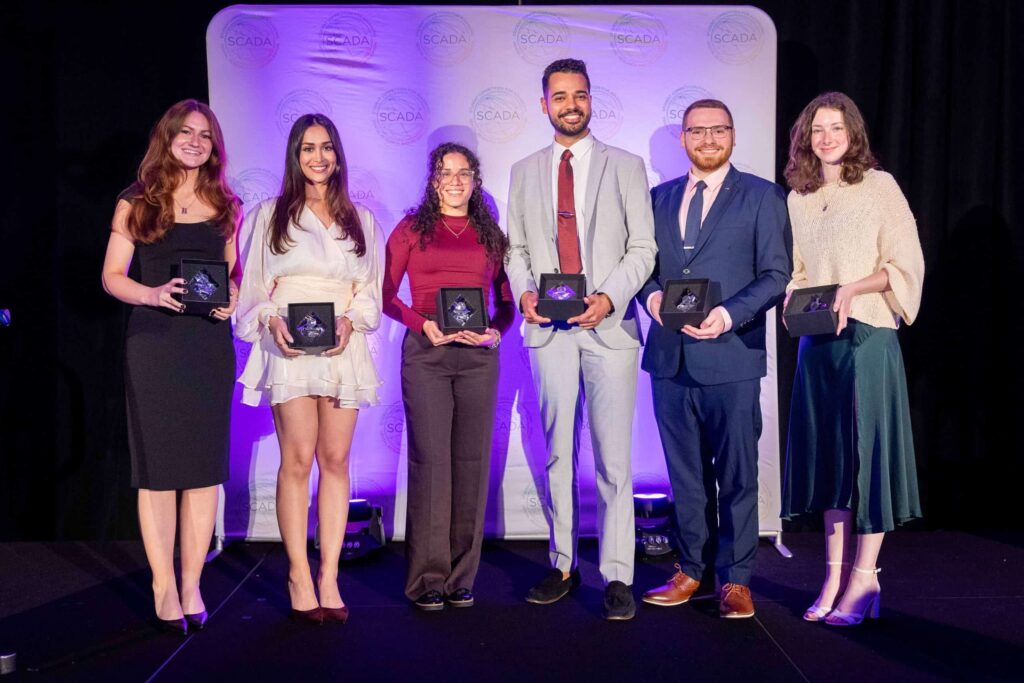
Dentsply Sirona and the American Association for Dental, Oral, and Craniofacial Research (AADOCR) have announced the recipients of the 2026 Student Competition for Advancing Dental Research and its Application (SCADA) Awards. The programme recognises pre-doctoral dental research presented at the AADOCR Annual Meeting and is designed to promote early engagement with dental research among students in the US and internationally.
What was presented and how the competition was run
The 2026 SCADA competition included 61 US-based dental student participants and seven international finalists representing Canada, France, Thailand, Taiwan, South Korea and Japan. All participants received travel and accommodation support to attend the AADOCR Annual Meeting, where they presented their work on 26 March 2026. Winners were selected on the basis of abstract quality, oral presentation and performance during the judges’ question-and-answer session. An awards ceremony recognising the winners was held on 25 March 2026 at the Hilton Bayfront Hotel in San Diego, attended by about 160 guests.
Key findings — award winners and notable recognitions
The 2026 SCADA awardees were announced across two categories: Clinical Research / Public Health, and Basic and Translational Science Research.
Clinical Research / Public Health
First place — Edson DeSousa, Harvard School of Dental Medicine: “Metabolic Syndrome and Dyslipidemia May Influence Periodontal Treatment Outcomes”
Second place — Evan Heidenreich, Kansas City University: “VR and Haptic Simulation in Teaching Dental Local Anaesthetic Delivery”
Third place — Alyssa Saltz, University of Kentucky: “Guideline Adherence to Dental Opioid Prescribing Recommendations in Kentucky”
Basic and Translational Science Research
First place — Elizabeth Leon, Nova Southeastern University: “Porphyromonas gingivalis Vesicles Control Osteoclast–Macrophage Lineage Fate”
Second place — Fatemeh Ebrahimi, University of Texas School of Dentistry: “Molecular Regulation of Facial Symmetry: Implications for Orofacial Cleft Pathogenesis”
Third place — Hannah Herzog, University of California, San Francisco: “Gut Microbiome Ablation with Antibiotics Attenuates Genetic Heterotopic Ossification”
In addition, the inaugural AADOCR SCADA/Dentsply Sirona Research Award was presented to Dr Jacqueline Mays. Dr Mays is a mucosal immunologist and clinical trials dentist whose research addresses chronic graft-versus-host disease affecting the salivary glands and oral mucosa. She leads the Oral Immunobiology Unit within the Division of Intramural Research at the National Institute of Dental and Craniofacial Research (NIDCR) and directs the NIDCR Dental Clinical Research Fellowship programme. The new award aims to support early-career dentist–scientists, including SCADA alumni, by encouraging sustained research careers in dental, oral and craniofacial biology.
“Since its inception in 1959, Dentsply Sirona has proudly supported SCADA as an opportunity for pre-doctoral students to explore the importance of dental research,” said Prof Rainer Seeman, vice-president and chief clinical officer at Dentsply Sirona. “We hope the competition inspires the next generation of dental researchers to build on this experience and contribute new knowledge and innovations that benefit oral healthcare and the future of dentistry.”
“I am extremely grateful to Dentsply Sirona and AADOCR for the opportunity to attend the conference, present our research and meet students, clinicians and researchers from across the country and beyond,” said Elizabeth Leon. “It was an encouraging experience that reinforced my interest in pursuing a career as a research clinician.”
Edson DeSousa commented: “It was an incredible and inspiring week. Presenting alongside so many passionate clinician-researchers has motivated me to continue pursuing clinical research and academic dentistry.”
“We are proud to support aspiring dental researchers and dentist-scientists early in their careers and provide opportunities for them to present their work and build new connections,” said Dr Effie Ioannidou. “Scientific discovery in oral healthcare is essential to advancing dentistry and improving future patient outcomes.”
Relevance for dental practice
The SCADA competition highlights emerging research topics with potential clinical implications, including the influence of systemic metabolic conditions on periodontal outcomes, simulation-based training for local anaesthetic delivery, adherence to opioid-prescribing guidelines, host–microbe interactions affecting bone and immune cell lineages, and molecular mechanisms relevant to craniofacial development. For clinicians, the presentations offer insight into ongoing translational and educational research that may inform future practice standards, postgraduate training curricula and interprofessional research collaborations.
Limitations and context
The SCADA awards recognise early-stage, student-led research presented at a scientific meeting; winning an award reflects the quality of the abstract and presentation rather than confirmatory clinical evidence. Details on study design, sample sizes, statistical outcomes and peer-reviewed publication status were not provided in the announcement. As with all preliminary and conference-based research, findings warrant critical appraisal and validation through full peer review and subsequent studies before being translated into clinical guidelines.
We use cookies to improve website performance, analyze traffic, and personalize content. You can accept all cookies or customize their use. Learn more in our Cookie Policy.
Functional
Always active
Technical storage or access is strictly necessary for the legitimate purpose of making possible the use of a particular service expressly requested by the subscriber or user, or solely for the purpose of carrying out the transmission of a message over an electronic communications network.
Preferences
The technical storage or access is necessary for the legitimate purpose of storing preferences that are not requested by the subscriber or user.
Statistics
Technical storage or access used solely for statistical purposes.The technical storage or access that is used exclusively for anonymous statistical purposes. Without a subpoena, voluntary compliance on the part of your Internet Service Provider, or additional records from a third party, information stored or retrieved for this purpose alone cannot usually be used to identify you.
Marketing
Technical storage or access is necessary to create user profiles for the purpose of sending advertising or to track a user across a website or multiple websites for similar marketing purposes.