Main » Technologies » «The most exciting stage in the development of dentistry»: transformation of the profession in the era of digital and clinical innovations
“The most exciting stage in the development of dentistry”: transformation of the profession in the era of digital and clinical innovations
Dentistry, being one of the oldest medical disciplines, has for decades developed primarily in an evolutionary manner, gradually improving treatment and diagnostic methods. However, in recent years, the industry has been experiencing a qualitatively different phase — a period of rapid technological and conceptual changes affecting both clinical practice and the organization of dental care. At the center of these processes are digitalization, the implementation of artificial intelligence, the development of implantology, and the transition to more personalized treatment models.
An interview with leading implantologist Dr. Martin Wanendeya provides an important analytical perspective on the current transformations in dentistry. His statement that “dentistry is at the most exciting stage of its development” reflects not only the expert’s subjective opinion but also an objective reality, confirmed by the dynamics of innovation and changes in the professional environment.
A professional career as a reflection of industry evolution
The career of Martin Wanendeya, co‑founder of Ten Dental clinic in London and a recognized specialist in implantology, has developed in parallel with key stages of dentistry’s transformation over the past two decades. His experience allows us to trace how the profession has moved from predominantly analog methods of work to fully digital, integrated clinical processes. The choice of profession, in his words, was driven by the unique combination of practical work, patient interaction, and the professional environment. However, it is the subsequent development of technology that has turned dentistry into a high‑tech field of medicine, where clinical skill is increasingly complemented by digital tools.
Digital transformation and new clinical opportunities
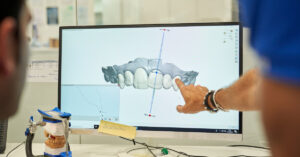
One of the key factors defining the current stage of dentistry’s development is digitalization. The shift from traditional methods to digital workflows has radically changed approaches to diagnostics, treatment planning, and the fabrication of dental prostheses. Modern technologies, including CAD/CAM systems, 3D printing, and digital imaging, make it possible to achieve high accuracy and predictability of results. This is particularly important in implantology and esthetic dentistry, where demands on treatment quality are constantly increasing. As a result, dentistry is becoming more standardized and, at the same time, more personalized.
Implantology and esthetics as drivers of development
A special place in the interview is given to the role of implantology, which in recent years has become one of the most dynamically developing areas of dentistry. Modern methods make it possible not only to restore lost teeth but also to significantly improve the functional and esthetic characteristics of the dentofacial system. Wanendeya emphasizes that modern dentistry is increasingly focused on restoring not only function but also the patient’s self‑confidence, making the esthetic aspect of treatment an integral part of clinical practice.
Education and the role of the professional community
Alongside clinical practice, an important area of the specialist’s activity is educational work. In the context of rapid technological development, continuous learning becomes an essential element of a dentist’s professional activity. The dissemination of knowledge through lectures, master classes, and international cooperation contributes to the accelerated adoption of innovations and the formation of unified treatment standards. This is particularly important in the context of globalization of the dental industry, where the exchange of experience between specialists from different countries becomes a key factor for progress.
Dentistry of the future: integration of technology and clinical expertise
Analysis of the expert’s statements leads to the conclusion that modern dentistry is moving toward the integration of various technologies into a unified clinical ecosystem. Artificial intelligence, digital platforms, and new materials are gradually becoming an integral part of daily practice. At the same time, the human factor — clinical thinking, experience, and the ability to take an individualized approach — continues to play a crucial role. It is the combination of technology and professional expertise that shapes a new model of dental care focused on maximum efficiency and patient comfort.
Conclusion
Thus, the statement that dentistry is in the most exciting phase of its development has serious grounds. The rapid growth of technological capabilities, the expansion of clinical approaches, and the strengthening of the role of education are shaping a qualitatively new paradigm for the industry. The relevance of this topic lies in the fact that the ongoing changes affect not only specialists but also patients, determining the level of accessibility, quality, and personalization of medical care. In the future, we can expect further deepening of digitalization and technology integration, which will make dentistry even more precise, efficient, and human‑centered.
Contemporary dentistry is rapidly transforming under the influence of digital technologies and interdisciplinary approaches, altering clinical and educational practices worldwide.
Dental technicians and the digital future: why adaptation secures the profession Introduction Julia Glancey, a dental technician and commentator, published
We use cookies to improve website performance, analyze traffic, and personalize content. You can accept all cookies or customize their use. Learn more in our Cookie Policy.
Functional
Always active
Technical storage or access is strictly necessary for the legitimate purpose of making possible the use of a particular service expressly requested by the subscriber or user, or solely for the purpose of carrying out the transmission of a message over an electronic communications network.
Preferences
The technical storage or access is necessary for the legitimate purpose of storing preferences that are not requested by the subscriber or user.
Statistics
Technical storage or access used solely for statistical purposes.The technical storage or access that is used exclusively for anonymous statistical purposes. Without a subpoena, voluntary compliance on the part of your Internet Service Provider, or additional records from a third party, information stored or retrieved for this purpose alone cannot usually be used to identify you.
Marketing
Technical storage or access is necessary to create user profiles for the purpose of sending advertising or to track a user across a website or multiple websites for similar marketing purposes.